

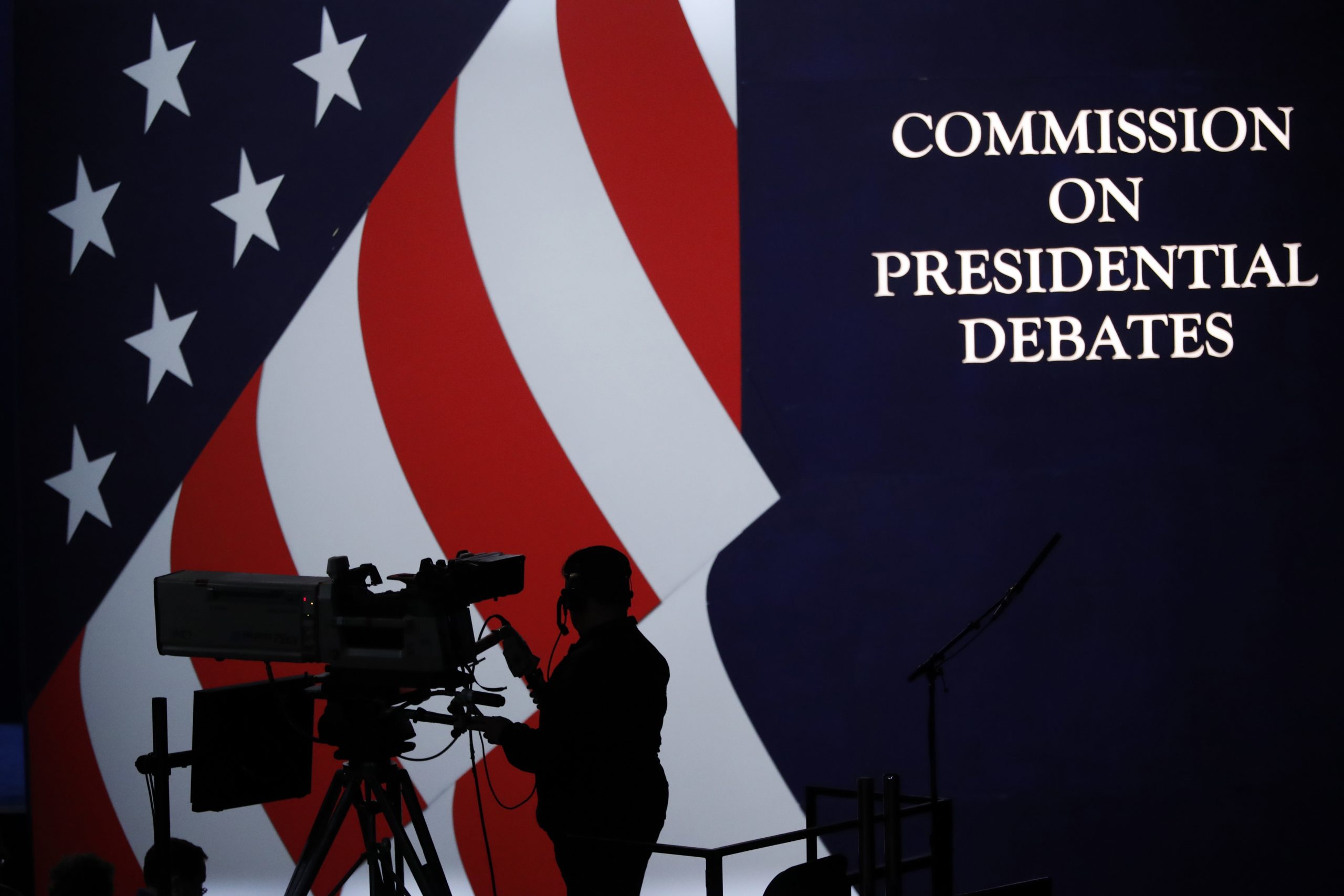
Hillary Clinton and Donald Trump are walking into a pressure cooker.
The Democratic and Republican nominees remain broadly unpopular ahead of the first debate, raising the stakes for each to deliver a winning performance.
Recommended Stories


Televised presidential debates rarely alter the trajectory of a campaign or reverse the fortunes of the candidates.
But with so many voters unhappy and unsure about their choices, Monday evening’s 90-minute, no bathroom breaks broadcast could have major implications on the outcome of the election.
“It’s a bigger deal because 95 million are going to be watching,” Frank Luntz, a Republican strategist, said. “Everyone’s going to be talking about it tomorrow.”
In public opinion polls, 56 percent of voters have an unfavorable opinion of Clinton; even more — 60 percent — view Trump unfavorably. For Democratic and Republican nominees, these numbers are historically low.
Trump can’t shake doubts about his fitness for the White House or concerns about his temperament. Voters wonder if he has the basic knowledge required for the job, and worry about behavior that is perceived by some as racially insensitive.
Clinton’s problem is that voters don’t think she is honest and trustworthy. Her use of a private email server while serving as secretary of state, and voters’ perception that she hasn’t told the truth about it, continues to weigh on her prospects.
The result has been a volatile presidential race where Clinton has the upper hand, but only narrowly, with no lead in the polls that will stay truly safe. An audience of between 80 million and 100 million is expected to tune in at least partly in search for clarity.
“Because voters have way more unanswered questions in this election than they’ve had in prior cycles, they’re going to use the debates to answer those questions,” added Brett O’Donnell, a Republican strategist and debate coach.
Clinton and Trump are scheduled to take the stage at Hofstra University in New York at 9 p.m. Eastern Time. Each has challenges unique to their personalities and what they need to accomplish. Trump is the biggest wildcard.
The reality television star probably has an edge on Clinton when it comes to understanding how to use television to communicate. He comes across as confident, leaving no doubt as to why he’s running for president and what his campaign is about.
But unlike Clinton, Trump has never participated in a one-on-one debate. His command of facts and domestic and foreign policies is often lacking, and he can be easily baited into counterproductive attacks on his adversaries.
“The key for Trump is decency,” Luntz said.
O’Donnell said Trump’s hurdle is “being able to carry on protracted conversation about policy. He’s pretty good at talking to the heart, not very good at talking to the head.”
Clinton is expected to come armed with facts and figures. The former secretary of state, New York senator and first lady has been steeped in public policy for three decades.
Her challenge is packaging everything she knows in a coherent message that offers voters an understanding of why she’s running for president in the first place and inspires confidence that she would do what she says she’s going to do.
Clinton has to go on the offensive and be prepared to effectively parry Trump’s attacks, but she can’t get so caught up in fact-checking her Republican opponent that she forgets to talk to the audience that matters — the voters.
“The key for Clinton is integrity,” Luntz said.
Added O’Donnell: “It’s about finding her voice and message.”
Debates are really about “moments and messaging,” agreed Luntz, who runs debate focus groups, and O’Donnell, the debate coach.
Over the years, the “winner” has been determined along these criteria, as opposed to who was more knowledgeable or experienced on matters of policy.
In 2000, Vice President Al Gore was deemed the loser of the first debate with then-Gov. George W. Bush because he sighed contemptuously while Bush was answering a question.
In 1992, President George H.W. Bush was caught looking at his wristwatch in the middle of his debate with then-Gov. Bill Clinton and billionaire Ross Perot.
This year, things could play out accordingly. It’s a lot different than the GOP primary debates.
In those events, there were so many candidates on stage, Trump (and his competitors) could disappear for minutes at a time and never had to engage at length on policy because there wasn’t enough time to allocate to all of the candidates.
“Trump didn’t need to win those debates; he needs to win this one,” Luntz said.
