

The Obama administration doesn’t appear to be on the same page as the United Nations when it comes to funding a $100 billion-per-year “green” climate fund to help developing countries cope with the effects of climate change.
U.N. officials on Tuesday wrapped up a final meeting before world leaders converge on Paris Nov. 30 to begin hashing out a final global deal on reductions of greenhouse gas emissions.
Recommended Stories


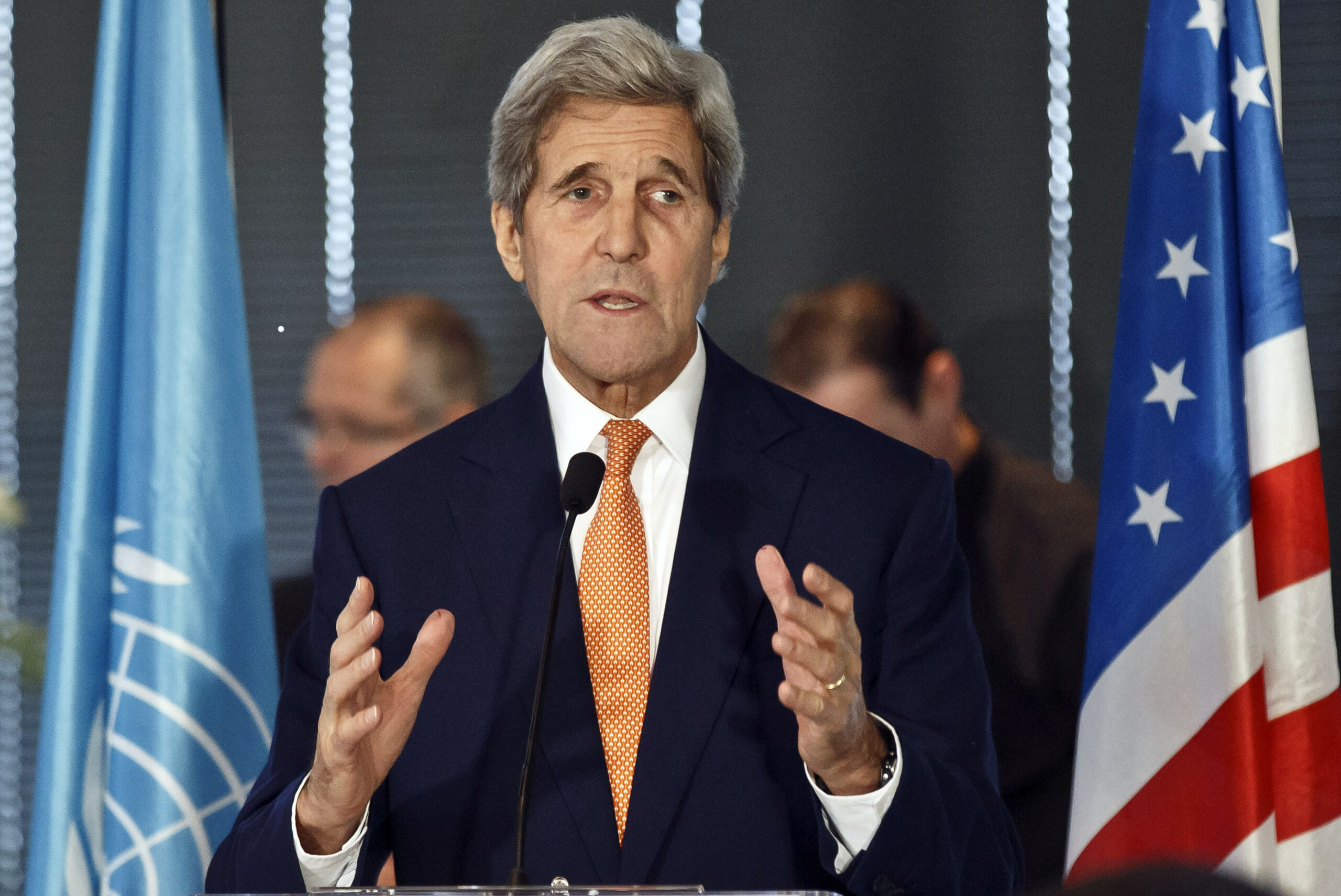
The U.N. said financing for the $100 billion annual fund was agreed to for the period that begins after 2020, when the fund is slated to be fully funded. But at a separate event, Secretary of State John Kerry said the administration’s contributions to the green fund are in jeopardy.
“We are struggling to find $3 billion for the green climate fund,” Kerry said, addressing Old Dominion University in Norfolk, Va. The comments underscore Republican lawmakers’ criticisms of the president’s climate change agenda and their reluctance to appropriate money for the green fund.
French foreign minister Laurent Fabius, the president of the upcoming U.N. meeting in Paris, said the post-2020 financing for the fund was “agreed,” which a statement said would include “additional contributions from new funders.” It did not elaborate on who the new funders would be, however.
The green climate fund has been an area of difficulty for U.N. officials in negotiations among potential contributors, who have slow walked negotiations on the fund in recent months. Officials have warned that could upset a deal from being reached in Paris.
In the weeks ahead of the meeting, however, the U.N.’s tone has been more upbeat, with leaders more inclined to say they have reached agreement.
But Kerry’s statement could be a more truthful reflection that problems persist.
Activists have said that the U.S. and the European Union had been the reason for the lack of movement on the green fund earlier this year.
Critics of the green fund say it constitutes a wealth transfer from the developed world to poorer developing nations. The critics argue that it is a way of effectively buying off the developing countries to get them to commit to emission reductions that they argue is not their fault or concern.
Fabius, in addition to the climate fund, also addressed countries’ commitments to emission reductions that have been submitted to the U.N. He said there will be “no backtracking” from those commitments and that every country should expect to be asked to increase their commitments.
The statement underscores problems the U.N. says have arisen in meeting the goal of the meeting in Paris, to ensure temperatures do not exceed 2 degrees Celsius in the coming decades. A recent assessment of the countries’ commitments showed that temperatures will rise 2.7 degrees. Officials have said they would ask countries to make further commitments to cuts to achieve the goal.
Most climate scientists blame greenhouse gas emissions, caused by burning fossil fuels, for driving manmade climate change.
Fabius also confirmed that those commitments would be reviewed “hopefully” every five years to ensure nations are doing their part to combat climate change. He said the review period “is now widely shared among parties.”
