Judge tosses Covington Catholic student’s defamation lawsuit against Washington Post

A federal judge in Kentucky dismissed a defamation lawsuit filed against the Washington Post by a Covington Catholic High School student.

Nicholas Sandmann and his family sought $250 million in damages over the newspaper’s reporting about a confrontation between Sandmann and a Native American man in January.

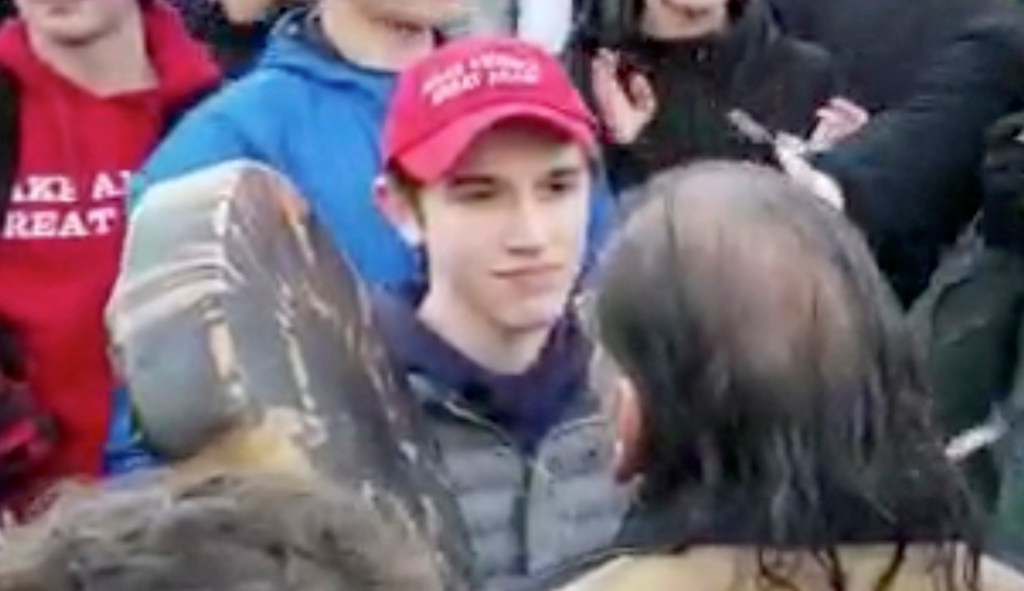
A video rapidly spread online that showed Sandmann, 16 at the time, wearing a “Make America Great Again” hat and standing face to face with the Native American man, Nathan Phillips.

Sandmann, who was in Washington, D.C., with his peers for the anti-abortion March for Life event, was widely pegged as an instigator of a confrontation with Phillips. But videos that surfaced later showed the students were verbally harassed by a group of black street preachers who also taunted a group of Native Americans, and Phillips was the one who walked in between them while beating a drum.

The lawsuit alleged the Washington Post smeared the high school student in its “war against the president” and accused Sandmann of being a racist. U.S. District Judge William Bertelsman said in his ruling Friday that the newspaper never named Sandmann in its initial reporting, instead writing that “hat wearing teens” were involved in the incident, nor did it publish any photo of him.

Bertelsman said the words used do not identify any particular individual and therefore are not defamation.

The Washington Post published a lengthy editor’s note on March 1 acknowledging errors in its coverage of the viral incident. Based on an incomplete recording of the incident, the Post initially reported Phillips was prevented by a student in the group from moving past them. The newspaper had also stated Phillips had been taunted by students before the encounter and that the students were the instigators of the incident. “Subsequent reporting, a student’s statement and additional video allow for a more complete assessment of what occurred, either contradicting or failing to confirm accounts provided in that story,” the Post’s note stated.

The Post also acknowledged it erred in stating that Phillips, who served in the U.S. Marines, was a Vietnam War veteran.

In a separate correction, the outlet also noted it incorrectly characterized a statement from Covington as an apology instead of a condemnation, and falsely stated that the group of teens involved in the incident could be heard on the video chanting “Build that wall” at Phillips.

Bertelsman said he accepts Sandmann’s claim that he was only trying to diffuse the situation, not block anyone, when he was standing in front of Phillips, despite Phillips not viewing Sandmann’s actions in the same manner.

“However, Phillips did not see it that way. He concluded that he was being ‘blocked’ and not allowed to ‘retreat.’ He passed these conclusions on to The Post. They may have been erroneous but … they are opinion protected by the First Amendment. And The Post is not liable for publishing these opinions,” Bertelsman wrote.

Related Content