Republican candidates now have political skin in the game amid the delay of several primary voting days due to the coronovirus outbreak.
Republican officials over the weekend moved back Democratic presidential primary dates in Louisiana and Georgia. Though done in consultation with Louisiana’s Democratic governor and the Georgia Democratic Party chairwoman, the moves still aroused suspicions among some Democrats that the delays were aimed at lengthening the time it would take presumptive nominee Joe Biden to win enough delegates to claim victory.
Under this theory, nomination rival Bernie Sanders would keep fighting until it was mathematically impossible, in the process, eating up months of valuable campaign time for Biden against President Trump. Just weeks ago, the entire contest looked like it was going to be wrapped up at the end of the month.
On Saturday, Georgia Secretary of State Brad Raffensperger announced the state would postpone its primary, originally set for March 24, to May 19. Citing concerns about the spread of the coronavirus, Raffensperger said in a statement, “Events are moving rapidly and my highest priority is the health of our poll workers, their families, and the community at large.”
His announcement came a day after Louisiana pushed back its primary from April 4 to June 20.
But now Republicans have their own primaries to worry about, too.
On Sunday, Alabama Secretary of State John Merrill indicated that the state’s March 31 runoff elections would likely be pushed to a later date.
“The health and well-being of the people of this state are of paramount importance,” he said in a letter to Republican Gov. Kay Ivey. “In order to effectively practice social distancing, as recommended by the President of the United States, the Centers for Disease Control & Prevention (CDC), the Alabama Department of Public Health, etc., the March 31 Runoff Election must be postponed.”
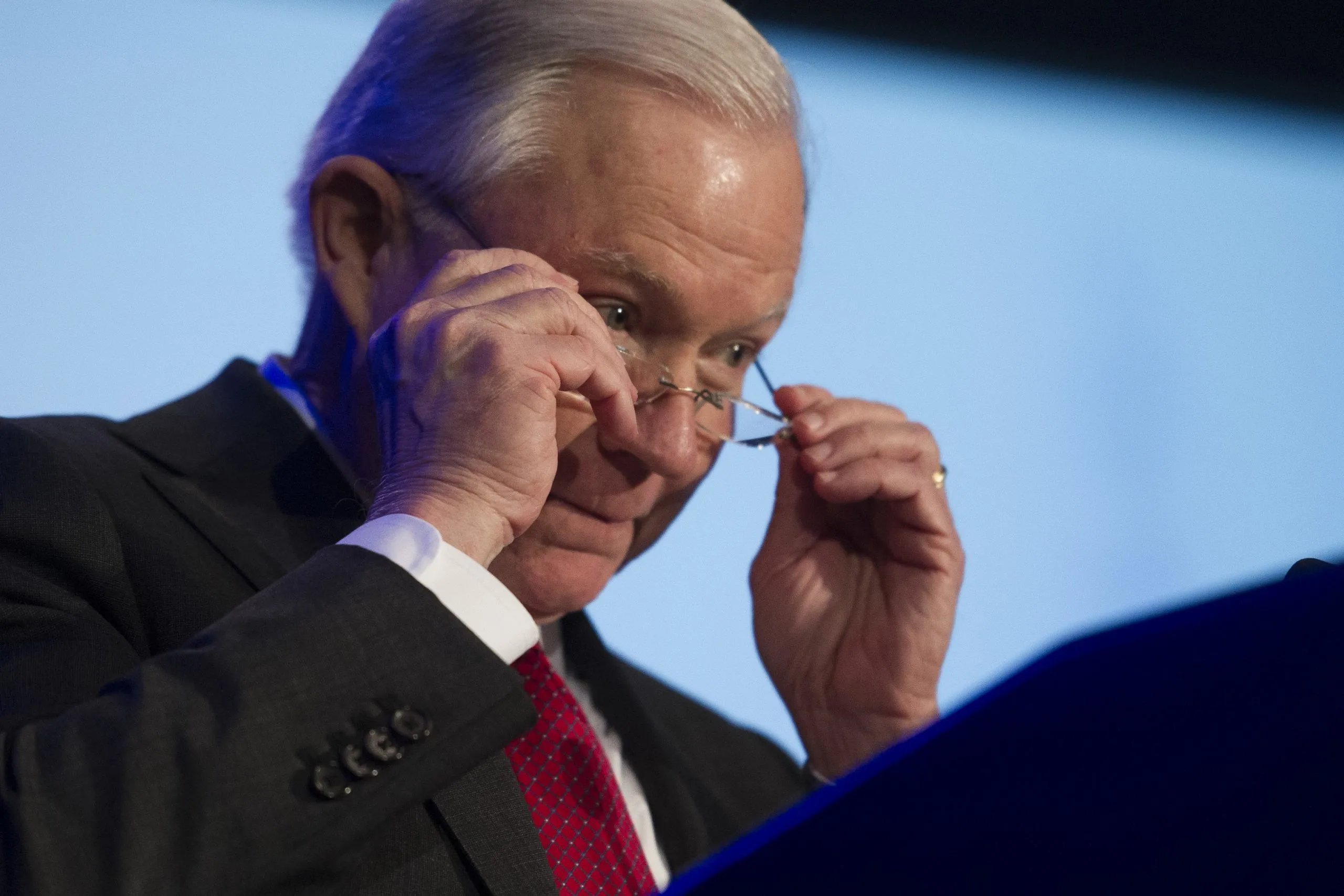
That means the closely watched Republican primary between former Auburn football coach Tommy Tuberville, who has been praised by Trump, and Jeff Sessions, Trump’s ousted attorney general, may not be resolved for months.
Sen. Doug Jones, a Democrat, is considered to be one of the most vulnerable incumbents up for reelection in November, meaning that the winner of the Alabama GOP primary is favored to be sworn into office next year.
In North Carolina’s 11th Congressional District, a runoff is scheduled between Republicans Lynda Bennett and Madison Cawthorn on May 12. That seat was vacated earlier this month after Rep. Mark Meadows resigned to become Trump’s chief of staff.
The winner of that election would face Democrat Morris Davis. Most analysts say the seat remains safely Republican.
Although North Carolina already held its primary on Super Tuesday, postponing that election would be no surprise should a wave of other states make the same decision. North Carolina has reported more than 26 cases of the coronavirus as of Tuesday.
As of Monday afternoon, other states set to hold their primaries Tuesday are proceeding as business as usual. Top election officials in Florida, Arizona, and Illinois released a statement, saying “Americans have participated in elections during challenging times in the past … we are confident that voters in our states can safely and securely cast their ballots in this election.”
But on Monday, Ohio Gov. Mike DeWine recommended the state delay its in-person voting, just one day before voters there were supposed to cast their ballots in both the 2020 Democratic and Republican presidential primaries.
The Republican governor encouraged the state to delay Tuesday’s scheduled in-person voting until June 2 on social media. He tweeted, “We cannot tell people to stay inside, but also tell them to go out and vote,” noting that “we must also look out for our poll workers.”
Pressure from either Biden or Sanders could accelerate the primary changes. On Sunday, Sanders indicated that he would support moving all contests back until the spread of the virus has diminished.
“I would hope that governors listen to the public health experts and what they are saying is … we don’t want gatherings of more than 50 people,” he said. “I’m thinking about some of the elderly people sitting behind the desks, registering people and doing all that stuff. Does that make sense? I’m not sure it does.”
