

Don’t worry too much about the Russian satellite that is behaving oddly in space. While that satellite is strongly believed to be a weapon prototype, it does not displace U.S. deterrent credibility.
All of this bears consideration following State Department official Yleem Poblete’s statement on Tuesday that a Russian satellite is showing “very abnormal behavior.” Although Russia denies the satellite is a weapon, Poblete added that its behavior is “inconsistent with anything seen before from on-orbit inspection or space situational awareness capabilities, including other Russian inspection satellite activities.” The new satellite was launched into space last October.
Recommended Stories


But what’s really going on here, and what does it mean for America?
The new satellite is believed to be a Russian prototype designed for in-space strikes against U.S. military, communication, and spy satellites. Russia is using this prototype to test its ability to destroy or “kill” American satellites. But while this obviously is not good news for America, neither is it disastrous.
For a start, the U.S. continues to dominate the space-based tactical and strategic environment. Our satellite networks are more numerous, more effective, more reliable than those of Russia or other near-peer competitors such as China. U.S. networks are also semiredundant in their ability to survive strikes against elements of their network. But as important is the fact that U.S. and allied military forces are urgently improving their ability to operate “blind,” or without the integrated intelligence, targeting, and command and control capabilities that these satellite networks provide. This will allow allied forces to continue fighting effectively even if satellites are knocked out in a conflict.
At the same time, alongside ongoing improvements to NATO combat power, the U.S. retains anti-satellite strike capabilities such as the RIM-161 (S3) and other platforms based on the Israeli Arrow 3 system. While imperfect, these counterstrike capabilities will improve as the U.S. employs its next generation of new low-orbit satellite networks. After all, in order to kill U.S. low-orbit satellite networks, the Russians would have to send their kill satellites into low-orbit. That will make their platforms vulnerable.
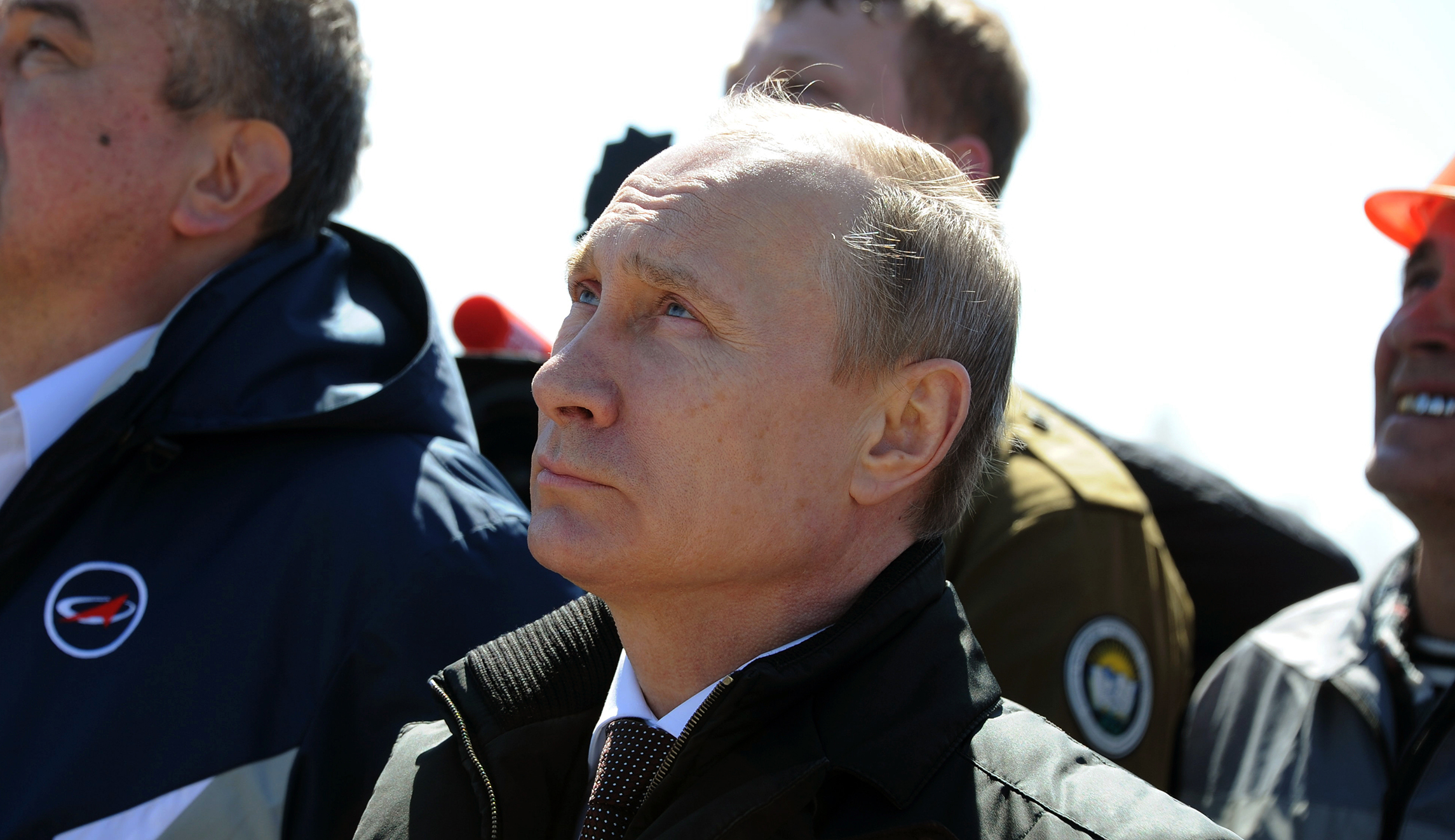
Ultimately, the real issue with these new Russian satellites is not what they mean in terms of specific threat, but rather what they tell us about Russian strategic doctrine. Because alongside other Russian efforts to harden its nuclear strike capability and project power into Europe, it is clear that President Vladimir Putin wants Russia to pose a significant, long-term threat to the West. In the context of Russia’s great economic difficulty and its demographic crisis, these expensive investments prove the lie of Putin’s claim that he seeks compromise with the West.
Fortunately, Putin isn’t an idiot. Seeing the U.S. strengthen NATO and develop next generation nuclear strike forces to maintain the existing U.S. balance of power, Putin knows he faces grave costs in any major conflict. We must double down in the cultivation of that understanding. The key here is to respond to this new Russian threat with proportionate resolve and the development of our own capabilities. Put simply, Putin is not a crazy imperialist, he can be deterred.
Meeting Russian officials next week, national security adviser John Bolton should clarify that we see Russian satellites for what they are and won’t blink.
