

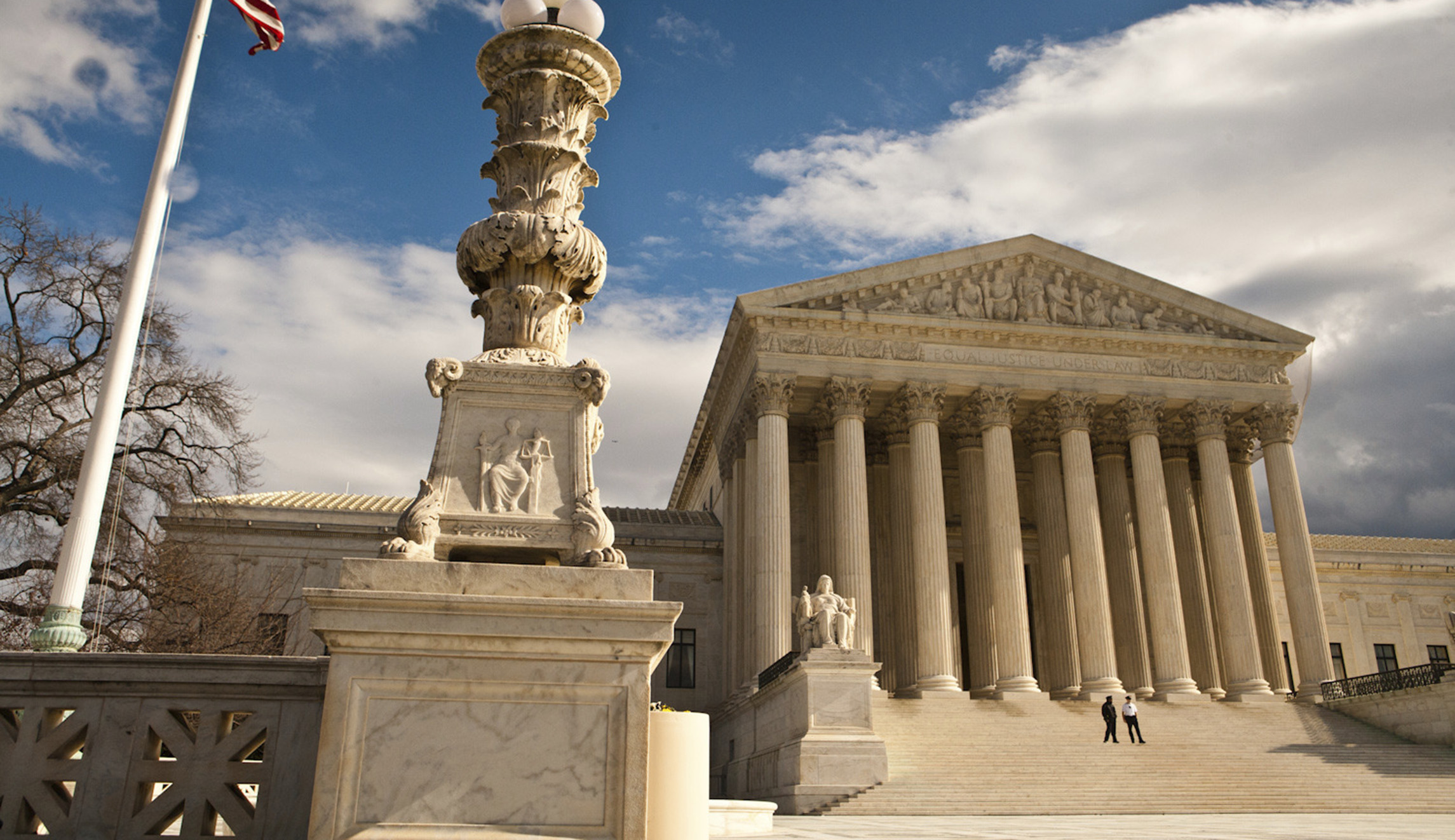
University of California, Irvine, law professor Leah Litman wrote in the New York Times on Monday that this week’s Supreme Court decision Franchise Tax Board of California v. Hyatt, by simply overturning a 1979 precedent, paves the way to the reversal of the Roe v. Wade abortion decision.
As much as I hope Roe is overturned, it would be rather sanguine to place any hope in Litman’s argument. Sufficient refutation already exists in that the Roberts Court, as Jonathan Adler has aptly pointed out, has actually been more respectful of precedent than its predecessors. Stare decisis has never been an absolute for any court — and thank goodness for that.
Recommended Stories


We’re going to hear a lot about stare decisis in coming months — not because it’s an important concept (which it is), but because it’s the last line of defense for Roe.
Litman describes stare decisis as follows:
She goes on to assert that these conditions all recommend against reversing Roe in particular, even if the justices believe (as even Ruth Bader Ginsburg does, according to her previous writings) that the original decision was a poor one.
What first caught my nonlawyer’s eye was Litman’s dubious deployment of the concept behind the phrase “structured their lives.” Specifically, she wrote this: “Women who have structured their lives around being able to decide when and whether to have a child should take note” of this week’s decision.
It’s very hard to believe that “structuring one’s life” in this context is supposed to refer to the potential status of future decisions. The idea of “structuring one’s life” implies that there have already been irrevocable past decisions — say, large business investments based on longstanding interpretations of the law, which a sudden Supreme Court reversal could abruptly reduce to nothing. The idea that abortion might be restricted or banned in some jurisdictions years from now is nothing like that.
Although Litman evidently disagrees, it should also be a given that Roe is based on outdated law. That Ginsburg and other serious pro-choice scholars would openly disparage Roe is a clear tell. It may have been outmoded even when it was written, but it’s probably generous to plan an ad hoc decision.
As for outdated facts, that’s even more obvious. The current justices need only look to the text of Roe itself, because the 1973 decision more or less invites its own reversal at some future date:
Setting aside the strongest argument against Roe — its dubious constitutional reasoning — we can still agree that 46 years of “the development of human knowledge” in medicine and biology have passed since Roe was decided. A lot more is known and observed today about the humanity of the unborn, and the point of what the court called “viability” keeps moving earlier into pregnancy as medicine advances.
Even adopting the same premises as the Roe court, reasonable people might infer from the new facts that we should not dismiss the state’s interest in protecting prenatal life as lightly as the Roe court did.
Roe openly presents itself as balancing various rights and state interests after giving them what seemed at the time like an appropriate weight. But given new information, that balance might have to change. The greatest disrespect toward stability and precedent in law would not be to overturn Roe, but to treat it as an immutable commandment carved into a tablet of stone.
