

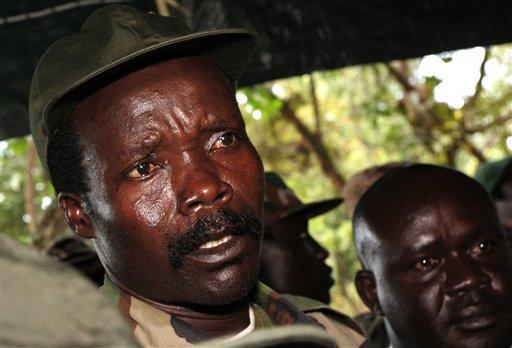
President Obama is deploying 100 ground troops to Uganda to help hunt down the leader of a guerilla group, even though that group hasn’t attacked Uganda since 2006 and poses no direct national security threat to the United States. Obama cited humanitarian concerns when he announced last week that he would send armed U.S. military advisers to help capture or kill Joseph Kony, the leader of the Lord’s Resistance Army.
Under Kony’s leadership, the group has terrorized central Africa for more than 20 years, killing at least 2,400 people and abducting more than 3,400 since 2008, according to the State Department.
Recommended Stories


The LRA killed tens of thousands of Ugandans and displaced nearly 2 million more between 1986 and 2006, but there have been no LRA attacks in Uganda since August 2006, the State Department reported.
It remains unclear how the group poses any direct threat to U.S. national security interests, though Obama insisted U.S. interests were at stake in a letter informing House Speaker John A. Boehner, R-Ohio, of the deployment.
“I believe that deploying these U.S. armed forces furthers U.S. national security interests and foreign policy and will be a significant contribution toward counter-LRA efforts in central Africa,” Obama wrote.
Defense Secretary Leon Panetta later shed more light on the mission, saying the U.S. is concerned that the region’s instability could provide a safe haven for al Qaeda-affiliated groups.
“There are elements there that either have ties to al Qaeda or that represent the forces of terrorism on their own — and that’s what’s dangerous,” Panetta told CBS News.
Meanwhile, another U.S. official said the mission has nothing to do with al Qaeda, but it is strictly “LRA-specific.”
“We are here and we are engaged with Uganda in the region in a support role, in an advisory role — not in a combat role, not in a leading role, not in an operational role,”
Virginia Blaser, the No. 2 American diplomat in Uganda, told reporters from the U.S. Embassy in Kampala.
The mission has broad support in Congress. Yet, some lawmakers worry that the mission’s lack of clarity could open the door to a long — and unintended — period of U.S. involvement in the region.
“I worry about, with the best of intentions, we somehow get engaged in a commitment that we can’t get out of — that’s happened before in our history and we need an explanation,” Sen. John McCain, R-Ariz., told NBC News.
Nobody wants another Vietnam War, said John Campbell, an expert on African policy for the Council on Foreign Relations.
“The trouble with ‘slippery slope’ is that very often you slide down it without being aware that’s what you are doing,” Campbell said. “The escalation of American involvement in Vietnam under Kennedy … at the beginning it was all very slow and just seemed to be one more step that logically followed on previous steps.”
Administration officials have provided no deadline for the military mission to be completed.
“The American people should be concerned,” Panetta said, acknowledging the risk of sending U.S. troops into such an unstable region. “I’m concerned. The Congress is concerned. And for that reason we have to exercise the greatest caution.”
