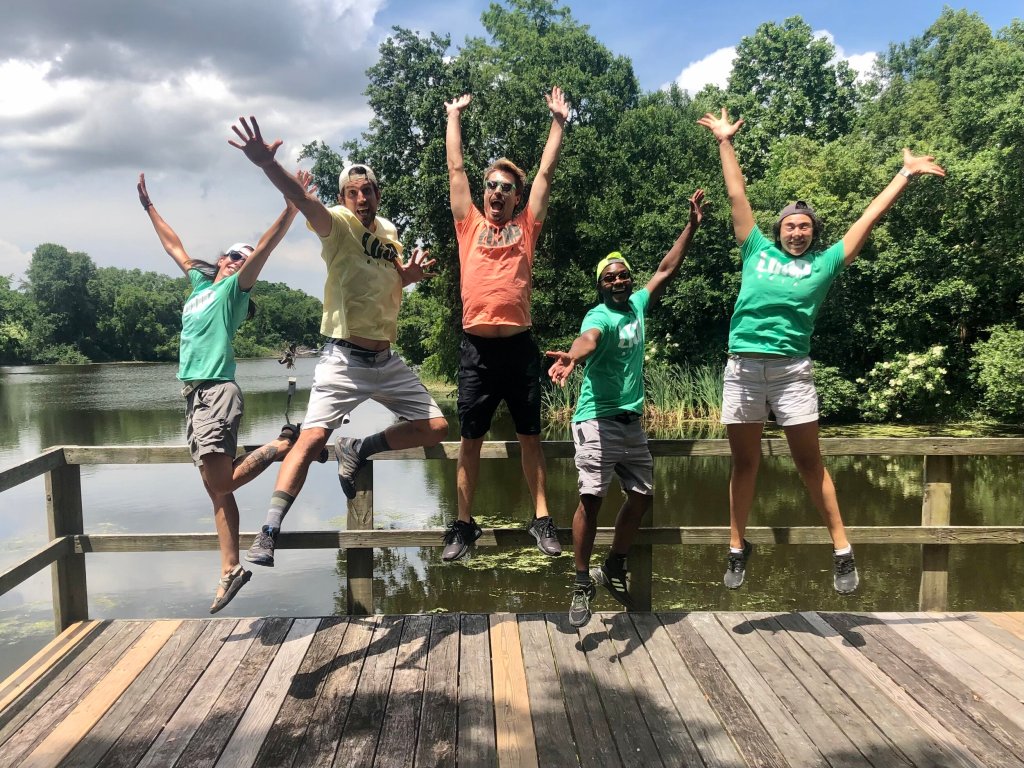
It stands to reason that the best way to keep adults from exhibiting social pathologies, including criminal behavior, is to give them hope and tools when they are young. Across the country, innovative projects are doing just that — including one in New Orleans celebrating its 25th anniversary this week.
Thumbnail sketches of the New Orleans program, one in Mobile, Alabama, and one in St. Paul, Minnesota, give a sense of the ways young people can be inspired to forge better lives.
In New Orleans, the Louisiana Outdoors Outreach Program was designed with the knowledge that numerous inner-city children have never or almost never even seen creeks, rivers, or other natural habitats. The lessons learned in outdoor activities, the late LOOP founder Dan Forman believed, could “help them avoid the cycle of dysfunction and violence that plagues the city’s poor,” as one news article put it.
As columnist Bob Marshall wrote in the New Orleans Times-Picayune 10 years ago, Forman called the concept “expeditionary learning,” with the specific programs aimed at teaching “social skills such as teamwork, conflict resolution, problem-solving and self-esteem.” What began with just a $5,000 budget now serves more than 2,000 children each year, with 13 schools or nonprofit youth development groups working as partners. It’s a combination of outdoor fun with hands-on science.
In nearby Mobile, meanwhile, there’s a program for children who already were on the wrong path. Its acronym, NEST, stands loosely for “nurture children, equip parents, strengthen families, and transform communities.” Its driving idea is that quality and depth of service, not the quantity of beneficiaries, are essential. Juvenile court Judge Edmond Naman found that almost no amount of punishment or boot camp could turn around the lives of juvenile offenders if their home lives were wrecked, with parents on drugs, living in filth, utility bills unpaid, and the like. But when NEST’s teams of as many as five volunteers per offender work in a structured way, holistically, to give the children a base of support, the results are stunning, with recidivism rates less than half that of non-NEST peers in Alabama and with numerous college graduations and other success stories.
As Naman said, “A kid can walk around [and thus avoid] trouble if he has someone to walk with and somewhere to walk to.”
Finally, and more famously, there is the High School for Recording Arts in Minnesota, included as a subject of the newly published Hip-Hop Genius 2.0: Remixing High School Education. Also founded 25 years ago this spring, by a recording associate of the singer Prince, as part of Minnesota’s path-breaking charter school movement, HSRA uses music as a means of recapturing an education for students who were expelled or dropped out from traditional schools. Although more than 90% of its students live at or below the official poverty level, 90% of them graduate — and among graduates, 100% of them have been accepted into college.
“These programs are based on relationships first — relationships between caring adults with high expectations and young people who might not have had a lot of opportunities for those healthy developmental relationships,” said Jon Bacal, a noted charter school pioneer in Minnesota. Citing studies by respected outfits called the Search Institute and the America’s Promise Alliance, he added, “There’s a ton of evidence on this.”
Referring to the Search Institute’s list of five elements of excellent mentorship, Bacal, who has no affiliation with HSRA but has watched it since its inception, said: “This school prioritizes those elements.”
The same could be said of NEST and LOOP. Here’s hoping we can all find programs like these and support them to the max.