
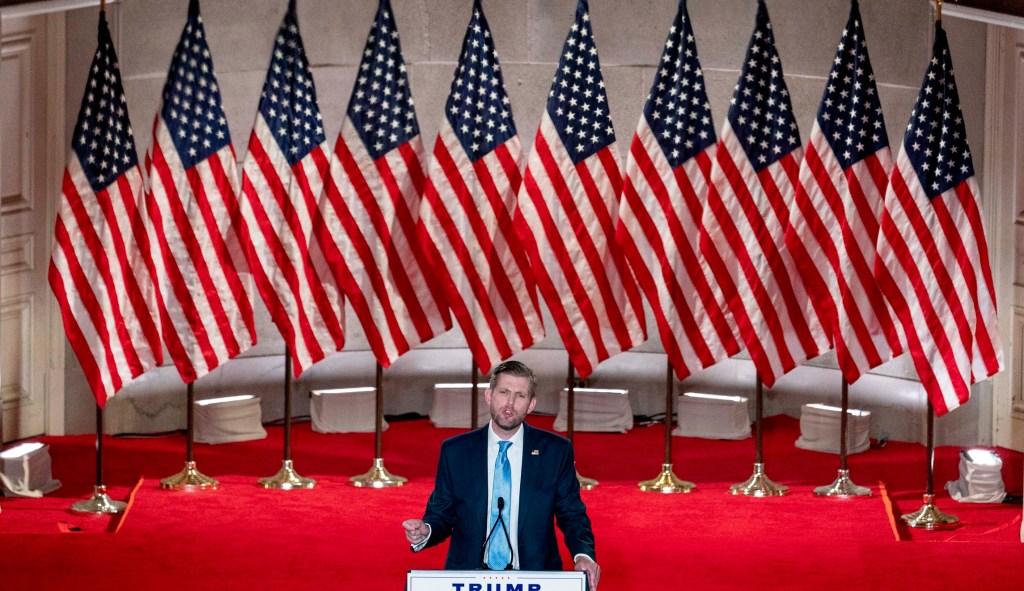
President Trump’s first-term foreign policy has been marked by strength and fulfilled promises, his second son, Eric Trump, argued at the Republican National Convention on Tuesday night. His father “rebuilt the mighty American military,” Eric said, “adding new jets, aircraft carriers. He increased wages for our incredible men and women in uniform. He expanded our military defense budget to $721 billion per year.” Moving beyond financials, Eric continued:
Coming three-quarters of the way through a presidential convention cycle with little foreign policy content from either party, Eric Trump’s remarks were, in that sense, a welcome change. They’re also revealing: of stagnant assumptions in this administration’s approach to foreign affairs, of what the public wants in our foreign policy, and of what could be accomplished in the next four years.
Real journalism.Trusted by millions.
Unlimited access to in-depth reporting, expert analysis, and the stories that shape our country.
Already a member? Log in