

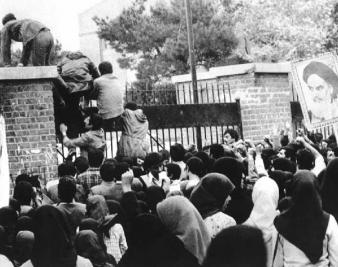
As the United States and other members of the P5+1 commence negotiations with Iran, it is worth recalling the classic analysis of Iran’s negotiating style sent in from the U.S. embassy in Tehran on August 13, 1979. The author of the cable, political counselor Victor Tomseth, and the man who authorized it, charge d’affaires Bruce Laingen, became hostages when the embassy was seized on November 4, 1979.
The cable is an analysis of the “underlying cultural and psychological qualities” that explain the difficulties the embassy had been having in negotiations with the new regime. In one famous line, the cable claims that “Perhaps the single dominant aspect of the Persian psyche is an overriding egoism … that leaves little room for understanding points of view other than one’s own.” There is also a “pervasive unease about the nature of the world in which … nothing is permanent and … hostile forces abound.” Persians therefore see themselves as “obviously justified in using almost any means available to exploit such opportunities” to protect themselves. Tomseth then adds that Persians have a poor understanding of causality, “an aversion to accepting responsibility for one’s actions,” and resist “the idea that Iranian behavior has consequences” on American policy.
Stay informed.Stay ahead.
Join Washington Examiner for unlimited access to the news, analysis, and commentary that matter most.
Already a member? Log in
