
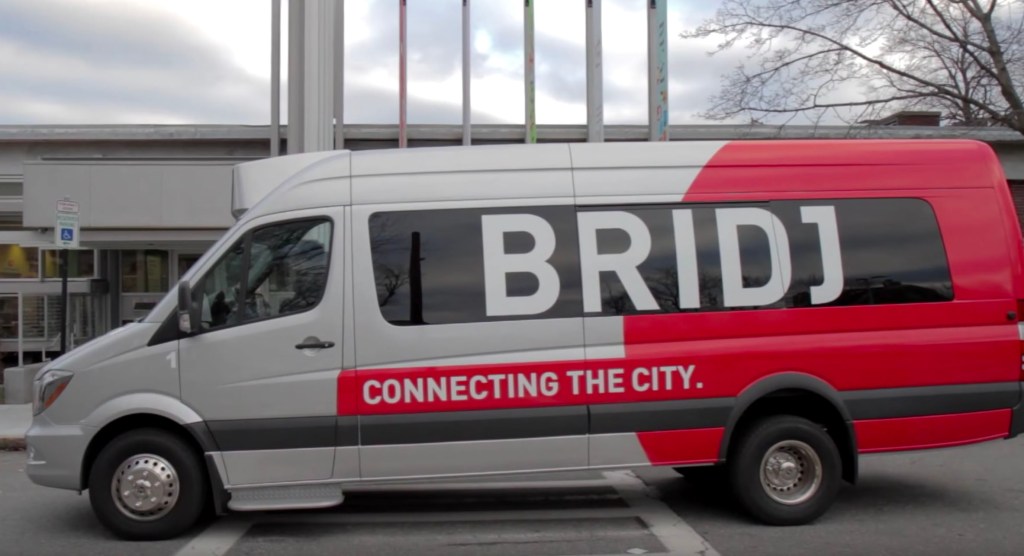
As the Metrorail’s SafeTrack rehabilitation continues, commuters around the District of Columbia are seeking out backup transit options. Sure, if the WMATA board and monitors from the Federal Transit Administration can make the overdue maintenance investments, reduce the disturbingly hostile conduct of certain “train-breaking” employees, and prevent their security employees from joining the Islamic State, Metro will eventually get back on its feet. In the meantime, riders who can’t stand road rage driving have other options, thanks to D.C.’s public buses, public-private bikeshare system, and innovative private ridesharing options like Uber, Lyft, and Bridj. The last option is particularly promising: A dynamically routed, app-based bus system that may grow to serve a key public policy niche.
UberPool and Lyft Line reduce congestion, at least compared to similar levels of service by old-fashioned single fare taxis. They certainly reduce congestion and parking demand compared to single-occupant private car reliance. But they’ve taken a lot of political heat for their regulatory fights, and for their designation of “driver partners” as non-employee individual contractors. In the biggest city centers that have reliable transit coverage and low pre-existing private car ownership, they’ve even been accused of increasing congestion by drawing former bus riders onto a growing ridesharing fleet.
Real journalism.Trusted by millions.
Unlimited access to in-depth reporting, expert analysis, and the stories that shape our country.
Already a member? Log in