

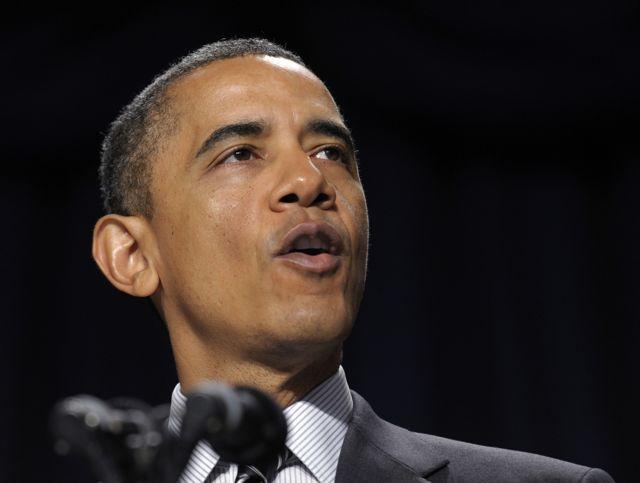
President Obama on Thursday talked about how his religious faith shapes his Oval Office decisions, but then fended off attacks from religious groups upset over his proposal to require some church affiliated employers to cover contraceptives under health care plans they offer workers.
Reeling from an onslaught of criticism from Catholic groups, Obama aides defended the administration’s decision to exempt churches but require some church-affiliated employers, such as hospitals, to pay for something to which their owners object on religious grounds.
Obama, addressing the National Prayer Breakfast, touted his Christian faith as influential in his policy decisions — notably his calls to raise taxes on the wealthiest Americans — but did not weigh in on the contraceptive controversy.
“I think to myself, if I’m willing to give something up as somebody who’s been extraordinarily blessed, and give up some of the tax breaks that I enjoy, I actually think that’s going to make economic sense,” he said. “But for me as a Christian, it also coincides with Jesus’ teaching that ‘for unto whom much is given, much shall be required.'”
The president’s health care overhaul requires most employer insurance plans to cover preventative service for women, but administration officials recently announced that religious-connected institutions would also have to follow the regulation.
House Speaker John Boehner, R-Ohio, joined critics in calling on the White House to reverse the decision.
“I think this mandate violates our Constitution,” Boehner said. “I think it violates the rights of these religious organizations. And I would hope that the administration would back up and take another look at this.”
White House spokesman Jay Carney said requiring religiously affiliated groups to cover contraceptives in their health care plans is rooted in a desire to “make sure women have access to good health care no matter where they work.”
“Some of his critics suggest he doesn’t talk about his faith enough,” he added, defending the president’s remarks at the prayer breakfast meeting. “He is influenced by his faith. It was not a political event. He was explaining how his faith guides him.”
The injection of faith into the political discussion underscored the ongoing challenge Obama faces with religious voters, particularly white Catholics whose support helped boost Obama to victory four years ago but who have since cooled to the president.
A recent Pew Research poll shows Republican presidential front-runner Mitt Romney holds a 13-point lead over Obama among white Catholics. Obama bested former Sen. John McCain among Catholic voters by nearly 10 percentage points in 2008, but current Republican candidates see that waning support as an opportunity to attack a president struggling to win over white, middle-class voters.
Republican presidential candidate Newt Gingrich accused Obama in engaging a “war on religion” and Romney called the birth-control decision an “assault on religious liberty.”
Yet, Democrats say the decision was a prudent political calculation that will help Obama in November.
“Put yourself in the president’s shoes,” said one senior Democratic strategist. “Why waste political capital on those who care that deeply about abortion and other related issues? You’re probably not getting their vote anyway. Protect your base.”
