

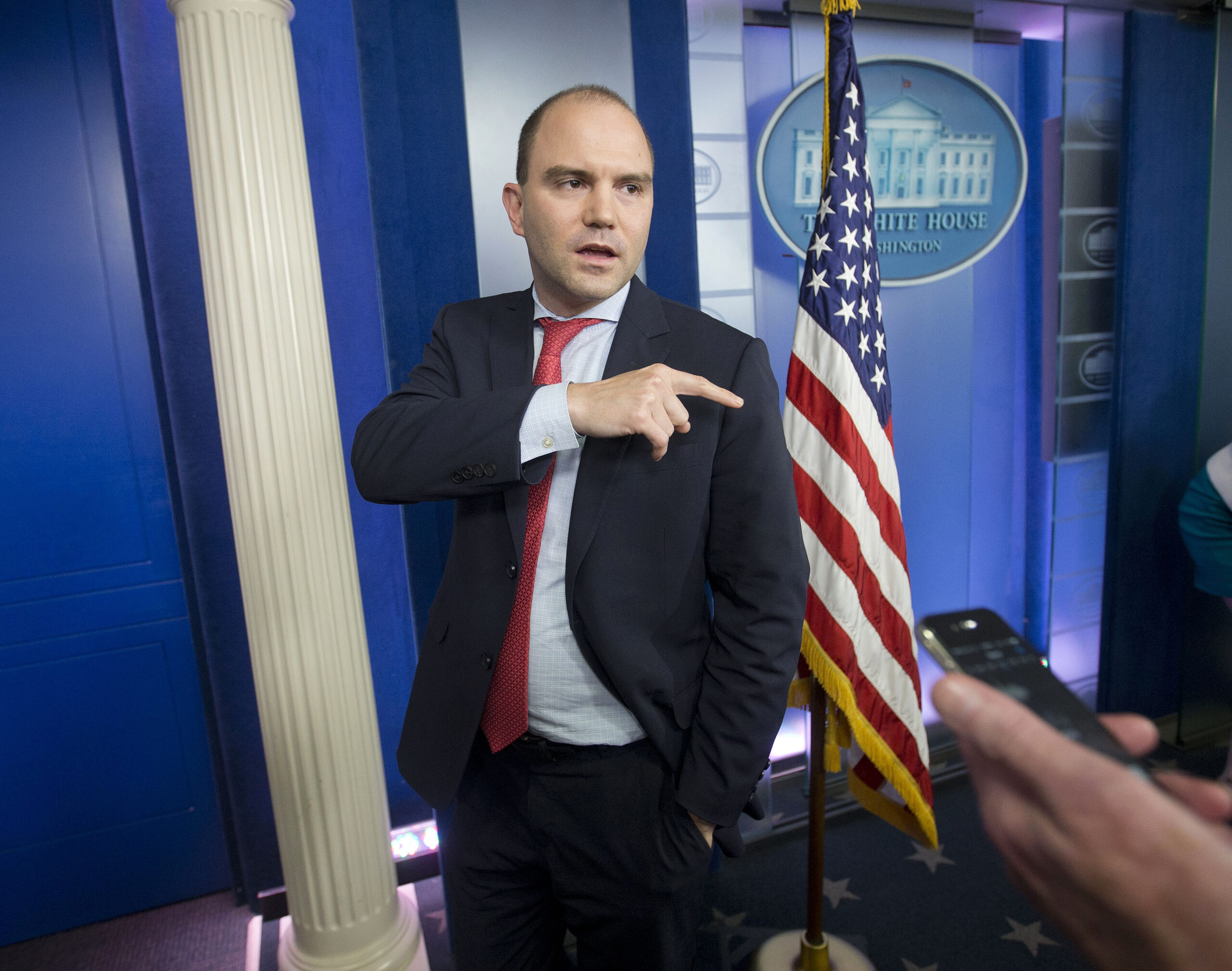
Obama administration officials said Thursday that the terrorist attacks on Paris have renewed the sense of urgency among the 65-member coalition combating the self-proclaimed Islamic State, but couldn’t give any new specifics on what they are doing to stop the Sunni terrorist group.
“[T]here is a new sense of urgency; and I think we do want to take that sense of urgency and make it concrete,” Deputy National Security Advisor Ben Rhodes told reporters traveling with President Obama in Asia on Thursday.
Recommended Stories


However, the actions he cited are all things the administration has previously touted or have occurred since Friday’s attacks in Paris. They include a new intelligence sharing agreement between Washington and Paris, additional French sorties on Islamic State targets, Russian bombing of Islamic State targets, and additional U.S. takeoffs from a Turkish base.
Appearing with new Canadian Prime Minister Justin Trudeau in Manila, Philippines, Obama himself downplayed the idea that ISIS’s murders in Paris would lead to radically new actions.
“[W]e have always had a sense of urgency about the need to defeat ISIL,” Obama said, using his preferred acronym for the Sunni terrorist group. “And the 65-country coalition, including Canada, that we’ve organized has put consistent, steady pressure on the organization.”
“But what I’ve also said is that it’s going to be a multi-year task and that we’re not going to be able to fully succeed in eliminating their safe havens until we have a political settlement of some sort in Syria,” he said.
When he was on the campaign trail, Trudeau promised to pull his pilots from Syrian skies.
“I made a clear commitment to Canadians to withdraw the six fighter jets, and we will be doing that in collaboration and coordination with all of our allies to ensure that the coalition still has tremendous impact against ISIL,” Trudeau assured Obama in their first meeting.
Rhodes said leaders individually and collectively, such as during the G-20 meeting in Turkey earlier this week, promised Obama to assist more in the fight against ISIS. He also said that other countries can make valuable contributions without putting planes in the air.
“We can handle a significant amount of this air campaign,” Rhodes said. “Frankly, the key area in terms of being able to do more on the strike campaign is our ability to generate more targets through intelligence. So it’s not necessarily going to be the best contribution for every country to be taking strikes. There are other ways to contribute.”
He cited participation in training and equipping programs to supply Kurdish, Iraqi and other forces combating the Islamic State and intelligence sharing as particularly helpful assistance.
“So I think across both Syria and Iraq, we want to look at what can other nations do not just to help with the air campaign, but I think, importantly, to help with training, equipping and support for these forces that are fighting and making some progress against ISIL on the ground,” he said, giving particular nod to Germany and Australia in those categories.
Some countries have planes in the air doing only reconnaissance, which is a key contribution, Rhodes said.
“We have nations that are flying with us to provide that type of intelligence basis to be able to identify, for instance, ISIL infrastructure,” he said. “We’ve increased the targeting of ISIL oil infrastructure … with great success,” he said.
And working with regional intelligence services gives the U.S. more threads to pull that can lead to “high-value” ISIS members that the U.S. can better target and strike, he said.
“But a lot of these countries, frankly, will need to sit down, look at what their resources are, get with our Defense Department, and figure out where they can plug in more resources going forward,” Rhodes said.
When French President Francois Hollande visits Washington on Tuesday, they will discuss France’s intensified bombing campaign and how to leverage Russian involvement in Syria, Rhodes said.
“I think often people want to know whether or not we’d be concerned about the Russians playing a large role,” Rhodes said. “We want Russia to play a significant role in solving this problem because they are ones who have significant leverage on the Assad regime, and insofar as they want to make contributions to the counter-ISIL campaign, that’s a good thing.”
