

Reviews and News:
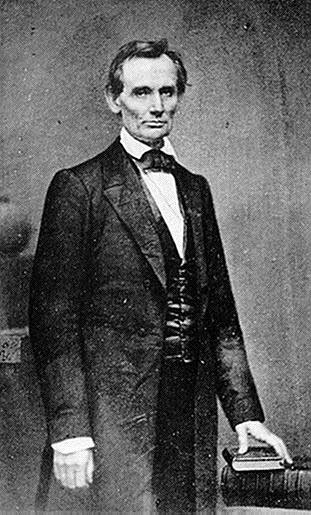
Eric Foner reviews Fred Kaplan’s Lincoln and the Abolitionists, which argues that Lincoln belatedly and begrudgingly signed the Emancipation Proclamation because he was a racist: “Lincoln and the Abolitionists never quite gels. As the bifurcated title and subtitle suggest, it lacks a clear focus. In addition, there are numerous historical errors, some trivial (the Northwest Ordinance was adopted in 1787, not 1795) but many egregious. Instead of giving African-Americans the right to vote in 1821, as Kaplan states, New York in fact disfranchised nearly all of them. It is astonishing to read that Tennessee, one of the 11 states of the Confederacy, ‘never left the Union’ or that the Compromise of 1850 (rather than the Kansas-Nebraska Act of 1854) repealed the Missouri Compromise, a milestone on the road to civil war… Kaplan is correct to direct attention to Lincoln’s strong advocacy of colonization during the 1850s and the first two years of the Civil War, something many admirers play down or ignore. But as a full portrait of Lincoln’s views on slavery and race, the account is, to say the least, one-dimensional. Kaplan’s treatment of Lincoln’s relationship with abolitionists, who demanded an immediate end to slavery, is a case in point. Lincoln was not an abolitionist and never claimed to be one. But it is untenable to write, as Kaplan does, that Lincoln ‘detested’ abolitionists and ‘wanted nothing to do’ with them.”
Recommended Stories


* *
“Where do babies come from? The answer to that question is now common knowledge, yet in The Seeds of Life, the veteran science writer Edward Dolnick tells us that for centuries it proved elusive, even to the greatest minds. Profound discoveries were being made in medicine, mathematics, astronomy and other fields, but it would take until 1875 for us to fully comprehend the process of human gestation.”
* *
The point of a museum of failure: “‘Failure is how you learn to walk and learn to talk,’ [Samuel West] said. ‘Any skills that you have are gained by failing first.’ He thinks schools should pay more attention to failure — not just success — and hopes visitors to his museum don’t forget about the times in their lives where things didn’t go so right.”
* *
Caring for corpses: “When she was a child, Carla Valentine used to wonder what it felt like to be a corpse. She would direct her friends to take part in funerals for roadkill they found. While her contemporaries went off to learn languages or travel in Southeast Asia, Valentine spent her gap year assisting an embalmer. As a student she volunteered part-time at the local mortuary, learning the correct etiquette for holding organs removed from a cadaver. Valentine has worked in hospitals, civic mortuaries and, latterly, as curator of the St Bartholomew’s Hospital Pathology Museum and as an adviser on films. This book is ‘my life in death’. It forms part of a growing trend of books and television programmes about the facts of death, though none, I think, is quite as visceral as this.”
* *
In Case You Missed It:
Frank Lloyd Wright at 150: “Baiting Frank Lloyd Wright has long been a blood sport; his arrogance makes people want to knock him off his pedestal. On the other hand, his acolytes and ardent fans idolize him uncritically. Neither extreme provides much insight into the architect, though, about whom many questions remain.”
* *
How brainwashing works: “I began my formal research in 1999, eight years after battling my way out of a secret, so-called Marxist-Leninist group whose leader controlled my life in its most intimate details. He determined what I wore: a version of the advice in John Molloy’s bestseller Dress for Success (1975), featuring tailored blue suits and floppy red silk bowties. More significantly, he decided when I could marry, and whether I might have children. The leader’s decrees were passed down via memos typed on beige notepaper and hand-delivered to me by my ‘contact’. Because I was a low-ranked member, the leader remained unknown to me. I joined this Minneapolis-based group, called The Organization (The O) believing I was to contribute to their stated goal of social justice, a value instilled in me by my family.”
* *
Why did Mikhail Bulgakov, a conservative medical doctor from Kiev, remain in the Soviet Union? Hope of literary fame. But he was unable “to produce – and at times even deduce – what was asked of him.
* *
In The London Review of Books, Long Ling writes about banquets in Communist China. At one, a country official died after some heavy drinking. “We were well aware that when the new day broke, everyone would be an offender, their careers almost certainly ruined”
* *
Interview: Ben Domenech talks to Douglas Murray about Europe’s slow death.
* *
Classic Essay: Walter Bagehot, “The Character of Sir Robert Peel”
Get Prufrock in your inbox every weekday morning. Subscribe here.
