
You readers flatter me. You send me emails and letters asking me to review certain movies you’ve seen because you want to know what I have to say about them. At times these missives make me feel guilty, because I know I’m going to let you down. Because it’s often the case that you want to hear my views on a movie I have simply decided I cannot bear to see.
Consider this a critic’s confession.
Real journalism.Trusted by millions.
Unlimited access to in-depth reporting, expert analysis, and the stories that shape our country.
Already a member? Log in
This month marks the 36th year of my life as a film reviewer (and it was 20 years ago this fall that I wrote my first piece about the movies in The Weekly Standard). It is said that familiarity breeds contempt—and indeed, when you’ve seen enough movies and learned enough tropes and clichés that you know who the killer is five minutes in, or you start anticipating dialogue and reciting it 10 seconds before the dialogue is spoken, it’s hard not to feel a certain level of disdain for the entire medium.
But it’s not the movies inspiring this world-weariness that I avoid like the plague, and it’s usually not these kinds of movies that readers kindly ask me to enlighten them about. There are three kinds of movies I now find it advisable to avoid, lest my general disposition turn black as pitch.
The first level of avoidance is strictly neurotic. As I’ve gotten older I’ve lost my tolerance for being frightened at the movies. This was a tolerance I actually acquired, deliberately and with effort, after a childhood in which even being told the plot of a scary movie would make me lose sleep. I mean literally: One Sunday afternoon, when I was 7, my thrill-loving sister revealed she had stayed up late the night before with her friend Daniela to watch The Blob on Chiller Theatre and recounted it to me in moment-by-moment detail; I literally wept with fright. Later, I forced myself to watch scary movies until I became “desensitized” (as they say).
I feel the same way about movies set in confined spaces, which induce a claustrophobia I also feel in crowded arenas and stadiums. When I was asked by one of my friendly readers earlier this month to share my thoughts about the celebrated Room, a film about a woman and her 5-year-old son who have been trapped by her rapist (his father) in a 10×10 backyard prison for years, I replied that I was unable to read through a single review of the novel on which it was based, or even its dust jacket.
The second, which is related to the Room example, is sheerly autonomic: I cannot sit through any depiction of child abuse or any film in which a child is placed in physical or emotional jeopardy. This came upon me unexpectedly, and is entirely the result of having had children myself. A friend of mine made a movie a year back in which two little girls accidentally kill a baby. He showed me a scene from it (on his iPhone!) because he loved what the cinematographer had done with a camera angle. I watched after he assured me the scene had nothing to do with the plot. It was indeed beautifully conceived. Then I told him, calmly, that I would actually rather die than see the whole thing.
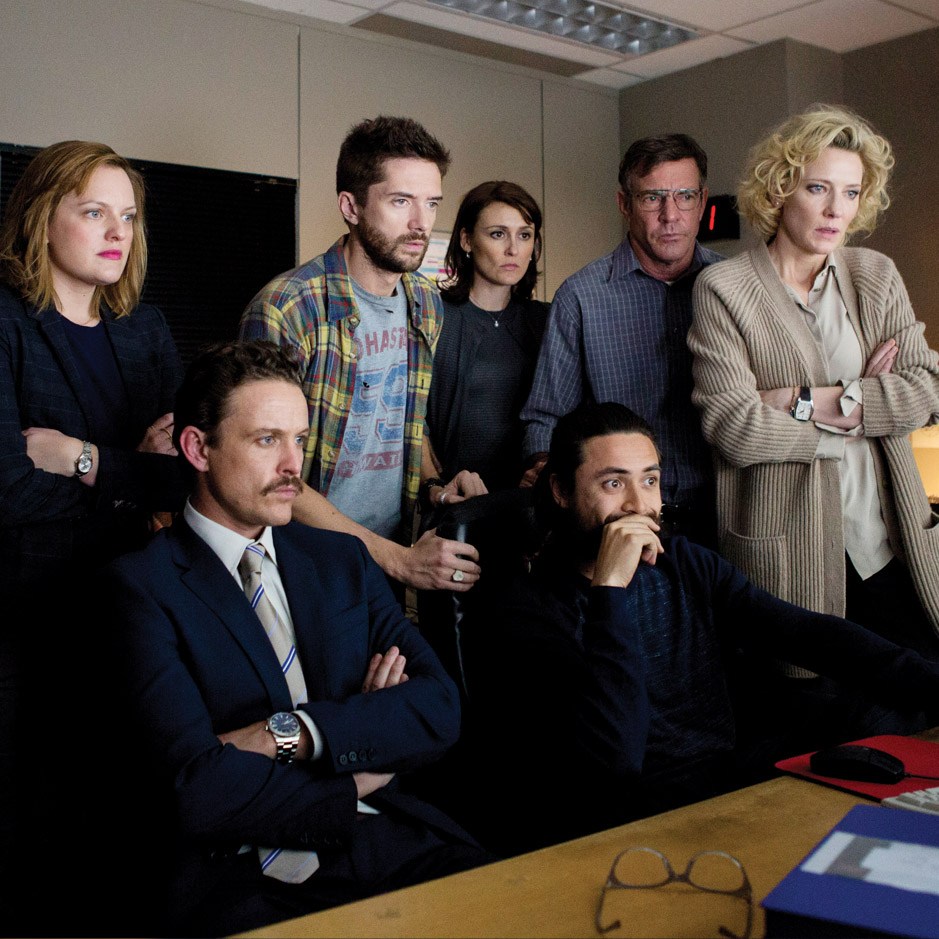
The third level of avoidance is ideological. I am increasingly unable to pass any kind of aesthetic judgment on fact-based films whose primary purpose is the naked advancement of a left-wing agenda. The most recent example is, of course, Truth, the alternate history of the 2004 incident in which CBS anchor Dan Rather and his producer Mary Mapes fell for a con in which she was passed fraudulent documents about George W. Bush’s National Guard service. I know too much about this case not to know that every second of Truth is a lie, and I know too much about myself not to know that the sight of Cate Blanchett and Robert Redford whitewashing one of the greatest journalistic crimes of my lifetime would fill me with an unappeasable rage that would last days beyond my viewing of it.
The same is true of Kill the Messenger, a similarly shocking effort to rehabilitate the posthumous reputation of a conspiracy-mongering obsessive from the 1990s named Gary Webb—who wanted the world to believe that the CIA was responsible for the crack epidemic and whose own newspaper disavowed him and his story on it.
Earlier in my life as a critic, I would have relished the opportunity to take these movies down, to expose their falsities and fallacies and deceptions. And I salute those, like my friend Kyle Smith at the New York Post, who do so. But the anger the mere thought of these films provokes in me no longer motivates; it depresses. I will force myself to do it if I have to, if I feel the record simply must be set straight, but I admit I was thrilled when Scott Johnson of Powerline, the blog that first surfaced the Rathergate fraud, took on the task of debunking Truth in these pages so I could spare myself the pain.
I may be neurotic, but I’m not a masochist.