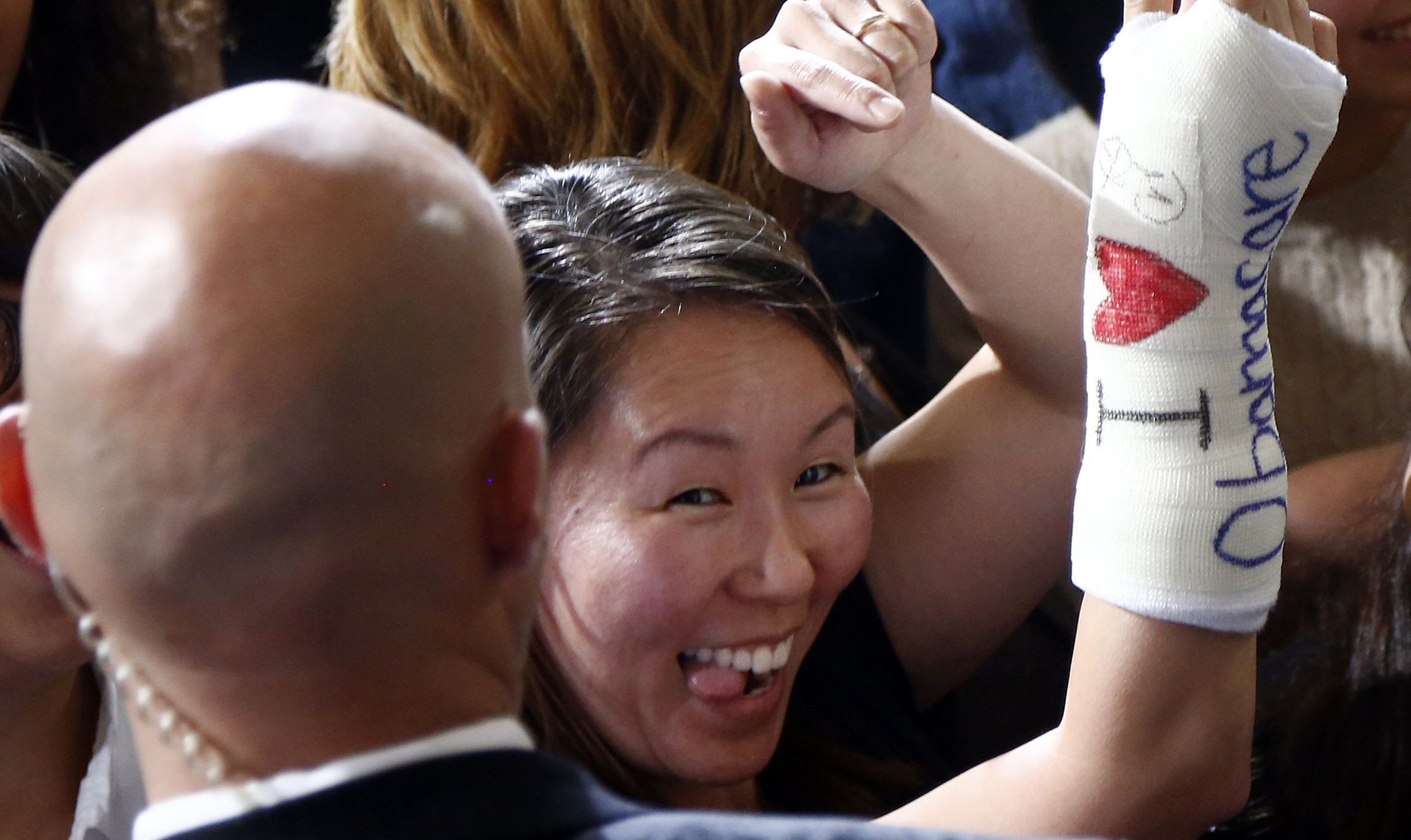
Even though Obamacare premiums are soaring by an average 25 percent next year, the average price is still cheaper than before the law went into effect, according to one expert.
Open enrollment for Obamacare started Tuesday, with higher premiums and less choice facing most consumers. Customers in some states could see jumps of 50-70 percent or more.
Recommended Stories
However, 2017 rates would have to rise 44 percent to match 2013 rates for the individual market, which is for people who don’t get insurance through work, said Paul Ginsburg, director of health policy for the Brookings Institution.
Ginsburg and Brookings fellow Loren Adler conducted a study published in July that compared rates in the individual market between 2013 and 2014, the year that Obamacare’s exchanges went online. Obamacare comprises most of the individual market.
The analysis found that 2014 individual average premiums were 10 to 21 percent lower than in 2013.
In 2014, the average premium was about $3,800, down from as much as $4,700 in 2013, according to the analysis from Adler and Ginsburg.
Ginsburg told the Washington Examiner that premiums would have to rise by 44 percent on average to match pre-Obamacare totals.
“If they went up 25 percent, that would still put them 15 percent under,” he said.
The analysis was based on Congressional Budget Office estimates of average individual market premiums in 2009, which is the most recent pre-Obamacare year the nonpartisan agency provides an estimate for.
The 2014 Obamacare premiums came in 20 percent below the budget office’s projections, the analysis said.
Another expert said that it is more difficult to discern between pre-and post-Obamacare premium levels because of dramatic changes to the insurance industry caused by the law.
For instance, insurance companies before 2013 could deny coverage to people with pre-existing conditions, which kept their costs down.
“The individual market was not particularly attractive to older individuals or individuals who had any pre-existing health condition,” said Elizabeth Carpenter, senior vice president at the healthcare research firm Avalere. “The market looked much different, certainly prior to the law’s passage.”
The Obama administration has responded to the news of higher premiums by pointing out that more than 80 percent of Obamacare enrollees will be eligible for tax credits to pay down the cost of health insurance.
It also points to the fact that projections remain below CBO estimates for 2017 premiums.
However, that projection may have been flawed, according to Brian Blase, a senior research fellow with the right-leaning think tank Mercatus Center at George Mason University.
Blase wrote in Forbes on Tuesday that the budget office made the estimate in 2009 and it involved “significantly and generally unforeseeable errors in key underlying assumptions having nothing to do with the [Affordable Care Act].”
Blase said the budget office’s estimates don’t take into account that Obamacare insurance coverage is “generally more limited,” including offering more narrow networks and and high-deductible policies.
“Therefore, it is not an apples-to-apples comparison to contrast 2017 premiums with what was projected in 2009,” he said.
