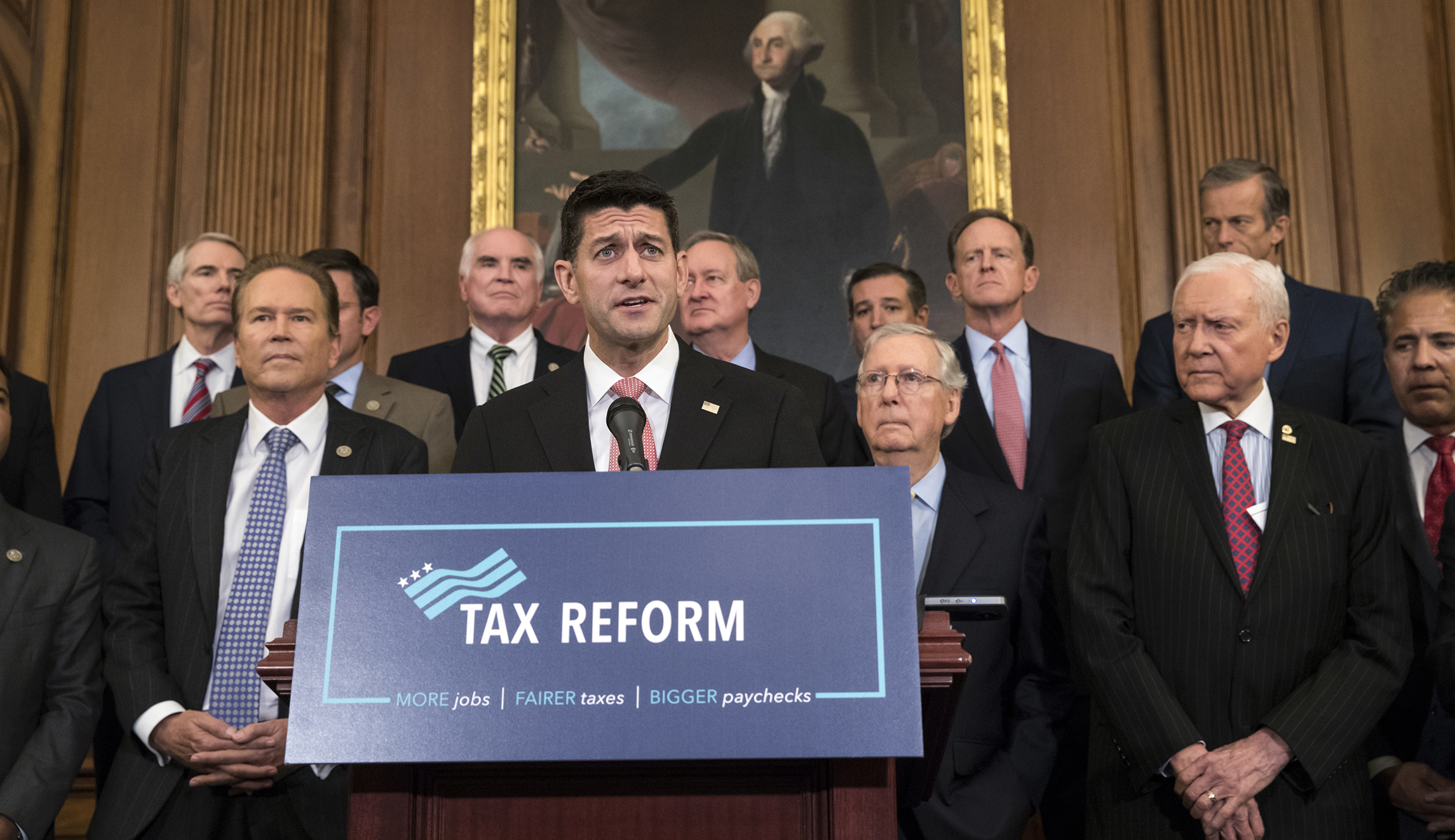
Republican tax plan gets a B+

There’s some good stuff in the House Republican tax reform plan that was released on Thursday.

After doubling the standard deduction for individuals and married couples, the plan consolidates tax rates to 35 percent, 25 percent, and 12 percent for the vast majority of American families. But retaining a 39.6 percent rate for those earning over $1 million a year, Republicans shield themselves from criticism that this is a handout to the rich.

Another positive for individuals is the elimination of the Alternative Minimum Tax, but retention of the Earned Income Tax Credit for low-income workers.

On the business side of the ledger, the corporate tax rate would plummet to 20 percent, putting the U.S. in line with tax rates in other major economies.

In addition, businesses will be able to write off major capital investments and research expenditures. Small businesses would also see relief of interest on outstanding loans. That said, there will be new protections against those who unjustly claim business rates on their income earnings.

Republicans add that they will make it easier for companies to bring capital abroad back to America. And in a play to President Trump’s campaign narrative, they pledge to eliminate incentives that lead U.S. companies to relocate operations abroad.

Still, there is some necessary pain to make the sums add up.

Most notably, Republicans propose to cap the mortgage interest deduction at $500,000 and the state and local tax deduction at $10,000.

While it would have been better to eliminate those deductions entirely, it’s good that Republicans are paring them back. Absent these tougher steps, the tax bill would have thrown hundreds of billions of dollars in new debt onto the shoulders of younger Americans.

Nevertheless, there are big gaps in the plan.

For one, Republicans could have been truly bold by reducing income rates even further and offsetting that lost revenue with a national sales tax. They might also have eliminated the tax exclusion on employer-provided health care and office benefits.

Most important of all, we need to see Congressional Budget Office and reliable external scoring on what this plan means for the deficit.

However, as things stand, this looks pretty good.

Related Content
