

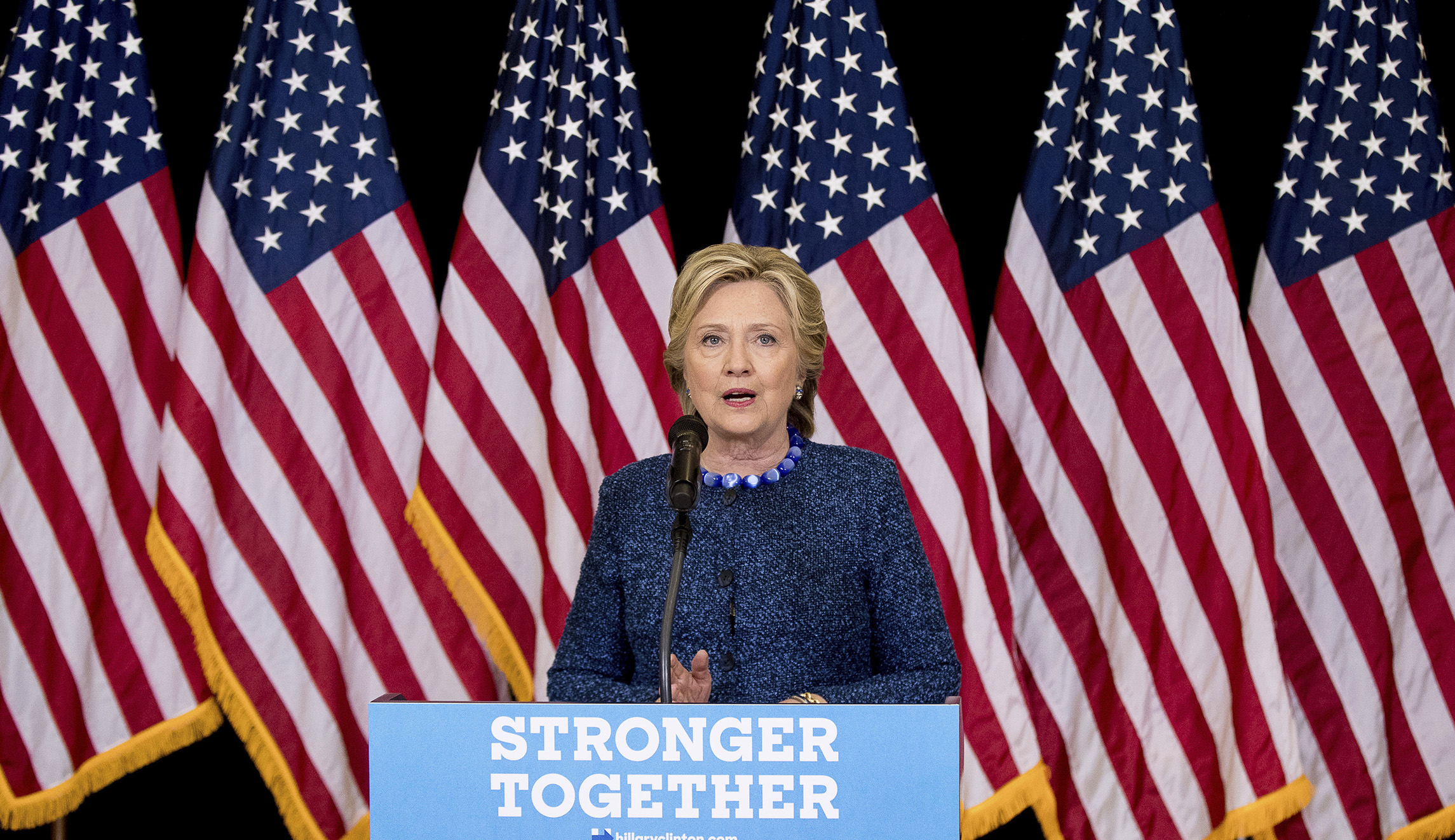
David Leonhardt, a columnist for the New York Times, said that the national media’s greatest shortcoming in the 2016 election was lending too much coverage to Democratic nominee Hillary Clinton’s email controversies.
In an op-ed published Tuesday morning, Leonhardt said the French press and its restraint in covering a similar controversy involving one of the candidates in that country’s recent election should serve as a model for the American media.
Recommended Stories


“Despite the mundane quality of the Clinton emails, the media covered them as a profound revelation,” he wrote. “The tone often suggested a big investigative scoop. But this was no scoop. It was material stolen by a hostile foreign government, posted for all to see, and it was only occasionally revealing. It deserved some coverage, but far less. … The overhyped coverage of the hacked emails was the media’s worst mistake in 2016 — one sure to be repeated if not properly understood. Television was the biggest offender, but print media was hardly blameless.”
The 2016 election was widely seen as a moment of reckoning for the national media. Many reporters and commentators stunned at President Trump’s surprise win publicly acknowledged they had “missed” his appeal and misunderstood his supporters.
Leonhardt’s suggestion that it was mass coverage of Clinton’s email controversies that tipped the election stands in contrast to overwhelming evidence that Trump was the target of more media coverage than his opponent.
A study by the right-leaning Media Research Center published just before the election showed that on the nightly network TV newscasts, Trump 40 percent more coverage than Clinton. In the coverage solely focusing on Trump, 56 percent of it “focused on the various controversies surrounding his candidacy.” For Clinton, just 38 percent of her coverage was related to her own controversies.
(It’s worth noting that the MRC’s chairman, Brent Bozell, was an intense critic of Trump throughout the election.)
A separate study published in December by Harvard looked at the network and cable news programming, as well as the national newspapers came away with similar results.
The study found that, in total, Trump’s coverage was 77 percent negative, while Clinton’s was 64 percent negative.
Trump lost the popular vote but swept most of the swing states that determined his win with the electoral college.
In an email to the Washington Examiner, Leonhardt said it’s a “reasonable debate” over where the news media was most negligent but he maintained it was not related to Trump’s popularity among his supporters.
“Clearly, the underestimation of Trump’s support was a problem with the overall media coverage,” he said. “On the other hand, it was not universal.”
He noted an analysis by the Times published on the front page of the paper in June that showed Trump may benefit from unexpected turnout among white voters.
“Even Trump and his aides expected to lose (unlike Team Romney in 2012), which is another way of saying that they also missed his appeal in some ways,” he said. “Again, I agree that the underestimation of his support was a weakness in the coverage. I just wouldn’t rank it No. 1.”
