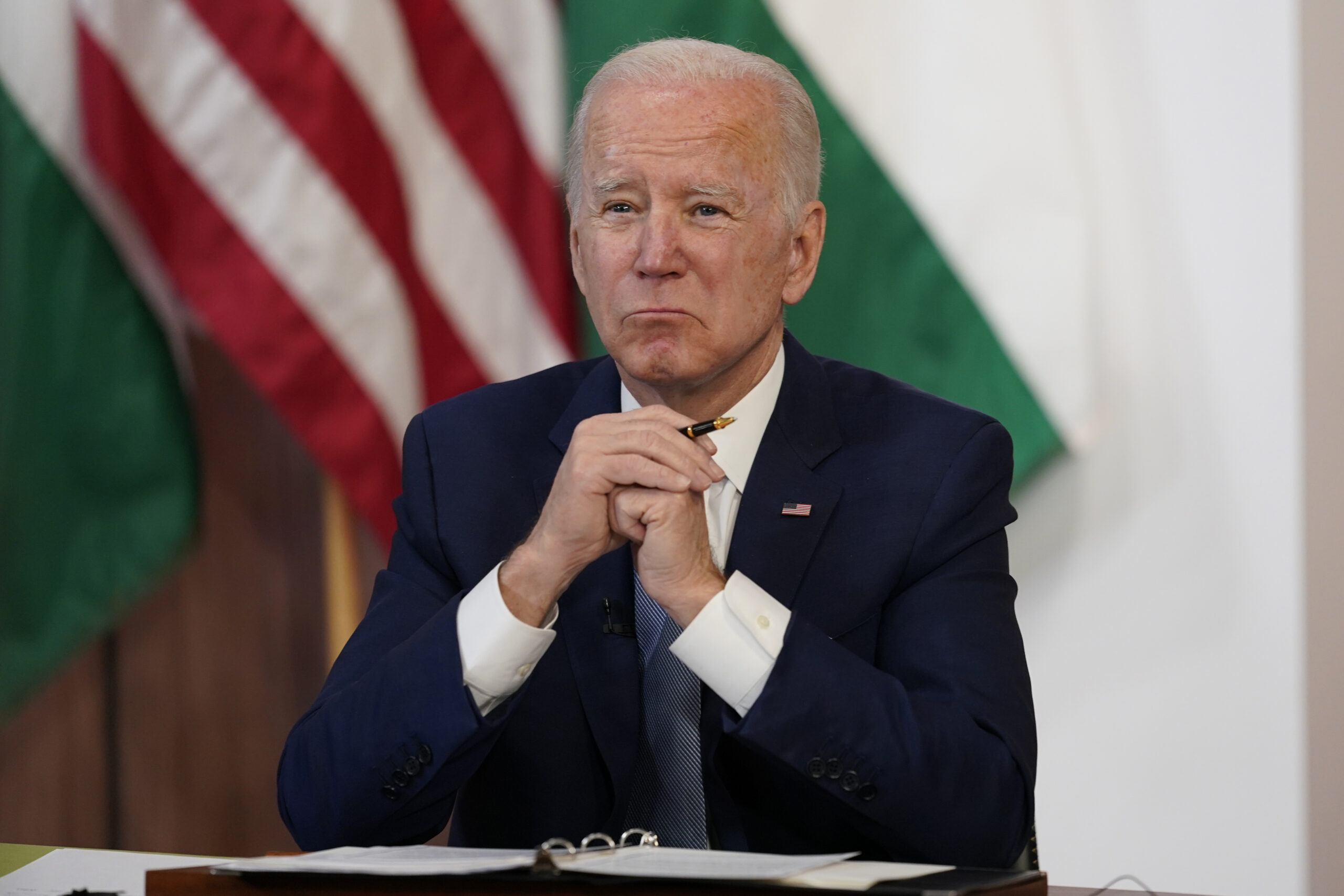
President Joe Biden is expected to announce how the United States and allies plan to address the global food shortages sparked by the war in Ukraine, according to senior administration officials.
The Black Sea region produces the majority of wheat supplies for Europe, Asia, Africa, and the Middle East, and the U.N. Food and Agriculture Organization’s food price index indicated on April 8 that chaos in Ukraine had caused global prices to rise an unprecedented 13% in March. The data represented the largest jump in food prices since the index was created in 1990. Brian Deese, Biden’s National Economic Council director, previewed the president’s announcement in late March.
GLOBAL FOOD PRICES HIT ALL-TIME HIGH, BROUGHT ON BY UKRAINE CONFLICT: UNITED NATIONS
The president said during his trip to Europe that the global community must be prepared to address world hunger and pledged follow-up action in conjunction with the other G-7 nations. To date, officials say the U.S. partnership with the U.N. World Food Program has assisted as many as 3.1 million “conflict-affected individuals in Ukraine, as well as 300,000 crisis-affected individuals in neighboring countries,” and the administration announced on March 24 the allotment of an additional $1 billion in new humanitarian aid, including food, shelter, clean water, medical supplies, and other forms of assistance for people affected by the war.
“It’s going to be real,” Biden said of global food shortages during a press conference. “The price of the sanctions is not just imposed upon Russia. It’s imposed upon an awful lot of countries as well, including European countries and our country as well.”
Senior administration officials familiar with the latest deliberations told the Washington Examiner that government agencies, at the direction of the president, are currently “identifying tools in the U.S. government’s existing food security toolkit and determining what programs are fit for this situation.” One official specifically highlighted the $5 billion in funding Biden allotted in September 2021 to the U.S. Agency for International Development’s Feed the Future initiative, a program launched by the Obama administration to fight global hunger and food insecurity in 2010. At the time, Biden also directed $5 billion to the Department of Agriculture for the explicit purpose of fighting domestic nutrition and food security, though the administration does not expect additional food shortages for American consumers.
Sarah Charles, assistant to the administrator of USAID’s Bureau for Humanitarian Assistance, testified on April 6 that the administration is “determining the specifics” of using the Bill Emerson Humanitarian Trust to address hunger sparked by Ukraine. The trust itself is a $260 million fund overseen by the USDA that allows the U.S. government to buy domestic wheat and send it directly to foreign conflict zones.
According to senior administration officials, the State Department is also “conducting extensive diplomacy to encourage all countries to refrain from export restrictions and excessive stockpiling, which can exacerbate supply challenges and price inflation, and to consider how to expand production of key cereal crops, oil seeds, and associated commodities.”
Furthermore, officials say the U.S. is contributing to the Global Agriculture and Food Security Program, a $1.7 billion international financing mechanism that has helped the world’s poorest countries increase investments in agriculture and food security, but did not provide exact U.S. contributions to the program.
Officials said the president plans to call publicly on “nations with food stockpiles to donate to U.N. humanitarian organizations to help mitigate the disruptions to food supply from the Black Sea region” but stressed that the “fastest” and “best way to stave off a global food crisis is for [Vladimir] Putin to end this senseless war.”
“Let farmers safely plant, harvest, and tend to their fields,” the official stated. “Let ships of essential food commodities and related goods sail freely. Let business and warehouses operate as they did before his invasion.”
Secretary of Agriculture Tom Vilsack was slated to travel with Biden throughout April to rural communities across the country but tested positive for COVID-19 over the weekend. The tour is ostensibly meant to highlight Biden’s trillion-dollar bipartisan infrastructure law but will also highlight the administration’s efforts to grow domestic agriculture, creating new jobs and lowering food prices for American consumers.
CLICK HERE TO READ MORE FROM THE WASHINGTON EXAMINER
Biden has taken significant action since entering office to address rising food prices across the country, which the White House Council of Economic Advisers has pegged as the third-largest contributor to the current inflationary run. The president specifically targeted meat-packing companies and has tasked the Justice Department and USDA with rooting out anti-competitive practices in the industry. Meanwhile, the administration set aside $1 billion in pandemic aid for small and independent meat and poultry producers.
