
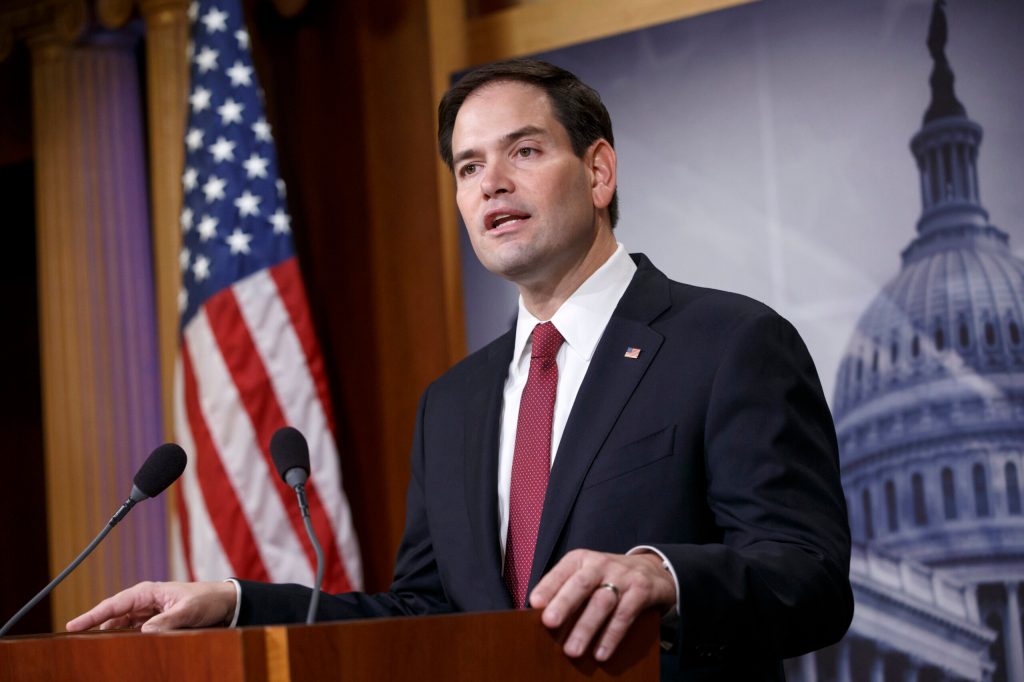
Marco Rubio has amassed an excellent voting record in the U.S. Senate, from a conservative, libertarian perspective. But on June 13, 2012, Rubio cast a very odd vote: he voted to save the indefensible federal sugar program.
To put it in perspective, this put Rubio on the other side from Sens. Pat Toomey, Tom Coburn, Jon Kyl, Jim DeMint, Mike Lee and Rand Paul.
Real journalism.Trusted by millions.
Unlimited access to in-depth reporting, expert analysis, and the stories that shape our country.
Already a member? Log in
The federal sugar program drives up sugar prices for American consumers and American food companies while putting U.S. taxpayers at risk, all to profit a sugar industry that is utterly dependent on big government for its existence.
Rubio is from Florida, which partially explains it. He’s justified his support for this corporate welfare on the grounds that Brazil also subsidizes its sugar. “If you do it unilaterally, you’re going to wipe out your agricultural industry,” Rubio has said when pressed on the topic in 2012.
It’s also relevant that the biggest sugar family in Florida, the Fanjuls, was supporting Rubio early in his long shot Senate race in 2010.
When Rubio was polling down near the single digits in March 2009, Pepe Fanjul and his son Jose both gave the maximum $2,400 to Rubio’s campaign, along with a pair of $1,000 contributions from two other VPs at the Fanjul’s company, Florida Crystals.
Three months later, while Rubio was still trailing by nearly 30 points, the Fanjuls co-hosted a Coral Gables fundraiser for the upstart conservative. They kept throwing fundraisers for him throughout the campaign.
The Fanjul fundraisers stuck out, because the business lobby was generally supporting Charlie Crist in the GOP primary. Similarly, the sugar vote sticks out because Rubio generally opposes corporate welfare — he’s firmly against the Export-Import Bank, and he introduced a measure to abolish Obamacare’s insurance bailout known as the “risk corridors.”
Battling corporate welfare is going to be a crucial matter for Republicans in the 2016 presidential race. For that reason, Rubio will need to make an accounting of his support for the sugar program.