

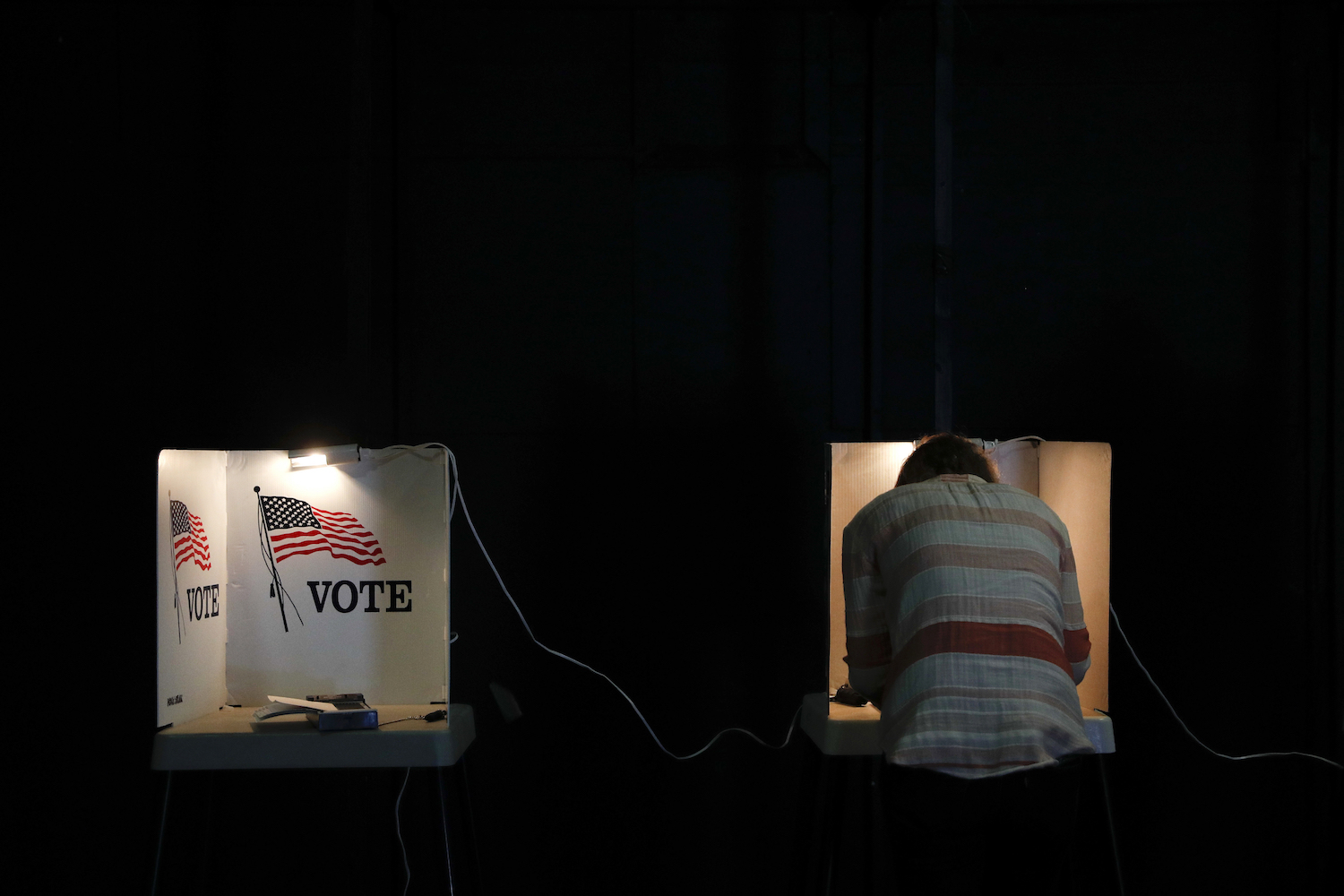
What if they held an election and nobody came out to vote? Something like that happened in Los Angeles’s Tuesday election for mayor. According to the Los Angeles Times, the total number of votes in the mayoral race was only 250,188, in a city whose Census-estimated population in 2015 was 3,971,883. Perhaps that number will be updated (California didn’t report its final presidential vote until some time in December), and the low turnout may be due in part to the fact that the race for mayor was not seriously contested: incumbent Eric Garcetti was re-elected with 81 percent of the vote.
This low turnout is not an anomaly in recent years: when Mayor Antonio Villaraigosa was re-elected in 2009 with no serious competition, turnout was a comparable 274,233 (I’m using Wikipedia numbers here). But in historic perspective, it’s quite low — the lowest since either 1937 or 1925. In 1937, turnout was 245,419 in the initial election, but since no candidate won an absolute majority there was a runoff, in which the turnout rose to 315,937. You have to go back to 1925, when turnout was 160,399, to find lower turnout in a decisive mayoral election. Of course, Los Angeles had fewer people then: the decennial Census counts were 576,673 in 1920, 1,238,548 in 1930 and 1,504,277 in 1940.
Stay informed.Stay ahead.
Join Washington Examiner for unlimited access to the news, analysis, and commentary that matter most.
Already a member? Log in
