

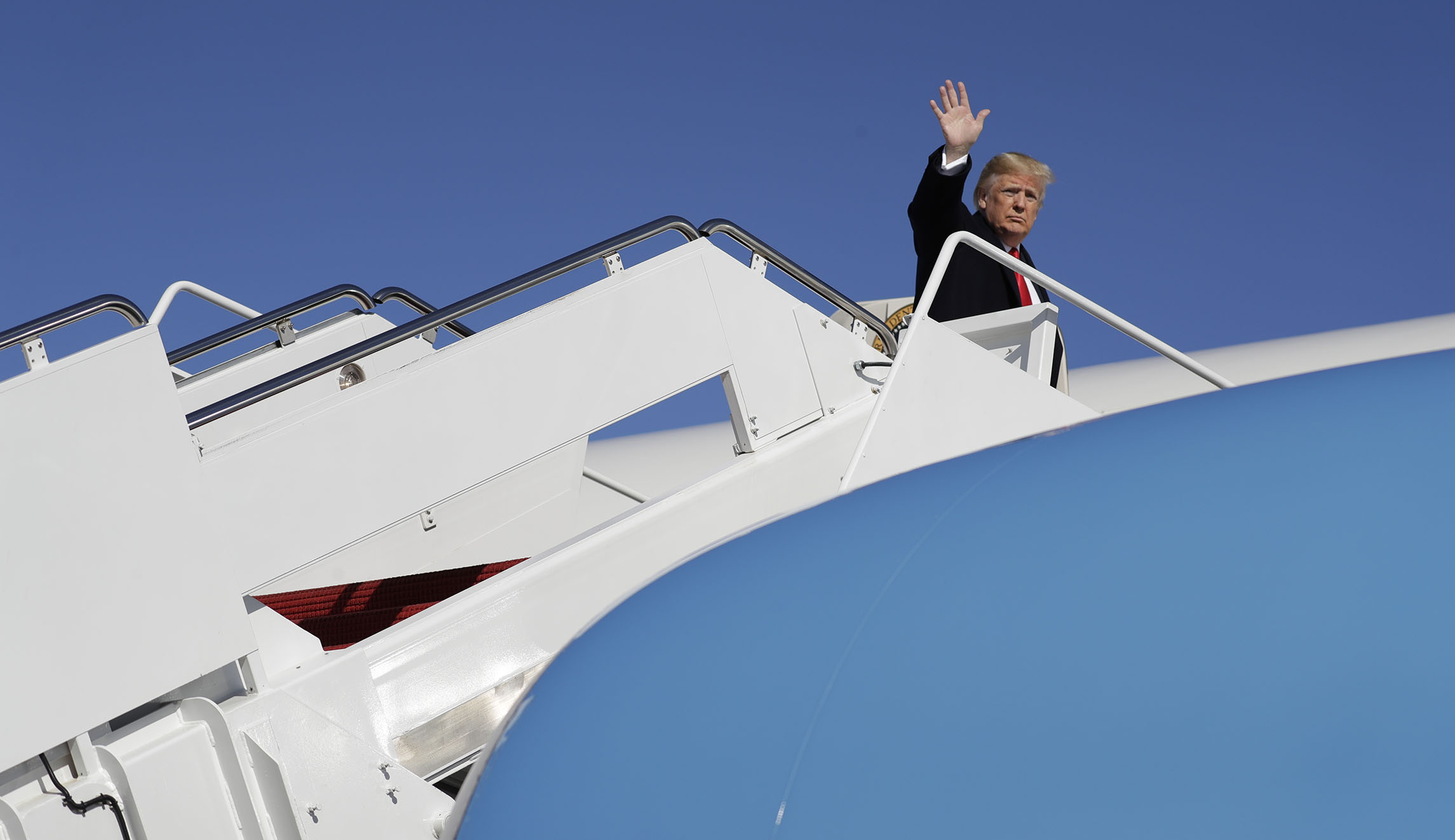
Just after the midterms, President Trump will jet off to Paris. If Republicans lose congressional control, that would likely set the stage for the president’s post-midterm agenda. Foiled with domestic policy at home, Trump would look abroad for clear Republican victories, now more difficult in Washington. And it would be the right move.
With an eye toward his 2020 campaign and long-term Republican support, he would do well to focus on making clear that the Trump presidency, despite its critics, brings foreign policy victories beyond the lackluster performance in the first two years.
Recommended Stories


Although Trump did eventually make good on his promise of revising the North American Free Trade Agreement and did sit down for a historic summit with North Koran dictator Kim Jong Un, there is still no denuclearization agreement with North Korea, no end to the trade war in China, an ongoing (and going badly) war in Afghanistan, no new deal with Iran, and worsening relations with key allies in North America and Europe, not to mention an ongoing threat of Russian interference and aggression.
For the midterms, the most important of those issues is the trade war, which is hindering what could be an even stronger economy. But beyond that, Trump has largely been able to focus the election on domestic policy, such as immigration, tax cuts, healthcare, and the economy. That has allowed Trump to largely escape scrutiny on foreign policy goals and would allow him to push ahead with his agenda post-election.
For the Trump administration to be successful, Washington needs a clear, realistic plan on foreign policy objectives. With diplomatic efforts already inching toward progress in North Korea and an upcoming meeting with Chinese president Xi Jinping, these would be good places to start.
For China, that means not just sloganeering about meeting and deal-making with President Xi, but a commitment to doing so, paving the way for the end of the tariffs imposed as temporary measures to bring Xi to the negotiating table. Additionally, Trump and his negotiating team needs to be ready to reconsider their approach to deal-making with an eye toward Chinese history and domestic policies, which make any agreement where Xi is seen to be giving into Washington highly unlikely. At the G20 summit in Argentina, Trump will have a great opportunity to make real progress toward a deal and he should wholeheartedly embrace it.
In talks with North Korea, the Trump administration would do well to develop a clear message and realistic understanding of what North Korea is likely to concede (It’s not going to be an all-out and immediate hand over of nuclear weapons). Trump also needs to avoid falling into the same trap he did in Singapore, by giving up key bargaining chips, including a meeting with the U.S. president, in exchange for nothing substantive when it came to North Korea actually cutting down on its nuclear weapons and mitigating the threat posed to the U.S. and its allies.
A solid denuclearization agreement in North Korea, concessions from China on trade policy — these would be huge victories, impossible for Democrats to argue with, and surefire talking points for Republican leadership. So would a robust post-Brexit trade agreement with the United Kingdom.
These would also be victories that have a real, positive impact on the United States. North Korea poses a serious security threat while China’s unfair trade policies, with an eye towards strengthening its military, presents both security risks and economic loss for the U.S.
If the midterms don’t shape up to be quite the victory that Trump is predicting, he would do well to make progress where he can: abroad.
