

Donald Trump is an embarrassment. It would be better for the country if he were president for at most one term. It would be desirable that his manner of governing go down in history as an aberration; that his form of conservatism be judged a detour from the broad path of a mostly praiseworthy movement; and that his type of Republicanism be seen as a cul-de-sac from which the GOP finds an honorable exit.
But he is our president and presumably will be our president for the next three and a half years. Many individuals we admire have joined his administration, or have stayed on since his taking over the reins of the executive. They therefore work, if only at times willy-nilly and at very different degrees of remove, at his direction. These individuals signed on or stayed on only incidentally to work for Donald Trump. They signed on or stayed on to serve their country.
Recommended Stories


These honorable men and women have a tough job. The Trump presidency is deficient in conception and problematic in execution. Those who would be truth-tellers or guides have to contend with a host of flatterers and enablers. Conservatives have to deal with devotees of various forms of Trumpism; the public-spirited have to beat back those seeking the advancement of their careers rather than their country. Those who seek to serve the public while employed in the Trump administration do their best—and then worry that they’ve not been able to do enough.
We recently happened to spend some time, in different contexts, with some of these honorable men and women. They are patriots—real patriots, in contradistinction to the juvenile “patriots” of cable news and talk radio. They deserve encouragement, support, and gratitude. And we hereby take a break from our usual editorializing on policy, personnel, and process to express it.
We do so in part because they get little appreciation from anyone else. Trump loyalists are suspicious of them. Some Never Trumpers indulge in an indiscriminate loathing of everything that is in any way connected with the Trump administration, and can’t distinguish the public-spirited from the rationalizers and opportunists.
And of course progressives lack all appreciation for these public servants. This lack of appreciation is not just a matter of disdain for anything associated with Donald Trump. It is a function of the progressive cast of mind.
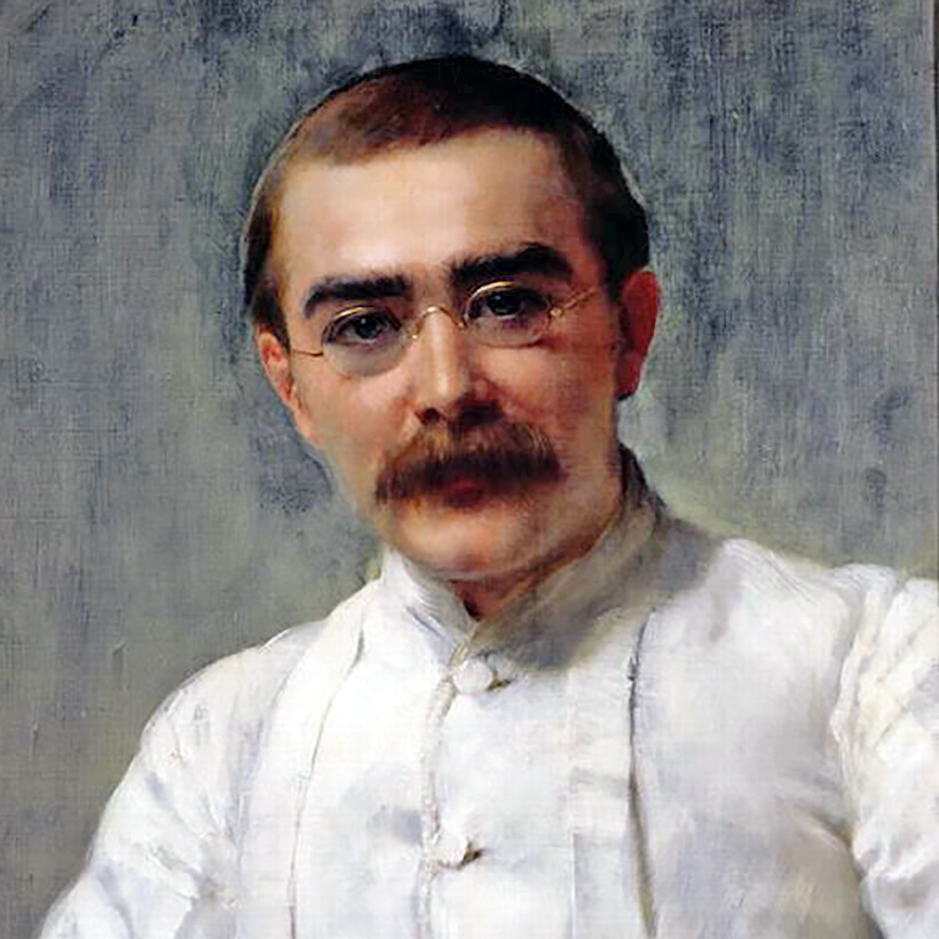
This is nowhere better captured than in George Orwell’s great essay on Rudyard Kipling, written in 1942. The anti-imperialist socialist had complicated views of the imperialist Tory. But Orwell was particularly impressed by one aspect of Kipling’s attitude towards politics—and towards life:
Later in the essay, Orwell returns to Kipling’s “sense of responsibility”:
When, after Trump, the party and nation reemerge into the sunlit uplands of a happier politics, those who took responsibility during these difficult years will have a role to play. Like Anthony Eden and Duff Cooper before them in the Great Britain of the 1930s, these men and women should serve in office as long as they can do good. If they find it necessary to leave as a matter of principle, they should of course do so. But in either case, they will deserve the thanks of their fellow citizens.
