The first rule of the GOP convention is that there are no rules

It was a blatant mockery of democracy.

On the floor of the 2012 Republican National Convention, a handful of delegates had compiled the necessary signatures to propose an amendment to the rules package passed out of the Rules Committee. Those rules took power away from state parties and disenfranchised delegates for Ron Paul.

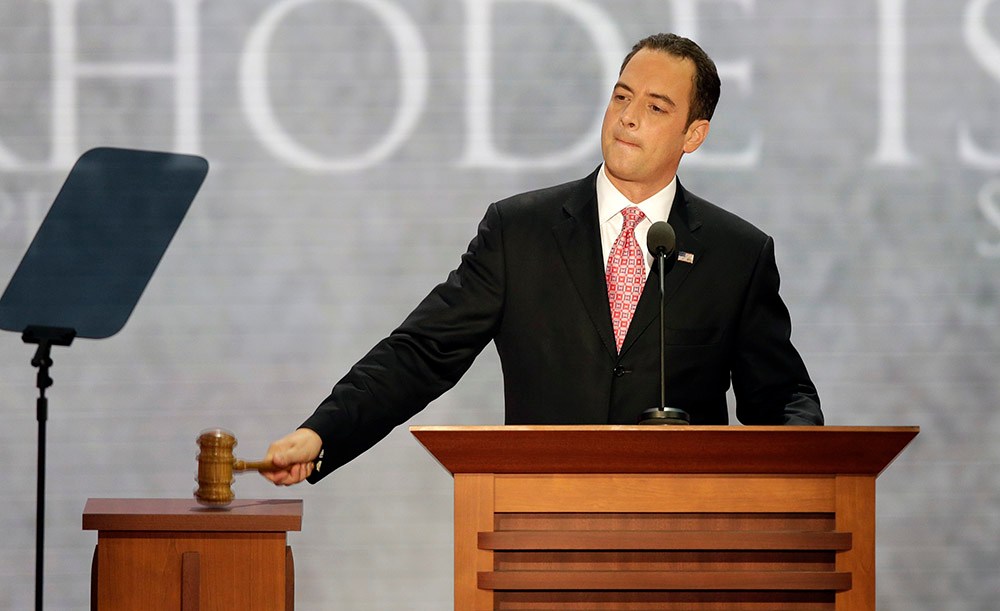
RNC Chairman Reince Priebus introduced the new rules for approval by the full convention. A handful of delegates — Tea Partiers, Ron Paul delegates and other conservative activists — tried to introduce their amendments. It was fairly quiet in the hall, and the dissidents were yelling. Priebus simply ignored them.

Priebus said that “without objection” he would move to a final vote on the rules. The objections were loud and furious. Priebus called the vote anyway. The “Ayes” were audible. The “Nays” were overwhelming. “In the opinion of the chair, the Ayes have it,” Priebus banged the gavel.

A Maine delegate grabbed her delegation’s microphone to object, and to call for a roll-call vote. Her mic was turned off. She called convention officials backstage. They didn’t answer.

The dissidents took up a chant: “Point of order! Point of order!”

Priebus ignored it, and handed the gavel to John Boehner, who continued in the railroading.

The delegates’ anger and exasperation were palpable. The establishment had railroaded them, winning because they controlled the microphones. It was a farce.

Imagine a similar fight, but instead of about rule changes, it’s over who is the Republican nominee for president.

Without doubt, Republican Party leaders — Reince Priebus and his lieutenants — have the power to handpick the nominee, regardless of how the voting turns out. They can change the eligibility rules for delegates. They can unbind delegates. They can change the rules on which candidates can be put up for nomination, and they probably will: GOP leaders told my colleague David Drucker that they don’t consider the 2012 candidate rules binding in the least.

And the party leadership can pass any of these rule changes over the objections of a majority of delegates, as that 2012 performance indicated.

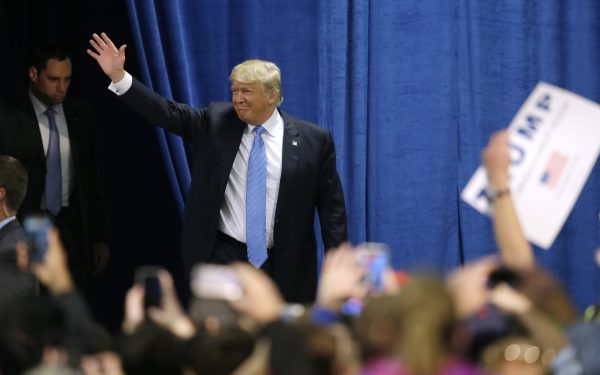
If Donald Trump wins a majority of delegates through the primary process, and then party officials and delegates tweak the rules, ignore motions and fudge vote outcomes in order to hand the nomination to someone else, it would be a coup. And violence would be unsurprising.

But any plausible course of events that results in Trump not winning the nomination would be a coup in the eyes of Donald Trump. He has repeatedly dismissed as “arbitrary” the rule requiring a candidate to win a majority of delegates, insisting that a plurality should be adequate for nomination.

Trump is nearly guaranteed to finish first in the delegate race — Ted Cruz would need to win 60 percent of remaining delegates in order to beat Trump. But if Trump doesn’t win on the first ballot at the convention, Cruz could certainly win on the second ballot, because John Kasich and the minor candidates have more than 320 delegates. Compounding that problem for Trump, many delegates pledged to Trump would flip when the rules allow them to — as early as the second ballot.

Trump would call this a coup, even though it is the old-fashioned way of nominating a candidate.

So anything but a Trump victory is a coup by Trump’s definition. The perception of an undemocratic coup will hurt the party. Will it hurt more than having Trump at the top of the ticket? It depends on how much of a coup it is or appears to be.

There is a sliding scale of coupness, ranging from not-a-coup-but-Trump-will-call-it-that to wow-they-stole-the-nomination-from-him.

At the left end of this scale would be Cruz winning on a second ballot after Trump attained a plurality. At the right end would be a 2012-style railroading on the convention floor. In between are dozens of possibilities.

Will the RNC reinstate or discard Rule 40(b), which only allows candidates to be entered into nomination if they win a majority of delegates in eight states? This 2012 rule would leave only Trump and (probably) Cruz eligible as candidates.

Will the RNC change other rules at the last minute? Will they disqualify any Trump delegates?

How close will Trump be to a majority of delegates? Trump winning 1,236 and then losing anyway would look more like a coup than would Trump winning 1,100 and then losing. It could also seem less like a coup if Cruz were to beat Trump in the delegate race and the popular vote from this point forward.

In any event, everything will be about appearances. There are no real rules here — literally, the RNC gets to make them up as it goes along. There is also very little precedent. And Trump has shown himself unfettered by reality in his pronouncements.

The RNC will either be victim to a hostile takeover by Trump, or it will be accused of conducting a coup. It’s a good time to be a Democrat.

Timothy P. Carney, the Washington Examiner’s senior political columnist, can be contacted at [email protected]. His column appears Tuesday and Thursday nights on washingtonexaminer.com.

Related Content