

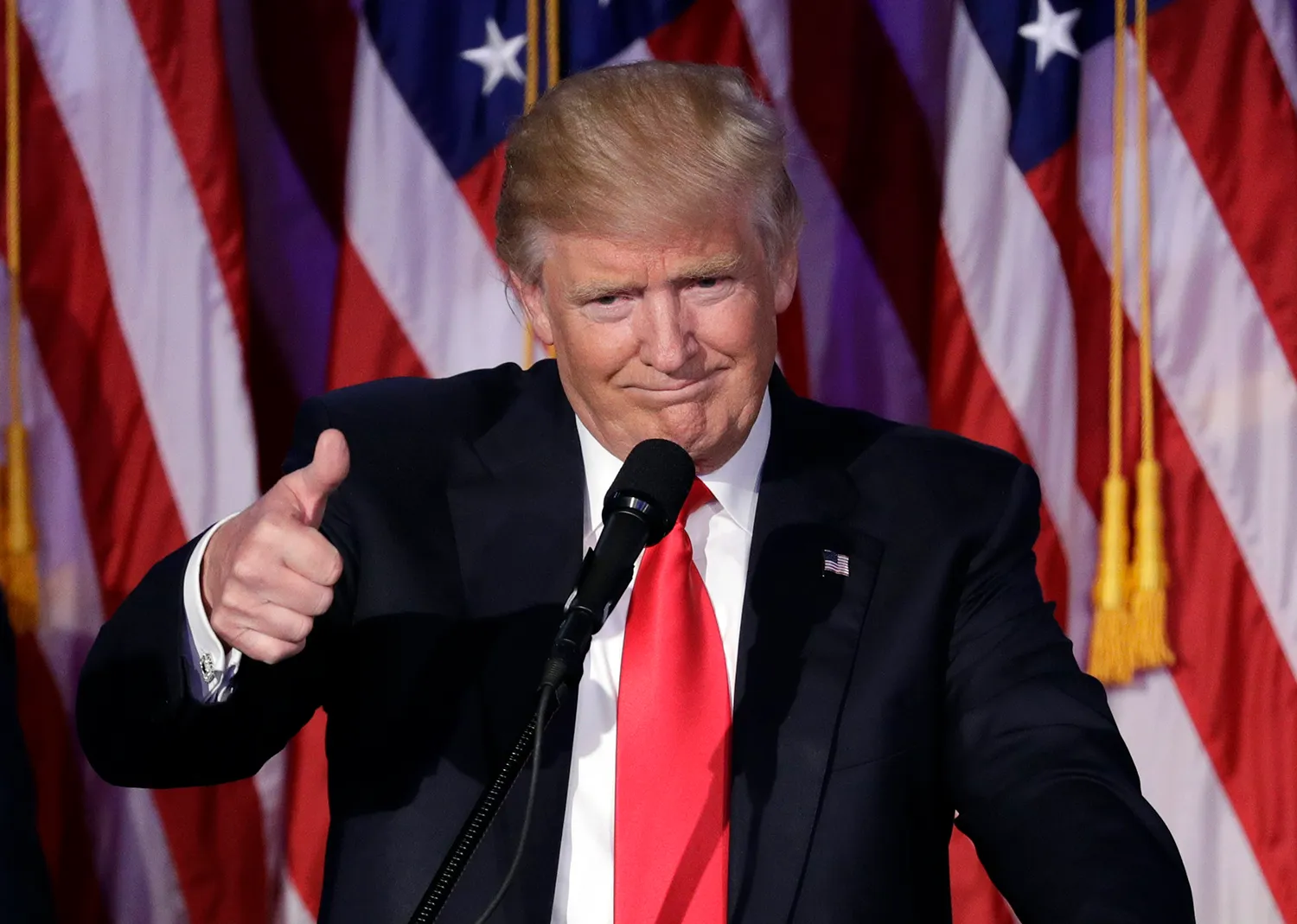
National security experts talked with the Washington Examiner on Tuesday night and Wednesday morning about their initial thoughts on the election of Donald Trump and what it means for the future of defense.
Mackenzie Eaglen, American Enterprise Institute:
Recommended Stories



This wasn’t just a win, it was a sweep and an unlikely one and a very difficult one with an unyielding Electoral College favoring Democrats.
Like the markets after Brexit, everything will calm down in a couple of days after Washington sees that he is going to appoint some of their own and smart people to surround him as president. The rest of America is already celebrating.
Concerning national security, many of Washington’s establishment will see familiar faces sprinkled throughout Trump’s Cabinet and senior appointee preferences. Names include Sen. [Jeff] Sessions and General Michael Flynn, of course, but then there are other reasonable and respectable people such as former Congressman Mike Rogers.
Benjamin Friedman, Cato institute:
One obvious point is that we are likely to see a big defense spending boost, with BCA caps on defense lifted if not abolished. That is unfortunate, as the caps force needed choices and spending discipline.
A more important one is that we face potential for more wars and genuine danger. Yes, Clinton is hawkish, but Trump, if we take his campaign seriously, is belligerent – he suggested bombing Iran over their ships circling ours and has a worrisomely off-the-cuff approach to matters of war. With a hawkish Republican Congress uninterested historically in restraining presidential war powers, we face potential for heightened conflict and dangerous international confrontations. Having a person like this – a belligerent temperament with little willingness to learn about issues — in control of nuclear weapons and U.S. military forces is frightening.
The civil liberties situation is even more alarming. Here is a president who threatens to ban Muslim immigration, torture terrorist suspects, kill their families, send U.S. citizens to Gitmo, and prosecute rivals because he dislikes them. That is banana republic stuff. The fact that we elected such a president, if only by electoral college (not yet clear), should give pause to all those who brag about how exceptional we are.
My hope is that having a person so manifestly unsuited to be president will awaken Congress to its powers to restrain presidential action. My fear is that the Republican Congress will not play that role.
Todd Harrison, Center for Strategic and International Studies:
One thing we should all remember when it comes to the defense budget under a new administration is that the president requests a budget but only Congress can appropriate funding. So the direction of the defense budget depends to a great extent on the makeup of Congress and how well the president is able to work with Congress to reach a budget deal.
[With Trump’s win] and Republicans hold[ing] smaller majorities in the House and Senate, I would not assume this means traditional single party control of government. Many Republicans did not support Trump, and there are significant policy difference within the Republican Party, especially when it comes to foreign policy and trade. Democrats will still have enough votes to block significant legislation in the Senate, and that is an important power. I think this outcome likely means continued or even worse gridlock and could actually make it harder to reach a budget deal, especially if Trump governs as he campaigned.
Andrew Hunter, Center for Strategic and International Studies:
In the realm of defense and foreign policy, the new president has challenges to face and much damage to repair. From the caps imposed under the Budget Control Act which exacerbated a major readiness gap and created a debilitating shortfall in the pipeline of modern defense systems, to the undermining of our alliances and partnerships around the world caused by conflicts in Syria, the Ukraine, and the South China Sea and the overheated rhetoric of the campaign. In addition to damage control, however, there are two structural challenges for DoD that must be tackled right away. DoD must get a handle on the ever-growing support costs for our shrinking military force, and it must meet the need to recruit and retain a new generation of military and civilian leaders with the skills required for future warfare. Hopefully the new president can get a running start on these issues by rapidly building out the transition team, lining up a slate of nominees prepared to tackle these issues early in the next administration, and beginning a dialogue with leaders on the congressional Armed Services committees that will allow real progress to be made on these structural challenges.
James Jay Carafano, Heritage Foundation:
On defense, I suspect, a Trump Pentagon will deliver on the promise of peace through strength.
I suspect a lot of foreign policy will look the opposite of Obama, but little like Bush. There will be a serious effort at a proactive foreign policy that in particular tries to regain momentum on European issues; bring stability to the Middle East, and manage competition with China. Peace through strength will be a theme both for the United States and what the United States will expect from its allies.
Bryan Clark, Center for Strategic and Budgetary Assessments:
National security and defense issues did not play prominently in the campaign, and when they did the discussion was largely thematic: strong or weak on defense, leading or following against Islamic terrorism, etc. Donald Trump promised to grow the military — most specifically building the Navy to 350 ships — and end mandatory budget caps, but did not address other specific initiatives or how to pay for them. Hillary Clinton did not promise specific initiatives or changes, but focused instead on principles and priorities for security strategy and defense management.
From a policy standpoint, Donald Trump’s positions are in some ways similar to those of President Obama, with a focus on using alliances, international structures, and non-military tools to pursue U.S. national interests. President-elect Trump’s statements during the campaign suggest he will be more likely to use force in response to specific threats, however, compared to President Obama’s reticence to quickly commit force.
The most significant and pervasive institutional challenge DoD faces today is the budget caps associated with sequestration. Donald Trump pledged in the campaign to eliminate sequestration. He may be able to find partners for this effort in Congress among Republicans advocating higher defense budgets. It is doubtful, however, the budget caps will be completely eliminated due to concerns of congressional deficit hawks. The budget caps require increases in defense spending to be matched by increases in non-defense spending, budget increases will likely be constrained because defense budget advocates in Congress are often those who also do not want to raise non-defense spending.
More important than current budget caps, however, is the fate of Overseas Contingency Operations (OCO) funding. The Obama administration has been very resistant to using OCO funding to make up for shortfalls created by the budget caps. Republicans in Congress have been increasingly willing to use OCO to cover base budget costs, but were countered by the administration and Senate democrats. There may be more willingness now to use OCO to support growth in military spending and the size of the military under a Trump administration.
That growth in the military is likely to occur by arresting the ongoing drawdown in Army and Marine forces, and increasing the procurement of existing ship, aircraft, and vehicle programs. During the campaign Donald Trump did not address reform in military healthcare, base closure, or efforts to reduce acquisition program cost growth. It is unlikely initiatives such as TRICARE co-pays or fee increases or BRAC will be pursued by the new administration. It is likely a new DoD leaders will want to contain acquisition cost growth, as did their predecessors, but will rely on traditional approaches such as competition and multi-year procurement to manage costs. Because of a potentially higher risk tolerance regarding acquisition, a Trump administration could be more likely to start new major defense programs than was the Obama administration.
The current DoD leadership has paid much attention to innovation and strategies that use technology to overcome geographic and numerical disadvantages. Their “Third Offset Strategy” relies on unmanned systems, autonomy, information technology, and networks to overcome adversary defenses and project power on behalf of U.S. allies and interests. The Trump administration is likely to continue this effort’s intent, particularly in autonomy and networks, but without the level of emphasis that comes from the secretary of Defense’s personal involvement. New Third Offset-related initiatives such as the Defense Innovation Unit–Experimental (DiUX) and the Strategic Capabilities Office will likely be deemphasized or mainstreamed in the new administration to ensure their good ideas are brought into the defense acquisition process and they don’t turn into isolated contracting organizations.
National Defense Industrial Association:
NDIA offers its sincere congratulations to President-elect Trump and looks forward to working with his administration to support the needs of those entrusted with our national security. Particularly in this complex international security environment with both enduring and rapidly evolving challenges, a robust and innovative American defense industry plays an important role in our security, and NDIA remains committed to championing this cause on behalf of our 1,600 members. Through our work convening stakeholders, thought-leaders and experts, collaboration and forward-thinking solutions can be developed to address these challenges. We welcome an open and continued dialogue between military leaders and industry as we have experienced with past administrations.
Bryan McGrath, managing director of the FerryBridge Group LLC and an expert at the Hudson Institute:
I will not watch election night results. Instead, I will sit quietly by the fire in thought. I suspect that when I wake in the morning, I will be informed as to who our next president will be. It is a virtual certainty that I will believe that person utterly unfit for the job, irrespective of the outcome. Because I recognize this unfortunate fact in advance, I will instead spend my time thinking about how I can help rebuild my fellow citizens’ faith in the abiding goodness of our nation and its people, in the genius of its system of government, and its potential to enable and support the creative energies of thoughtful Americans everywhere. I want to be a part of helping Americans realize that we CAN do better than the contestants in this election, but that WE have to want to be better than we showed ourselves this time around.
