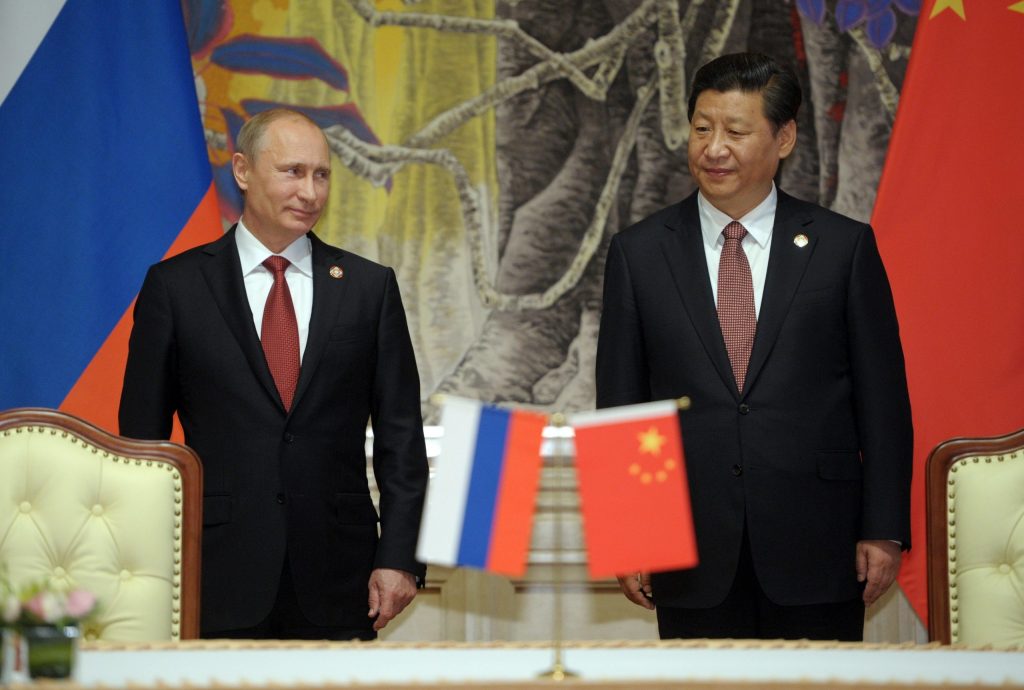
China complimented Russia for playing a “positive role” in the North Korean denuclearization process, in a warm message for Moscow on Friday.
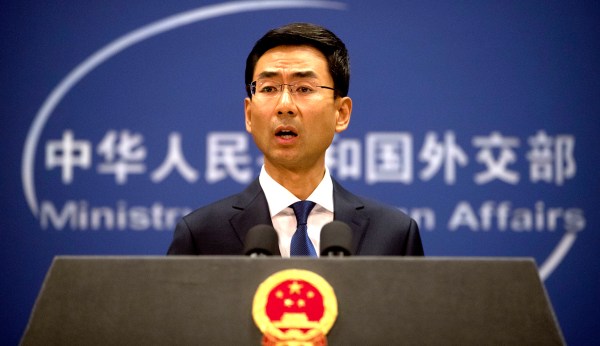
“China believes that the message sent out by the DPRK and Russia is positive and China welcomes it,” Foreign Ministry spokesperson Hua Chunying said. “China welcomes the development of bilateral ties and the enhancement of high-level exchanges on the part of the DPRK and Russia. We believe that this is conducive to promoting the political settlement process of Korean Peninsula issue and upholding the peace and stability of the Peninsula and the Northeast Asia.”
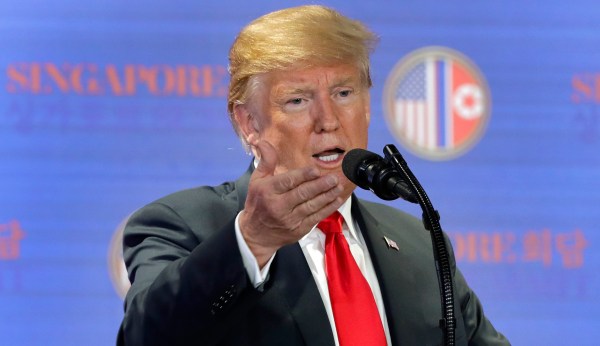
Russian Foreign Minister Sergey Lavrov met with North Korean dictator Kim Jong Un on Friday, even as President Trump renewed plans for a high-stakes summit during a meeting with Kim’s second-in-command.
Russia and China have cooperated throughout the international talks about Trump’s “maximum pressure” campaign, agreeing to some western-proposed sanctions while thwarting others.
U.S. officials have less respect for Russia’s role in the North Korea talks. “I think Russia has an inferiority complex and they’re looking for legitimacy, relevancy,” Rep. Ted Yoho, R-Fla., who chairs the Foreign Affairs subcommittee on the Asia-Pacific region, told the Washington Examiner.
Hua offered that status, at least rhetorically. “China welcomes Russia’s positive role in advancing the denuclearization of the Peninsula and promoting the political settlement process of the Peninsula issue,” she said.
That praise comes just days after a Russian official predicted that North Korea would use the upcoming summit to manipulate Trump and avoid abandoning its nuclear weapons and ballistic missile systems.
“The North Korean leader surely won’t agree to full denuclearization on the Korean Peninsula but will apparently give some concessions to help Americans save their face,” said Georgy Toloraya, a top Korea expert in the Russian Academy of Sciences, according to a state-run media outlet. “In this game, Kim Jong-un wins and Americans are forced to solve somehow the North Korean nuclear problem or pretend solving it.
He added, “This scenario quite suits Russia but the situation when South Korea, the United States and North Korea agree behind Russia’s and China’s back is unacceptable.”
Toloraya spent a career as one of the Russian Foreign Ministry’s top experts on the Korean Peninsula, in addition to a stint as a visiting fellow at the U.S.-based Brookings Institution. But Yoho downplayed the likelihood of the scenario described by the Russian side.
“I don’t think we’re going to get rolled,” Yoho said. “If we stick to our guns, you will see Russia and China get on the side of world peace versus having these conflicts going on, and I think China and Russia feel a little bit threatened that these talks may go on.”