

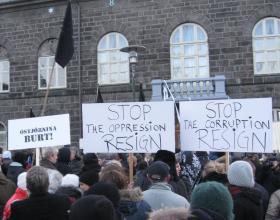
When Iceland’s financial system collapsed in the fall of 2008, the country’s future became scarily uncertain. Simultaneously, Iceland’s stock market crashed (down 77 percent in one day), the krona rapidly devalued (down more than 50 percent against the euro), the housing bubble burst, unemployment shot up more than 400 percent, and the country’s three large banks went bankrupt and were nationalized (leaving the government with debt eight times its annual budget). Iceland is not in a recession. It is in a depression.
Since then, the country has struggled to find a path out. Various bailout schemes fell through. A political crisis arose. And now the people of Iceland are facing a grim choice:
This, then, is the background to the decision by Olafur Ragnar Grimsson, Iceland’s president, to put the latest version of an agreement negotiated under duress to a referendum. Lord Myners, the UK’s City minister, has stated that if the Icelandic people were to reject the deal, they would “effectively be saying that Iceland does not want to be part of the international financial system”. After their recent painful experiences, Icelanders may wonder why that is so worthwhile. But without agreement to repay, a $10bn rescue plan funded by the International Monetary Fund and Nordic countries is now in doubt.
Martin Wolf argues that there should be some limit:
