
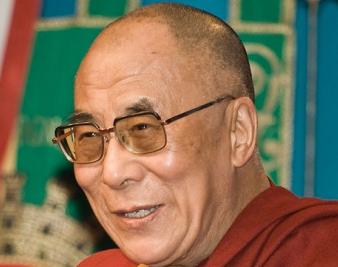
During his annual address to the Tibetan people on March 10, the fourteenth Dalai Lama of Tibet announced that he wished to complete his decades-long effort to divest political authority from the Dalai Lama’s own institution. While the media has characterized this as a retirement announcement, it is really the final stage of an effort he has been shepherding since the 1960s to shift political authority from monastic-led institutions to democratically elected ones. In his latest remarks, the Dalai Lama has proposed having the Tibetan parliament-in-exile, called the Kashag, pass amendments to the Tibetan constitution that would allow him to retire completely from political life in order to concentrate on his religious and humanitarian works.
At 76, the Dalai Lama surely deserves the right to retire. The question at this point is whether the Tibetan people and the rest of the world will let him. He has often had to drag the Tibetans kicking and screaming to accept the responsibility of democratic self-rule, and even his latest announcement has met with resistance from none other than the current elected prime minister in exile. Nonetheless, the Dalai Lama is doing what he can to prepare for the time after he leaves this earthly realm. Ultimately his success in creating a better future for the Tibetan people depends heavily on having Chinese interlocutors who are not driven by fear, mistrust, and misguided nationalism. Unfortunately, such interlocutors are nowhere to be found in Beijing today. If anything, things are worse.
Real journalism.Trusted by millions.
Unlimited access to in-depth reporting, expert analysis, and the stories that shape our country.
Already a member? Log in
In response to the Dalai Lama’s remarks, Chinese authorities predictably denounced his efforts at retirement as a “trick,” and continued their long-running rhetorical attacks, accusing him of “splitting the nation.” Earlier this week, the avowed atheists in Beijing also reiterated their intention to control the process of the Dalai Lama’s reincarnation, absurdly insisting that he has no authority to decide these matters himself. In addition, Chinese authorities announced that Tibet was closed to tourists for the entire month of March. While the authorities provided farcical excuses—too cold, and too crowded and busy with preparations to celebrate the anniversary of China’s May 1959 invasion—the real reason for this extreme measure was obvious: continued fears about a repeat of the widespread March 2008 protests against Chinese rule.
Even as it rolls out these menacing measures that further repress the Tibetan people, the Chinese government continues to try to put a happy face on the situation of Tibetans living under its rule. But as the Dalai Lama pointed out in his March 10 statement:
By contrast, the Dalai Lama considers the development of Tibetan democracy in exile as one of his greatest achievements and gifts to the Tibetan people. As Ellen Bork noted in a recent piece on the subject, by establishing a different kind of Tibetan political system in exile, the Dalai Lama and his colleagues challenge the underlying assumptions of China’s brutal and often racist authoritarian rule of Tibet. Until, and unless, China’s political system changes to the degree that it can relate to the imperatives that have driven the Dalai Lama to shed political authority and invest in democracy, the stalemate between the Tibetans and Chinese will grind on. Beijing likes to give the impression that time is on their side in Tibet: waiting out the Dalai Lama’s death, planning to replace him with their puppet, controlling the population through coercion, and forcing economic development at breakneck speed. They may see the present Dalai Lama leaving the scene as a boon to their ambitions, but he has spent the past 50 years instilling in the Tibetan people a sense that they deserve freedom and dignity. This is a legacy the Chinese leadership will have to contend with, and they are stunningly ill-prepared and ill-equipped to do so.