

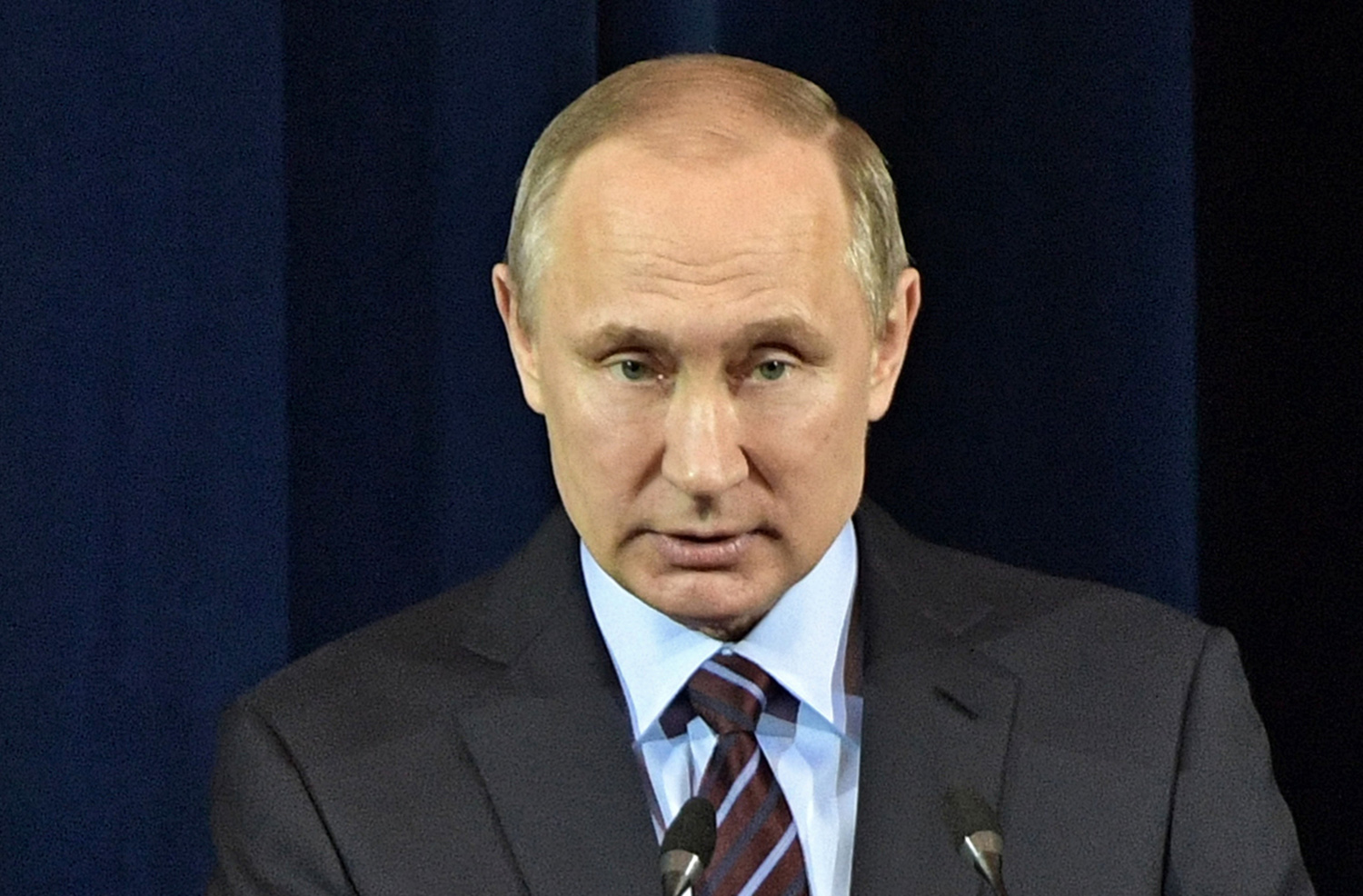
Russia on Wednesday vetoed a United Nations Security Council resolution that would have required an expansive investigation of the recent use of chemical weapons in Syria.
The resolution demanded “all parties [in Syria] cooperate fully” with international investigators, providing detailed instructions on the “unfettered access” that President Bashar Assad’s regime would have to provide. Russia vetoed the resolution, despite President Vladimir Putin and Sergey Lavrov’s repeated calls for an investigation of the attack, which they argue might not have been carried out by Assad.
Recommended Stories


“It is long past time for Russia to stop covering for Assad,” U.S. Ambassador to the United Nations Nikki Haley said before the vote. “It is long past time for Russia to push seriously for peace and not continue to be part of the problem.”
Putin and Lavrov disputed western claims that Assad had carried out the attack during meetings with Secretary of State Rex Tillerson, hours before the UN Security Council vote. “Just as in the case of the so-called Russian hackers and the chemical incidents in Syria, we would very much like to get some concrete evidence, not just words,” Lavrov said Wednesday.
Matthew Rycroft, the United Kingdom’s permanent representative at the UN, said the evidence is already in hand.
“Chemical weapons scientists at Porton Down, in the United Kingdom, have analyzed samples obtained from Khan Shaykun, and these have tested positive for the nerve agent sarin, or a sarin-like substance,” Rycroft said at the meeting. “The United Kingdom therefore shares the US assessment that it is highly likely that the regime was responsible for a sarin attack on Khan Shaykun on the 4th of April. This sickening use of chemical weapons — weapons that Asad agreed in 2013 to destroy – is just the latest in a long list of abhorrent acts.”
Haley introduced the resolution in part to force Russia into a difficult choice, according to one congressional Republican source. Russia would either allow an international mandate to probe Assad’s regime — an investigation potentially backed by the threat of UN-authorized military force — or undermine their own claims to want more evidence.
“For Russia, getting serious about peace starts by fulfilling its commitment to get chemical weapons out of Syria,” Haley said. “We urge Russia to use its influence to make Assad actually live up to his international obligations. That means giving investigators – who are already mandated through existing mechanisms – full access to the bases where the regime launched its chemical weapons attacks and access to anyone who might have been involved.”
But the western-backed resolution was too onerous for the Assad regime, according to Russian state-backed media. “The draft leaned heavily on the Syrian government in terms of demands to submit to an investigation of the incident,” explained RT, a Kremlin-run media outlet. “In the event of non-compliance with the terms, Syria could be exposed to military action mandated by the UN Security Council under Chapter VII of the UN Charter. The rebel forces controlling Khan Shaykhun were only asked to ‘provide delay-free and safe access’ to the site of the reported incident.”
