

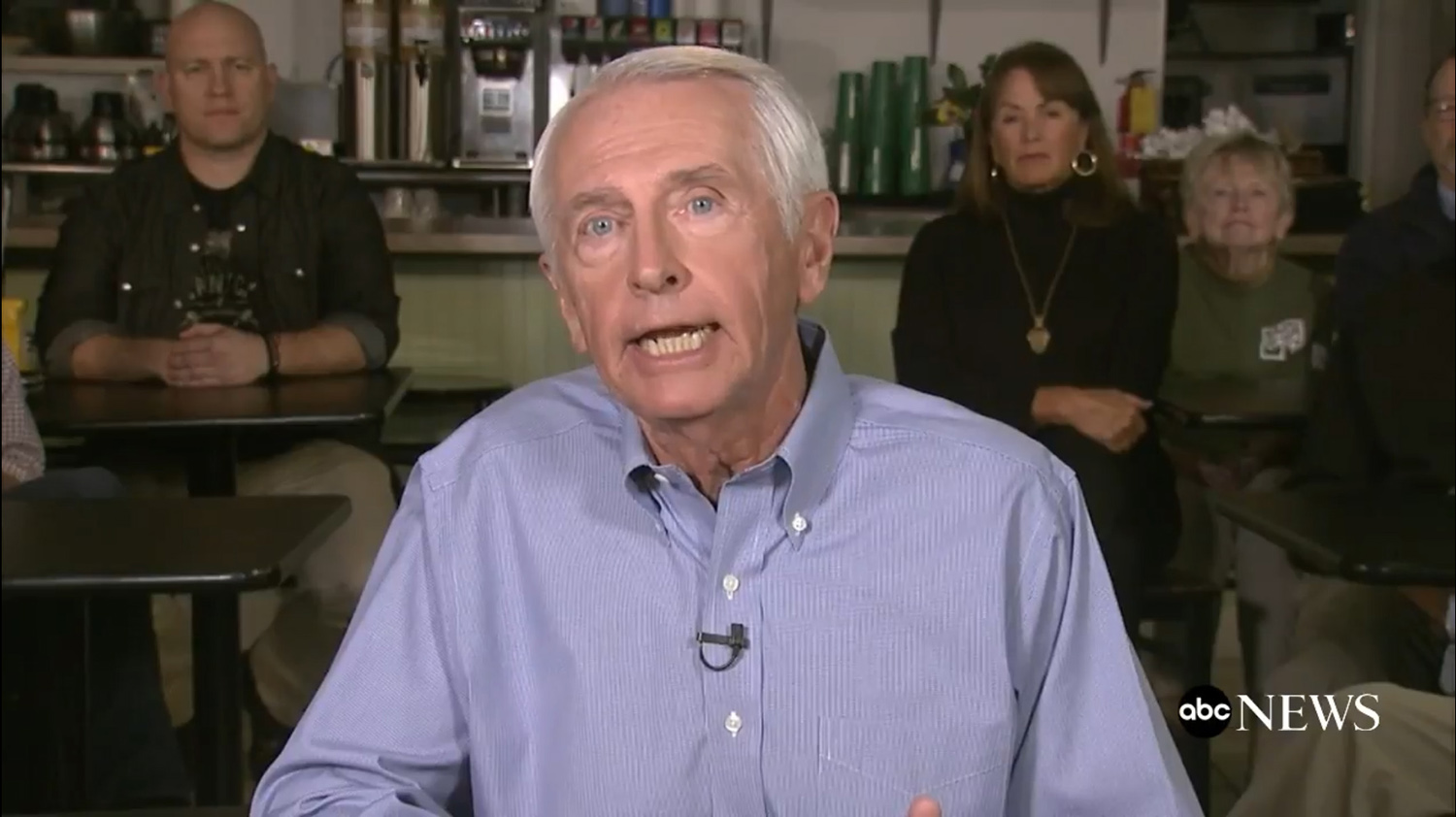
Former Kentucky Gov. Steve Beshear’s response to President Trump’s address last night was … well, it basically went over like a lead balloon. So you might be asking yourself why Democrats chose a 72-year-old political has-been to respond to Trump’s speech Tuesday night.
Recommended Stories



There are reasons, none of which in my opinion are good from a Democratic Party perspective. But Commentary’s Noah Rothman sees something that both progressives and Republicans should fear: The Democratic Party is going to moderate and try to look something more like it did in 2000 — a more moderate party that consequently has broader demographic appeal.
Beshear’s address heralds for urbane, progressive Democrats that a retrogression is in the works. They fear that the current political environment may force them to compromise and make common cause with socially conservative whites in the hinterland. For many on the left, the wilderness is better.
I don’t really disagree with Noah’s overall point about Democrats’ predicament, but I don’t share his pessimistic outlook on the progressives’ behalf. Which is to say, there is no way the Democratic Party is headed anywhere right now except leftward. That’s where all of the grassroots energy is. Even more than the Tea Parties in 2009 and 2010, the people showing up at those town halls are fanatics — the types who don’t need to be paid, because they’d show up to heckle if you charged them for it. They’re not typical Democratic voters who might be open to hearing a more moderate message.
I view the strange choice of Gov. Beshear to deliver last night’s response as a much more cynical gesture — a weak rear-guard action, an effort to stop the bleeding with a demographic group where Democrats have been consistently losing ground.
Between 1996 and 2016, voters over the age of 65 have swung 13 points in Republicans’ direction (both Bill Clinton and Al Gore carried this group). As for older white voters, Trump carried them by 19 points in November and Republican candidates for House carried them by 20 points.
The fashionable belief that demographic change will inevitably lead to one-party Democratic rule is still out there, firmly embedded in the minds of many Democrats. But as we learned last year — not just from Trump’s victory, but from victories all the way down the ballot — that day just hasn’t come yet. If it’s ever going to happen, it’s going to take some time.
That makes Democratic outreach to white senior voters a temporary necessity. Fool enough old white people for a few more election cycles, keep those losses to reasonable margins (20 points is better than 30 points), and you can still win elections here and there until they finally all die and the permanent Democratic majority can slide right into power with the thoroughly progressive approach that Democrats will continue to take in practice.
Morbid, perhaps, but so goes the theory.
