

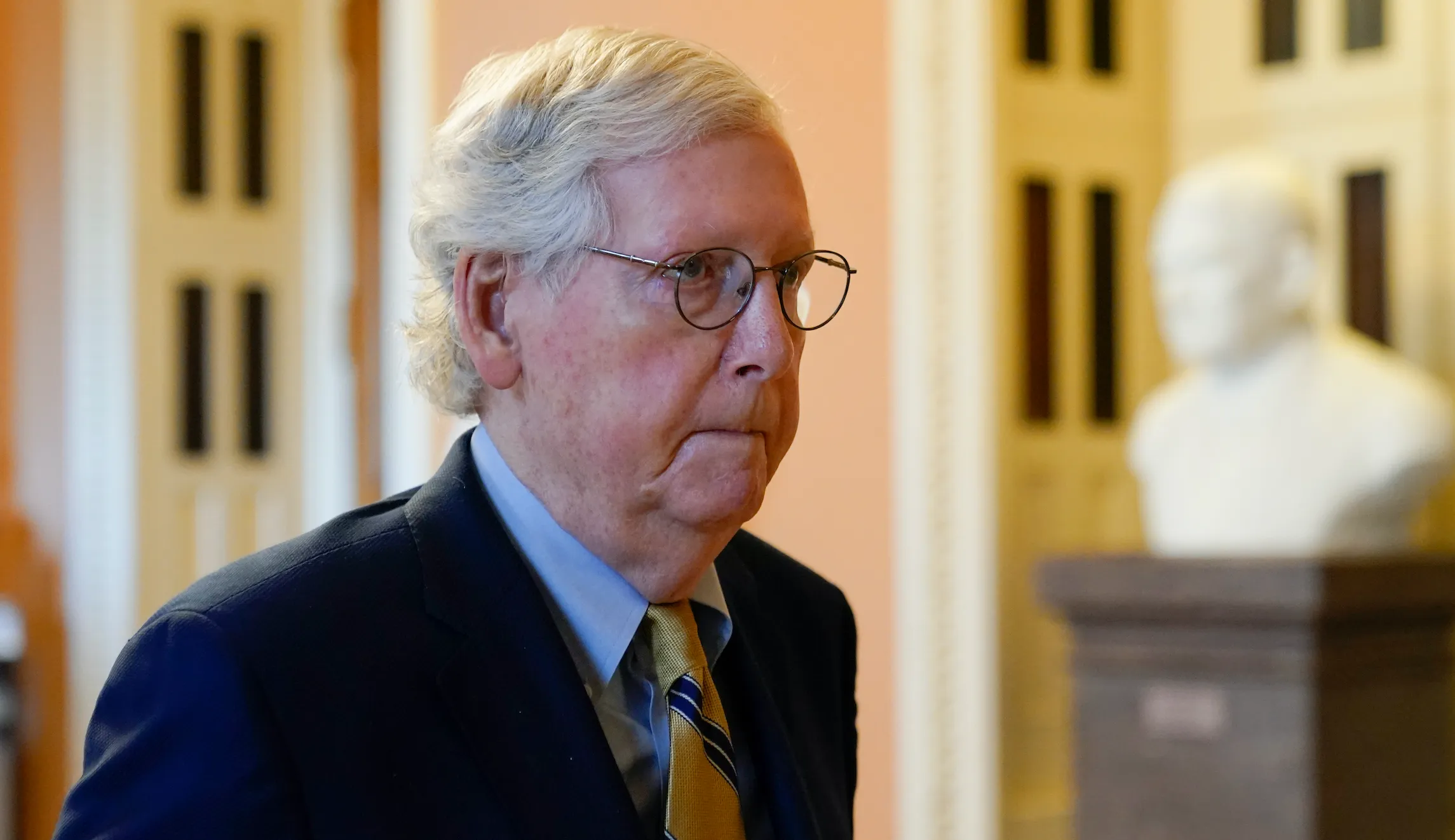
A series of polls released this week spell trouble for incumbent Republicans in competitive Senate races this fall as the GOP faces a precarious path to reclaiming a majority in the upper chamber.
Recommended Stories



There are 10 or so races that will determine which party controls the Senate next year, and for months, it appeared that Republicans had a slight edge as President Joe Biden’s low approval ratings and a teetering economy put Democrats on defense.
But back-to-back polls in Florida and Wisconsin offer a warning sign to Republicans as they seek to net at least one seat in the evenly divided Senate.
MCCONNELL ADMITS GOP MAY NOT RETAKE SENATE IN NOVEMBER
A surprise poll out of Florida on Tuesday showed incumbent Republican Marco Rubio vulnerable as he seeks a third term in the Senate. Despite the Cook Political Report rating his race “lean Republican,” the survey, released by the Public Opinion Research Lab at the University of North Florida, found his likely Democratic opponent, Rep. Val Demings, ahead 48% to 44%.
Rubio has consistently led in the contest, but a dearth of nonpartisan polling left the state of the race unclear in recent months. His campaign conceded the outcome will be close but projected confidence that Rubio will prevail in November.
“This is Florida, and we’ve always said it would be a tight race,” Elizabeth Gregory, a Rubio campaign spokeswoman, told the Washington Examiner. “This is a choice between Marco’s proven record of results, and Val Demings, who votes 100% of the time for Pelosi’s failed agenda. Given that choice, we are more than confident that we will win.”
The news got worse for Republicans on Wednesday when a Marquette University Law School poll found incumbent Sen. Ron Johnson (R) trailing his Democratic rival Mandela Barnes by 7 points in Wisconsin.
The state has previously sent Johnson, who has branded himself as a Washington outsider, to the Senate twice, but his approval ratings have dipped since 2019 amid his staunch support for former President Donald Trump and controversial comments he made about COVID-19. A Fox News poll released on Thursday found Barnes also leading Johnson but by a smaller margin of 4 points.
Johnson has overcome steep odds before. In August 2016, the same Marquette Law poll found him 11 points behind former Wisconsin Democratic Sen. Russ Feingold, who was attempting a comeback bid. Johnson won the seat that November by 3 points.
Nonetheless, the surveys must be unsettling for the GOP, especially as the party struggles to vie for open seats in key battleground states such as Pennsylvania, Ohio, and North Carolina.
Dr. Mehmet Oz came out of a bruising GOP primary to compete against Lt. Gov. John Fetterman (D) in Pennsylvania but has yet to find his footing in the contest to replace retiring Sen. Pat Toomey (R); he trails by more than 11 points, on average, in recent polling, leading the Cook Political Report to change the race’s rating from “toss up” to “lean Democrat.”
In Ohio, a state Trump won by 8 points in 2020, Republican Senate nominee J.D. Vance is in an unexpectedly tight race with Democratic rival Tim Ryan, and he’s faced criticism from within his own party for his campaign strategy and fundraising levels.
An Emerson College poll this week found Vance leading Ryan 45% to 42%, while the same poll found Gov. Mike DeWine (R-OH) leading his Democratic challenger, Nan Whaley, comfortably, 49% to 33%.
The winner of the Senate race will replace retiring Sen. Rob Portman (R).
One factor in these troubles, according to some elected Republicans and strategists, is the candidates themselves.
“It was never a slam dunk situation for the Senate the way, you know, people viewed the House,” Doug Heye, a Republican strategist, told the Washington Examiner.
Senate Minority Leader Mitch McConnell (R-KY) appeared to admit as much this week, telling reporters in Kentucky, “I think there’s probably a greater likelihood the House flips than the Senate.”
“Senate races are just different. They’re statewide. Candidate quality has a lot to do with the outcome,” McConnell said Thursday, according to NBC News.
CLICK HERE TO READ MORE FROM THE WASHINGTON EXAMINER
Heye said that even when a cycle generally favors one party over the other, “candidates matter.”
“And so, who emerges from a primary, you know, greatly affects what can happen in the general election,” he said.
Election analysts are taking note. Democrats’ odds of maintaining control of the Senate after the 2022 midterm elections have risen to about 60%, according to FiveThirtyEight’s “deluxe” forecast model. Just last month, Republicans were projected to win the Senate by comparable odds.
