

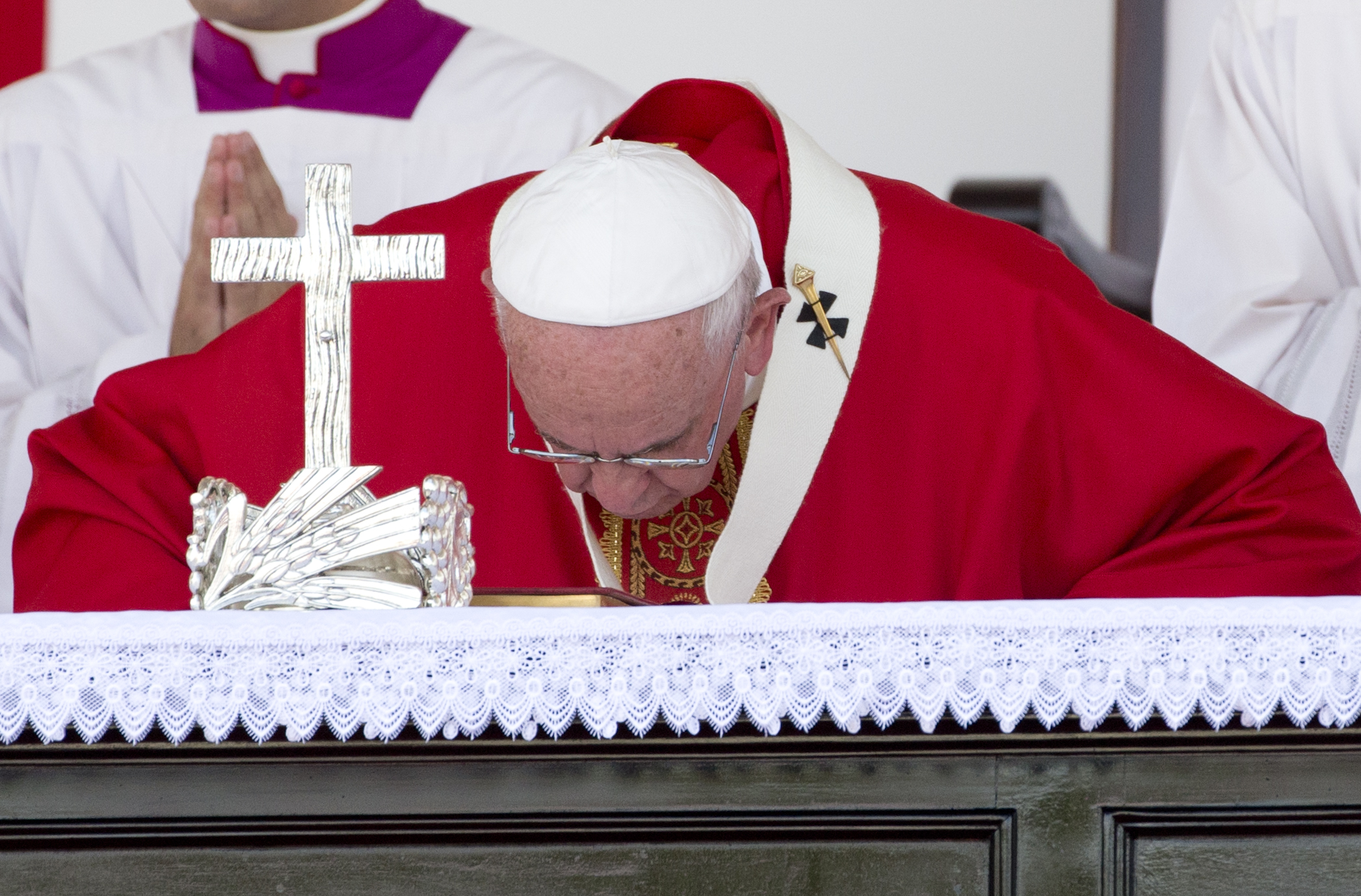
When Pope Francis addresses Congress and the United Nations General Assembly this week, much will be made over the world’s most recognizable religious leader’s forays into politics. Some may cry foul and claim for greater separation of church and state. Others might try to dismiss the significance of the occasion by claiming that he’s only here to offer moral guidance, but is uninterested in the political implications of his visit. This would be shortsighted.
Make no mistake about it: Francis is interested in the political ramifications of his visit. In many respects he’s hoping his politics helps reorient ours.
Recommended Stories


As a young priest, Jorge Mario Bergolio did not shy away from Argentine politics. And his experience as a pastor and shepherd who spent much of his ministry in the slums has shaped his belief that politics is best practiced in the trenches — on a local level, alongside those most affected.
Much can be gleaned from his address to the people of Bolivia while visiting South America this summer, where he critiqued political and economic structures that are not built for the service of people. For Francis, the practice of politics must be concerned with meeting the practical needs of people and the common good of society as a whole. Furthermore, it must be guided by a commitment to human dignity and moral responsibility. As he warned in Bolivia: “We know from painful experience that changes of structure which are not accompanied by a sincere conversion of mind and heart sooner or later end up in bureaucratization, corruption and failure.”
Yet for all of his talk of politics, he’s not here to sell specific policies either. “Don’t expect a recipe from this pope,” he said in that same address. “Neither the pope nor the church have a monopoly on the interpretation of social reality or the proposal of solutions to contemporary issues.” Instead, Francis wants to explore ways in which our political systems can better serve those most in need — not at the center, but those at the periphery.
Such reforms mirror the same changes he’s initiated within the church, where a guiding principle of his papacy has been to make the church and her sacraments more accessible to those on the margins of society. His two recent announcements — that all priests will be able to absolve the sin of abortion and his streamlining of the annulment process for divorced Catholics — is proof positive that Francis intends to shape a church that is outward focused intent on “opening the paths of dialogue, not erecting new walls!”
From the dais of Congress or the general assembly, there may be a temptation to place the pontiff in our partisan categories of liberal or conservative. This would be wrong, too. He’s moving us past these frameworks — and for Catholics, in particular — reminding us that we’re all in this together.
Francis speaks out for the poor and the immigrant, and for unborn children and their mothers. He upholds marriage while reaching out to the marginalized. He advocates for greater environmental conscientiousness while asking us to respect all of creation. He reaches to the fringes and safeguards the family. These aren’t mutually exclusive ideas; they’re all essential parts our Catholic tradition. His ask to us is to reclaim all of it.
Perhaps the two greatest themes of his pontificate have been the call for mercy and the call to encounter. We can expect more of that — both in style and substance — during his visit here. He will ask that we become a country that adheres to our great heritage of being welcoming to all in need, regardless of their life circumstances. He’ll also remind us that reform of the political begins with the personal.
Yes, Francis is asking that we change the way we do politics. But he’s also asking that we change ourselves first.
Christopher Hale is executive director of Catholics in Alliance for the Common Good. Christopher White is associate director of Catholic Voices USA. Thinking of submitting an op-ed to the Washington Examiner? Be sure to read our guidelines on submissions.
