

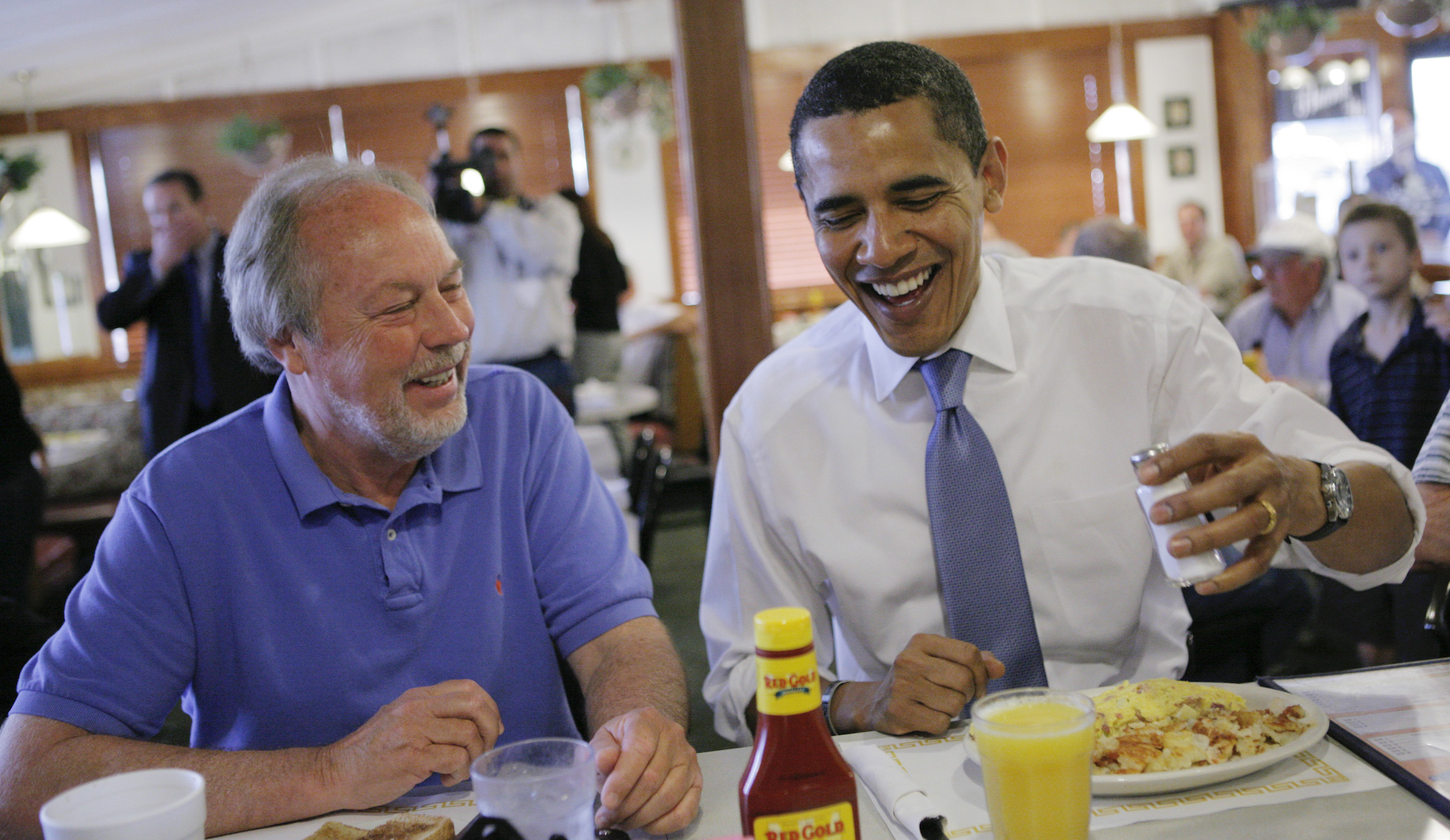
Americans are gearing up for our quadrennial duty of electing a president. There are many ways to gauge whether a man or woman would be a good fit for the job: their performance in previous offices, accomplishments, education, military service, leadership, vision, etc. The list goes on and on.
Here’s a new wrinkle: Why not pick someone based on what they eat for breakfast? The daily routine of each president is so structured and minutely orchestrated that they only get precious few minutes to do whatever they want. Breakfast is one of those rare opportunities, and it can reveal things about the person.
Recommended Stories


The current resident of 1600 Pennsylvania Avenue is known to dislike the morning meal. In fact, Donald Trump told one interviewer it’s his least favorite. He’s famous for chowing down on KFC and Big Macs, but for breakfast he gets by on the bare basics: bacon and eggs, or a bowl of cornflakes.
What did Trump’s predecessors prefer for breakfast? There’s not space to cover them all, so here are a few presidential highlights.
George Washington had a fondness for hoecakes, a kind of early pancake made of cornmeal. A visiting Englishman who dined with him in 1794 wrote, “Breakfast seemed to be the only meal in the Presidential house that was relaxed.” Martha Washington served tea and coffee as the First Family dined on sliced beef tongue, which the visitor found a refreshing break from the usual broiled fish many early Americans ate.
James Madison was a late breakfaster, sitting down at nine o’clock sharp and feasting on ham, salted fish, or herring accompanied by toast or plain bread slathered in butter.
Abraham Lincoln may have been the Great Emancipator, but he wasn’t a Great Breakfaster. His morning meal was a single egg, maybe a piece of toast, and a cup of joe. Whenever he could get away with it, he ate only part of an apple. (It should be noted Lincoln was largely indifferent to food, explaining why he remained rail thin well into this 50s.)
Compare that to Teddy Roosevelt, who liked his food simple, plain, and plenty of it. There were no frills at Roosevelt’s breakfast table. He wanted hard-boiled eggs cooked solid all the way through and fresh baked rolls. Lots and lots of rolls, in fact. Occasionally, he had a side serving of hominy with salt and butter.
William Howard Taft, our fattest president, put Teddy’s gargantuan breakfasts to shame. One morning during a visit to Georgia he consumed both potted and grilled partridge, boiled venison, grapefruit, waffles swimming in maple syrup, hominy, rolls, and, lest anything was left out, bacon.
Jumping ahead to more recent times, Harry Truman’s breakfast was as steady and reliable as the “Man From Missouri” himself. Hot cereal in cold months, cold cereal in hot, topped off with toast and milk. The only variable was the juice. Harry frequently switched from orange to tomato to grapefruit.
Jimmy Carter’s 5:30 a.m. rising was greeted with coffee and hand-squeezed orange juice. He topped it off with an extremely light meal a few hours later.
Ronald Reagan’s 7:45 a.m. breakfast was what you’d expect from a health-conscious former movie star. Fresh fruit, bran cereal with skim milk, whole wheat toast, and decaf coffee. Once a week he splurged and had eggs: poached, scrambled, or hard-boiled, it didn’t matter to him. Special occasions such as birthdays brought a family treat: a homemade concoction Nancy made called Monkey Bread, which Reagan especially enjoyed.
Finally, Richard Nixon had the most bizarre breakfast of them all: cottage cheese — with ketchup. Seriously! He indulged himself for his final White House meal on the morning the resigned by having cottage cheese with pineapple.
So, just what does all this mean, you ask? Beats me. But consider this: Breakfastime briefly lifts the White House curtain, offering a glimpse of presidents as real people rather than marble men on pedestals. It’s a chance to peak at their personality, not their public persona.
When you look at it that way, maybe mom was right after all. Perhaps breakfast really is the most important meal of the day.
J. Mark Powell (@JMarkPowell) is a contributor to the Washington Examiner’s Beltway Confidential blog. He’s VP of communications at Ivory Tusk Consulting, a South Carolina-based agency. A former broadcast journalist and government communicator, his “Holy Cow! History” column is available at jmarkpowell.com.
