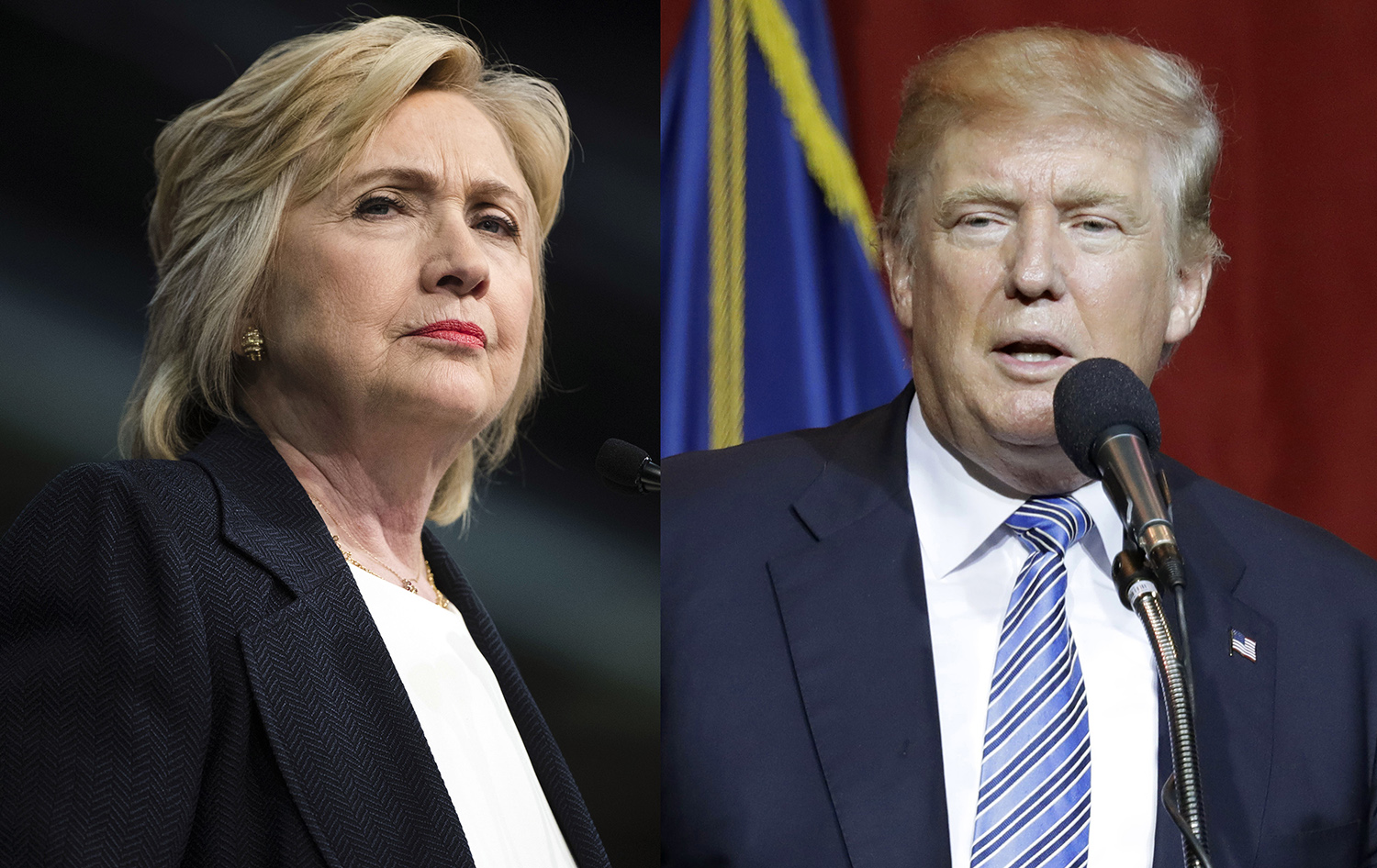
Picking a fight with Hillary Clinton on the issue of race is likely to backfire on Donald Trump, many Republicans fear.
Worse for Republicans, their presidential nominee could set back the party’s uphill battle to improve relations with ethnic minorities.
Recommended Stories
Trump has called Clinton a “bigot” who uses African Americans and Hispanics for votes, knowingly supporting policies that hurt their communities.
His pitch: What have you got to lose by voting for Trump?
That brash message is exactly what some white voters on the right want to hear, stung by years of enduring unfair charges of racism from Democrats.
Most Republican insiders are cringing.
Arguments about which party is more racist have never benefited the GOP and Trump certainly isn’t a messenger likely to change that, they say.
The nominee’s crude rhetoric directed toward African Americans and Hispanics continues to alienate. It’s also further undermining the Republican Party’s already precarious relationship with minority voters.
And, minorities aren’t the only problem. Moderate white voters also are turned off by Trump’s racially charged rhetoric — in numbers that could make it impossible for Trump to win.
But even had Trump’s approach been pitch perfect, GOP insiders fear attempting to recast his image, and launching outreach to skeptical voters less than three months before Election Day comes too late to change minds — especially after nearly 15 months of counterprogramming.
Ari Fleischer, a Republican who served as White House press secretary under President George W. Bush, said the debate over race is “never helpful for Republicans, and that’s why Democrats do it every cycle to virtually everybody they can.”
“I think it’s largely too late for Donald Trump. He’s dug a lot of this hole himself, and certainly the Democrats dug it deeper for him,” Fleischer added.
Sensing an opening to bludgeon Trump on the issue of race, Clinton last week delivered a major speech in which she sought to directly tie her opponent to elements of the racist, anti-Semitic fringe that exist on the right.
In connecting Trump to the alternative right, or “alt-right,” Clinton when further than most such Democratic attacks on previous Republican candidates when she declared that he has practiced racial discrimination in business and as a presidential candidate.
And yet Trump is so toxic on matters of race that few Republicans outside of his inner circle rushed to his defense, as might have been expected. House Speaker Paul Ryan and Senate Majority Leader Mitch McConnell said nothing.
It was the same for rank-and-file members of Congress.
“Everyone is scared to death of Trump and are just waiting to pull the trigger to run campaigns like 1996, as a check and balance on Hillary,” said a Republican strategist with relationships on Capitol Hill, who requested anonymity in order to speak candidly. “It will happen and soon.”
Trump appears to be doing his best to turn things around, although Democrats and some Republicans believe he’s only hardening impressions that he is racially insensitive.
He was scheduled to deliver a major speech on immigration on Wednesday evening, following a private meeting and public joint appearance with the president of Mexico in Mexico City designed to smooth his rough edges.
This weekend, Trump is headed to Detroit for an appearance at a black church as part of his appeal to African Americans.
It’s all part of Trump’s strategy to boost his numbers with minorities, as well as swing voters and college educated whites, who are abandoning him in droves despite an historical inclination to vote Republican. But it’s a tough road.
Trump’s troubles began on Day 1 of his campaign, in June of 2015, with a speech in which he referred to illegal Mexican immigrants as “rapists” and criminals. He later vowed to round up and deport millions of illegal immigrants who are otherwise law-abiding.
Trump pounded this message home over and over again, and along the way did things like accuse a federal judge of not being able to preside over a lawsuit involving one of his companies because this American born citizen is of Mexican heritage.
In Trump’s very recent effort to connect with African Americans, he referred to the black community as a poverty-stricken and living in “war zones,” suggesting that they keep voting Democrat because they’re getting hoodwinked.
On this too, Trump has modulated somewhat, acknowledging that the African American community is not monolithically downtrodden. But even if Trump’s approach might work — and his critics on the left argue otherwise — there’s the issue of establishing a trusting relationship.
With just 66 days Election Day, not to mention early and absentee voting beginning later this month, Trump simply doesn’t have the time to build bridges, if his desire goes beyond reassuring disaffected white moderates.
Republicans who have been effective at attracting minority votes large numbers have spent years cultivating relationships and establishing credibility with these groups on core issues. It doesn’t happen overnight.
“People who are succeeding are doing a tremendous amount of personal outreach, district by district, to make inroads,” Republican consultant Liesl Hickey said.
One such Republican who put in the time was President George W. Bush. He garnered more than 40 percent of the Hispanic vote in his re-election in 2004.
But successive Republican presidential nominees that followed dropped off from that. In 2012, Mitt Romney won just 27 percent of the Hispanic vote, far below what he needed to win the presidency.
Republican support among African Americans has been in the single digits with President Obama, the nation’s first black president, at the top of the ticket, and it wasn’t much higher prior to him.
Trump is threatening to do even worse than Romney.
His poor showing among Hispanics might have already cost him Colorado, a perennial swing state with a significant minority vote that no longer appears to be in play after Clinton jumped out to a lead that ranges from high single digits to low double digits.
Republicans usually try and chip away at this sort of disadvantage by accusing Democratic policies of being discriminatory. Trump has gone further, calling Clinton a bigot for pushing liberal policies that he says hurts minorities.
Demonizing the Democrat, rather than Democratic policies, are exactly what most Republican strategists advise against. It’s catnip for the media and obscures the policy debate that many Republicans are convinced they can win more votes with if given the time.
But for some Republicans, Trump’s approach is cathartic. Polite outreach the party has engaged in for years hasn’t netted any lasting results; maybe drastic measures will.
“It’s about time that one of our candidate’s did this. We’ve so danced around this as a party,” said Jim Dornan, a Republican strategist. “The fact that he’s saying so overtly that Clinton’s policies are keeping minorities poor is absolutely brilliant.”
