

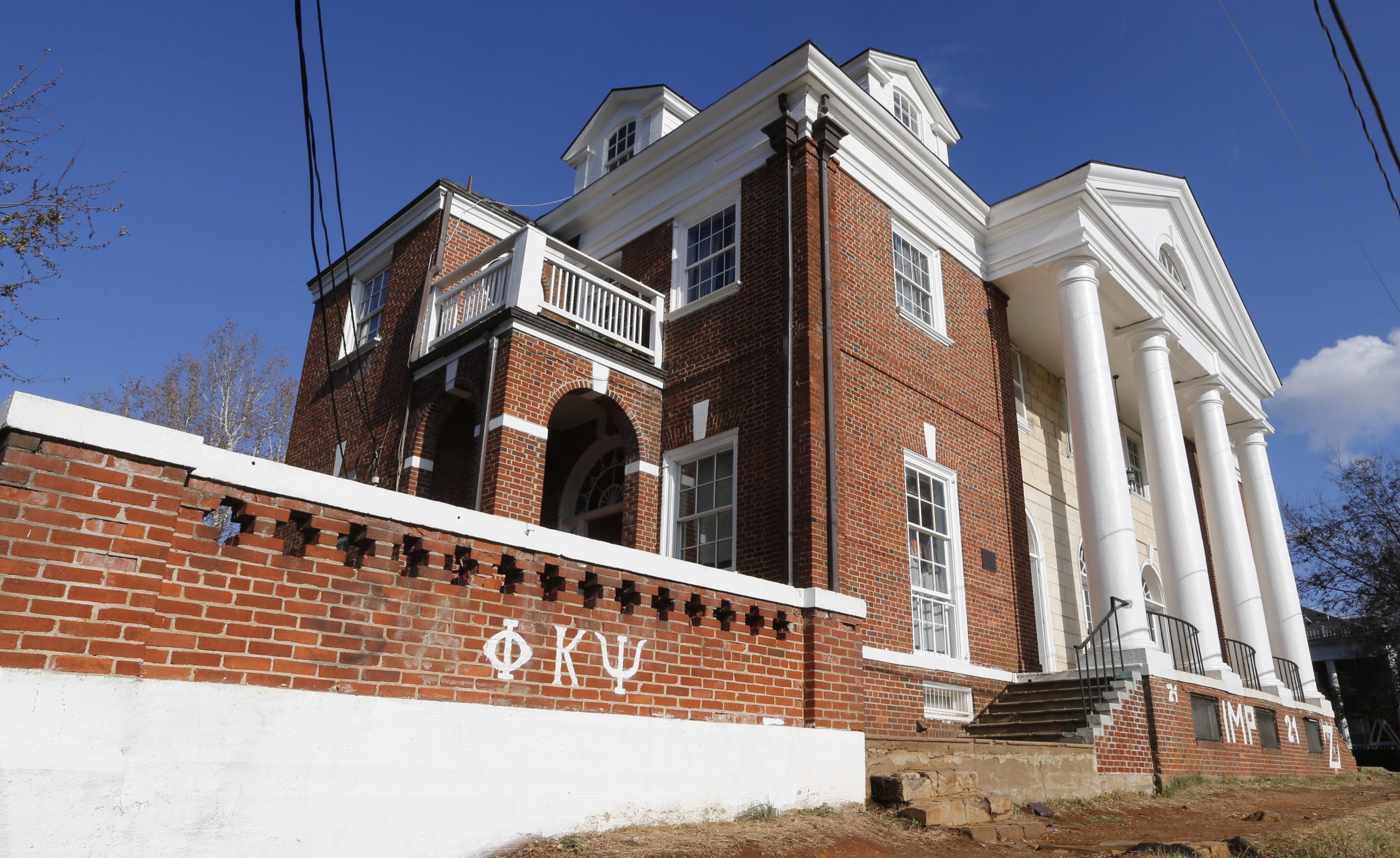
When Rolling Stone’s Sabrina Rubin Erdely set out last year to write an article confirming her ideas about campus sexual assault, she needed a specific villain for the story. While she broadly vilified the University of Virginia and the Phi Kappa Psi fraternity, the only named villain was Dean Nicole Eramo.
Eramo, according to the story’s victim, Jackie (and not fact-checked by Erdely), was indifferent to claims of a brutal gang-rape and reportedly told the accuser not to report, saying “nobody wants to send their daughter to the rape school.”
Recommended Stories


In February, when the debacle that was the RS story finally concluded with a post-mortem by the Columbia Journalism Review, Eramo said she had been portrayed inaccurately. Eramo told the CJR that RS “made numerous false statements and misleading implications about the manner in which I conducted my job as the chair of University of Virginia’s Sexual Misconduct Board, including allegations about specific student cases.”
She also flatly denied calling U.Va. “the rape school.”
In the wake of the review, Erdely offered an apology of sorts, first talking about the pain she had gone through after printing a falsified story, and then getting around to vaguely apologizing for that story. Erdely didn’t apologize to anyone specific, rather, to Rolling Stone’s readers and editors, to U.Va. in general and to “victims of sexual assault.”
Nowhere did she apologize to the fraternity she maligned or Dean Eramo — but then, that could have helped a lawsuit against her.
Eramo on Wednesday released a four-page letter to Rolling Stone CEO Jann Wenner condemning the magazine for what it did to her reputation. In the letter, Eramo writes that most of the attention since the article was debunked has focused on how the account was false and how the fraternities were smeared. Eramo says much less attention has been paid to how she was falsely portrayed.
Eramo claims that RS’s lawyers told her in February 2015 that even though the story had been debunked, the magazine “stood by” its reporting of how U.Va. responded to sexual assault victims.
The “true facts,” Eramo claimed, “are very different.” Eramo wrote that she “encouraged Jackie to report the alleged assault to the authorities, and I arranged for Jackie to meet with detectives almost immediately after she provided information identifying that she had been victimized at the Phi Kappa Psi fraternity house.”
Eramo insists she did “much more” but can’t provide the details due to federal law. She said, just as the Charlottesville Police Department had already described, that it was Jackie who refused to cooperate with police.
Eramo condemned RS for making “a calculated decision not to contact sources who would have contradicted [the magazine’s] preconceived storyline.” She also specifically blasted Erdely for squandering an opportunity to discuss the nuances of the campus sexual assault issue “because she was busy filling in her preconceived narrative and ultimately setting back the cause of advocacy and support in ways that we are still only beginning to understand here in Charlottesville and across the country.”
Ouch.
Eramo goes on to discuss how the RS article damaged her “personally and professionally.”
“Using me as the personification of a heartless administration, the Rolling Stone article attacked my life’s work. I saw my name dragged through the mud in the national press…protestors showed up at my office, demanding I be fired. Perhaps most egregious and shocking were the emails I received expressing hope that I be killed or raped, and commenting that they hoped I had a daughter so that she could be raped. Equally distressing…is the fact that while the false allegations in the magazine were being investigated, the university had no choice but to remove me from working with the students with whom I had spent so much time building a relationship, forcing them to ‘start over’ with someone else.”
Further, Eramo says Erdely and Rolling Stone’s “half-hearted generalized apology” was not good enough, and the fact that the magazine isn’t holding anyone accountable “suggests that the magazine is more interested in currying favor with its friends in the media than truly making amends with those of us who have been hurt.”
At this point Jackie needs to stop being treated like a victim. She claimed that her friends, her school and her closest counselor — Eramo — were sociopathic monsters indifferent to her pain. Nothing Jackie said was true, and her lies damaged real people without a thought.
What Rolling Stone set out to do was to damage these people — U.Va., the Phi Kappa Psi fraternity, Jackie’s friends and Dean Eramo. It would almost be funny, if it didn’t have such tragic consequences, how a story about a school caring more about its own reputation than student victims turned out to be a story about a magazine that cared more about its own reputation than the lives of people it maligned.
