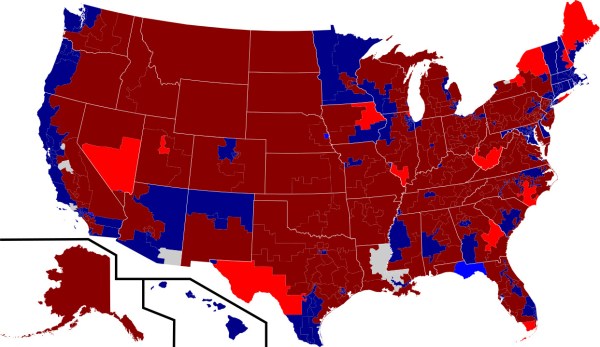
John Judis, co-author of the 2002 book The Emerging Democratic Majority, now says that majority has come and gone. That’s the thesis of his important National Journal article “The Emerging Republican Advantage.” I reviewed Judis’s book, co-authored by Ruy Teixeira, when it came out in 2002 — an unfortunate moment, as I noted, for their thesis, since it was a pretty good Republican year. But I also took it seriously and in time, in the 2006 and 2008 elections, its thesis seemed vindicated. Democrats won those elections with large majorities from blacks, Hispanics (in many states), single women and members of the Millennial generation.
“These advantages remain partially in place for Democrats today,” Judis now writes, “but they are being severely undermined by two trends that have emerged in the past few elections.” One, which he considers not so surprising, is that “Democrats have continued to hemorrhage support among white working class voters” — a declining share of the electorate, as he notes, but still a significant one. The Republican trend he finds surprising is among what he calls “middle-class Americans” in “the office economy” or, to put it in exit poll terms, college but not post-college graduates with household incomes between $50,000 and $100,000. Judis backs this up with a close look at exit polls and voting data and with interviews of middle class voters in Maryland where, to his surprise and mine, Republican Larry Hogan beat Democrat Anthony Brown for governor in a state that voted 62 percent for President Obama in 2012.