

Few in the liberal movement bet as much on a victory by Democratic presidential candidate Hillary Clinton as the leaders of organized labor. Republican candidate Donald Trump’s unexpected victory not only presents a blow for them politically but could result in severe recriminations within the ranks.
Union leaders were stunned by the losses. The AFL-CIO, the nation’s largest labor federation, ended its election live-blog shortly after 6 p.m. on election night. It “postponed until otherwise noted” a post-election press conference scheduled for Wednesday morning.
Recommended Stories


“Of course the @AFLCIO press conference this morning was canceled. As with the press, too much explaining to do,” tweeted Huffington Post labor reporter Dave Jamieson.
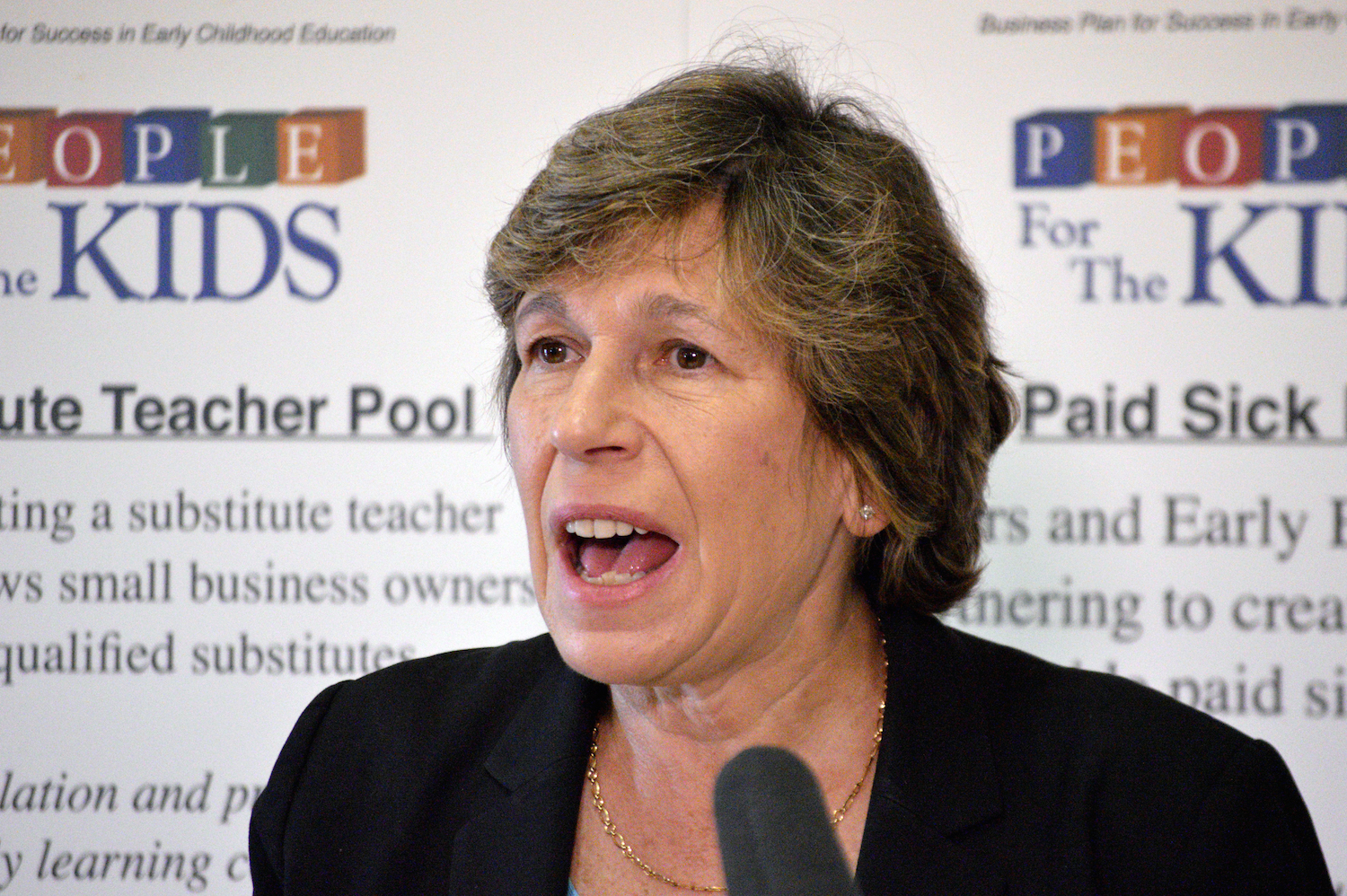
“We were all in and we lost. Trump tapped into big time the winds of change and won,” tweeted American Federation of Teachers President Randi Weingarten.
“It will take some time to get used to the fact that Donald Trump has been elected president of the United States,” said the Communications Workers of America.
Organized labor groups donated $15 million to Clinton and just $6,000 to Trump, according to Opensecrets.org. That’s not counting outside spending and get-out-the-vote efforts.
It is not clear what Trump’s victory means for organized labor, however. The Republican has a complicated and contradictory history with unions, having dealt with them extensively as a real estate and casino developer. He at times has spoken positively of them and boasted of good relations with some labor leaders. He is a union man himself, having joined the Screen Actors Guild for his many appearances on film and television.
At other times he has fought unionization of his businesses. Last week, the National Labor Relations Board, the main federal labor law enforcement agency, said the Trump International Hotel in Las Vegas, which the candidate co-owns, was guilty of unfair labor practices for refusing to deal with a workers union. The hotel has said the union election was corrupt and vowed to appeal the board’s ruling.
Broadly speaking, Trump agrees with labor’s agenda on issues such as international trade and has called for penalizing companies that outsource jobs. He has spoken in favor of right-to-work laws, which prohibit union contracts that force workers to join or otherwise financially support unions as a condition of employment. Unions despise the laws, which are associated with membership losses and depleted treasuries. Trump has given contradictory statements on minimum wage laws.
Conservatives are nevertheless optimistic regarding Trump. “Everything we have seen suggests that he would be fairly conservative on labor issues,” said James Sherk, labor policy analyst for the Heritage Foundation.
Most union leaders made scathing attacks against Trump. AFL-CIO President Richard Trumka called him “hateful and racist.”
Labor leaders were more subdued Wednesday morning. “We will do what we do best to hold President-elect Trump accountable on his promise to restore the American Dream: organize and advocate for solutions for all working people, from affordable health care for all, to reducing student debt, to rebuilding America’s infrastructure,” said Lee Saunders, president of the American Federation of State, County and Municipal Employees Wednesday.
Trumka, Saunders and others supported Clinton early, most delivering their union’s endorsements to her during the Democratic primary. That was despite a strong pitch to the union rank-and-file by her rival, Sen. Bernie Sanders, D-Vt. Some union leaders conceded that even Trump had significant appeal among their rank and file.
Sanders’ openly claimed that labor leaders fixed their member endorsement process to ensure that Clinton got their backing.
“I don’t know what the prospects would have been had there been a democratic poll at those other unions. I think I would have had a good shot,” Sanders said in December after he won the endorsement of the Communications Workers of America, one of the few unions to back him in the primary.
Clinton campaign manager John Podesta appeared to concede that the endorsement process was manipulated for at least one major union in a July 2015 email to Weingarten.
“Randi, thanks for everything you are doing for us. Let me know directly if there is more we can do to deflect some of the heat your feeling,” Podesta said. The email was illegally obtained from Podesta’s serve and published by the website WikiLeaks.
Union leaders viewed Clinton as their best bet to win the general election and expected she would continue President Obama’s pro-union policies and nominate liberal justices to the Supreme Court. Labor groups had high hopes that a liberal court would accept a legal challenge to overturn state right-to-work laws.
Trump’s big win came largely by outperforming prior GOP candidates in union-friendly Rust Belt states such as Ohio, Pennsylvania and Wisconsin. All three backed Obama in 2012 but swung to Republican column this year, after labor leaders like Trumka promised an unprecedented grassroots effort against Trump.
The union leaders lost down the ballot as well. Voters in Alabama and South Dakota passed right-to-work measures. In the case of Alabama, the voters approved adding right-to-work to the state constitution. A similar constitutional amendment effort failed in Virginia. Both states already had the laws on the books, however, so little changed. The constitutional amendments were an effort to further shore up the laws.
In Kentucky, Republicans gained a large enough statehouse majority to ensure a right-to-work measure would become law there. In Missouri, the election of Republican Eric Greitens as governor makes it likely that that state will adopt a right-to-work law.
“This was really a banner night for right-to-work,” Heritage’s Sherk said.
The only bright spot for the labor movement was that ballot measures increasing the minimum wage passed in Colorado, Maine and Arizona, upping those states’ rates to $12 an hour. Washington State voters approved a measure raising their minimum to $13.50.
But that was something of a pyrrhic victory. While unions favor high minimum wage laws because they create upward pressure on wages generally, they also undercut one of the main arguments for joining a union, the promise of higher wages through collective bargaining.
