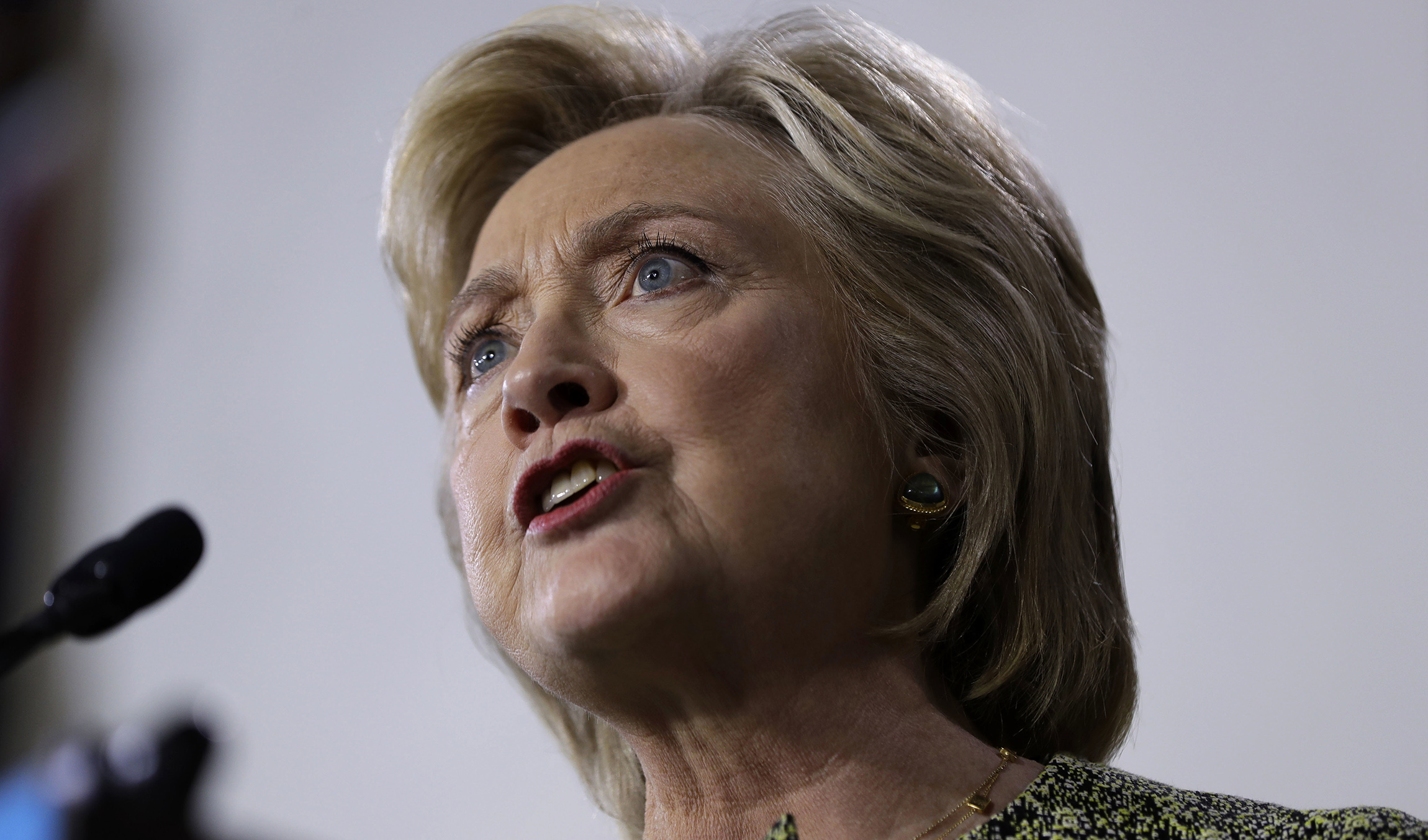
Philadelphia has become ground zero for Hillary Clinton’s campaign, as top surrogates have made their way into the city several times to stump in behalf of Clinton.
Over the past two weeks alone, Clinton as well as President Obama and Sen. Elizabeth Warren have all made stops in the City of Brotherly Love, and an appearance by Michelle Obama is set for next Wednesday.
There should be no mystery about how Philadelphia will vote in November. In Pennsylvania’s most populous city, Clinton will overwhelmingly beat Donald Trump, just as Democrats have beaten Republicans in every election there for decades.
However, questions persist about Clinton’s performance in the area in the wake of Obama’s record-setting turnout numbers in both 2008 and 2012. Obama won 83 percent of the vote in his first presidential race and 85 percent running for re-election, all the while winning by a nearly 500,000-vote margin each occasion.
Some observers are skeptical about whether she can recreate the Obama coalition of energized minorities and students in the city.
“It’s so crucial to the Pennsylvania electoral map for Democrats because of the boost they get out of Philadelphia,” said Chris Borick, a political science professor at Muhlenberg College. “If you can come out like President Obama did with 500,000 voter advantage in the city, it certainly makes it tough on Republicans to make that up anywhere else.
“[Philadelphia is] going to be overwhelmingly Democrat, just like it was in the past election cycle. It’s just how big that pie is, right? How big is the pie going to be. Ninety percent of a bigger pie is a lot better than 90 percent of a smaller pie, and that’s why they’re worried,” Borick said. “They’re worried that the turnout and the energy that’s there that has been there in the past just isn’t going to be there this year, and that really cuts into the ultimate weapon Democrats have in Pennsylvania, and that’s Philadelphia.”
Democrats are eager to point out the advantage they have organizationally in the city compared to that of the Republicans, thanks to union support and the party machinery. But Clinton is banking on the city providing a substantial buffer to offset potential losses in the rest of the state, especially in Western Pennsylvania, where Trump has resonated.
“If you tell me on 9 p.m. on election night that she has a net margin in the city of 500,000 votes, turn out the lights because it’s a good night,” said T.J. Rooney, a former chairman of the Pennsylvania Democratic Party. “If it’s 350,000 votes, then that’s another story.”
“Truthfully, it would concern me a whole lot more if the Republican nominee weren’t Donald Trump,” Rooney said. “Every theoretical advantage or, put another way, every perceived deficiency in Hillary’s operation, in her personnel, whatever, is always buttressed and offset by Donald Trump. If it were someone else, I would be a lot more concerned.”
One area that could offset any turnout issue in Philadelphia for Clinton is in the suburbs, also known as the “collar counties” (Bucks, Delaware, Chester and Montgomery), where Obama had considerable success in 2012. Although the suburbs have long been the state’s key swing vote, Democrats have created a foothold in the region in Obama’s victories and are looking to deepen their footprint as Donald Trump continues to flounder amongst white college-educated voters, which are a key voting bloc in the area.
“The Trump win scenario is built a lot on hoping, wishing, thinking and praying, and hers is more math-driven,” Rooney said. “Yeah, it could be bad, but the far more likely scenario is that college-educated white voters just continue to stick their fingers in their ears because he has nothing to offer those men and women.”
Some Democrats are unnerved about her chances, but still recognize her issues, with Philadelphia serving as a personification of those problems at recreating the Obama coalition.
“Her problem is the same problem she has everywhere else. It’s not about the percentage. It’s about the turnout and the lack of enthusiasm for her,” said Larry Ceisler, a Philadelphia-based Democratic strategist. “But I can’t believe at the end of the day [that] people don’t turn out, and in Philadelphia, people do turn out in presidential elections.”
“You’re probably not going to have Obama numbers,” Ceisler admitted. “But I think you’re going to be close.”
Democrats also see Obama being a monumental figure in the region with just a month and a half until election day. After campaigning near the Art Museum last week and Michelle Obama’s upcoming appearance, the pair are expected by multiple times prior to November 8.
“When Obama talks about the legacy message, I think that’s a very powerful message,” Ceiser said. “I know a lot of people who don’t particularly care about Hillary Clinton…but at the end of the day they were Obama people and they’re working this election and they care about this election, not because of Hillary Clinton, but because they have confidence that Hillary Clinton will preserve the Obama legacy.”
