
The Last Station
Real journalism.Trusted by millions.
Unlimited access to in-depth reporting, expert analysis, and the stories that shape our country.
Already a member? Log in
Directed by Michael Hoffman
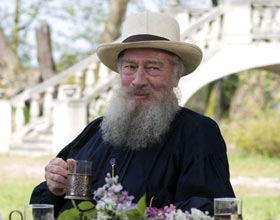
The Last Station is a wonderful new movie about the final days of Leo Tolstoy. The acting is superb and shaded, the look careful and considered, the writing delicate and literate, the direction restrained and energetic.
The story of Tolstoy’s end is one of the most melodramatic in the annals of literary biography, with the 82-year-old genius fleeing his ancestral estate and his wife of 48 years in the middle of the night in November 1910 to begin a directionless pilgrimage in a third-class train car—a pilgrimage that ends a few days later with the greatest writer of his age dying of pneumonia in a railway station.
To his immense credit, writer-director Michael Hoffman (working from Jay Parini’s pedestrian 1990 novel) tells the story at a slight remove. He does not underline or emphasize the collective hysteria among Tolstoy’s family and followers that led to his flight and continued to characterize his concluding hours on earth.
The truth is, they were hysterical, all of them, Tolstoy and his frantic wife Sonya and his many children and his grasping followers. But an effort to capture the degree of the hysteria on film would have risked turning The Last Station into something risible and ridiculous, as opposed to the compelling, moving, and meticulous drama for adults Hoffman has made of it—and in which he has directed both Christopher Plummer (as Tolstoy) and Helen Mirren (as Sonya) in the performances of their lives.
The only real problem here, and it’s not a problem with the movie as a movie, is that in trying to treat Tolstoy with the tactful deference due his literary eminence, Hoffman romanticizes and softens him. For in addition to being a very great writer, Tolstoy was also a very great monster, and never more so than in his final innings. In his glorious telling of Tolstoy’s life, published in 1968, Henri Troyat offers the brilliant insight that Tolstoy was, in fact, a character only Dostoevsky could have created and understood. It is the nihilistic darkness and cruelty of Tolstoy’s character that is missing from The Last Station.
Instead, the film portrays Tolstoy as a kindly, generous old lion of a man who is helpless to prevent or intercede in the fight being waged over his name, fortune, works, and legacy. On the one side of the fight are his religious and ideological followers, who have come to embrace the slippery mélange of antinomian religious universalism, pacifism, and egalitarianism known as Tolstoyism. They want him to renounce his possessions, primarily the copyright of his own lucrative body of work, and give them instead to the “people.”
On the other side is his wife Sonya, the mother of his 13 children, whom he married when she was barely 18 and toward whom he indulged in an almost unimaginable form of emotional sadism over the course of their nearly five-decade marriage. That sadism—which included giving her ready access to his diaries, with their accounts of his bachelor days of whoremongering and his intense feelings of rage toward her during their marriage—is barely hinted at in the course of The Last Station. The Sonya we see is the manipulative, Machiavellian, and altogether intolerable person she apparently was in her husband’s final years; but the proximate cause of the degeneration of her personality is given short shrift.
And yet Hoffman does make it clear just how pernicious the Tolstoyans were, especially their pompous and fanatical leader, Vladimir Chertkov (Paul Giamatti, amazing as ever), and how their efforts to convince Tolstoy to surrender his family’s wealth in the name of his philosophy had become a pitched battle for its own sake. Chertkov wanted Tolstoy to demonstrate that he loved his “movement” better than his family, and he would stop at nothing to get his way.
But though the Tolstoyan movement itself is viewed with appropriate skepticism in The Last Station, the movie takes Tolstoy’s ideas seriously—in part, one assumes, because they are so congenial to a post-1960s sensibility, with their invocations of love above all things and Tolstoy’s preachment of the doctrine of nonviolent resistance.
In truth, if all the world knew of Tolstoy was the dank nonsense he peddled in the last two decades of his life, and not his standing as the greatest novelist ever to have lived, his name would conjure up nothing more than the image of a deservedly forgotten crank. Hoffman offers a moving portrayal of Tolstoy’s death, but it could just as readily have been played as a dark farce, the black comedy of a sick and crazy old man with two strokes under his belt, renouncing his marriage and his possessions and setting off on a train to nowhere in the middle of the night.
That would be another movie, and much harder to take. But arguably more honest.
John Podhoretz, editor of Commentary, is The Weekly Standard’s movie critic.