

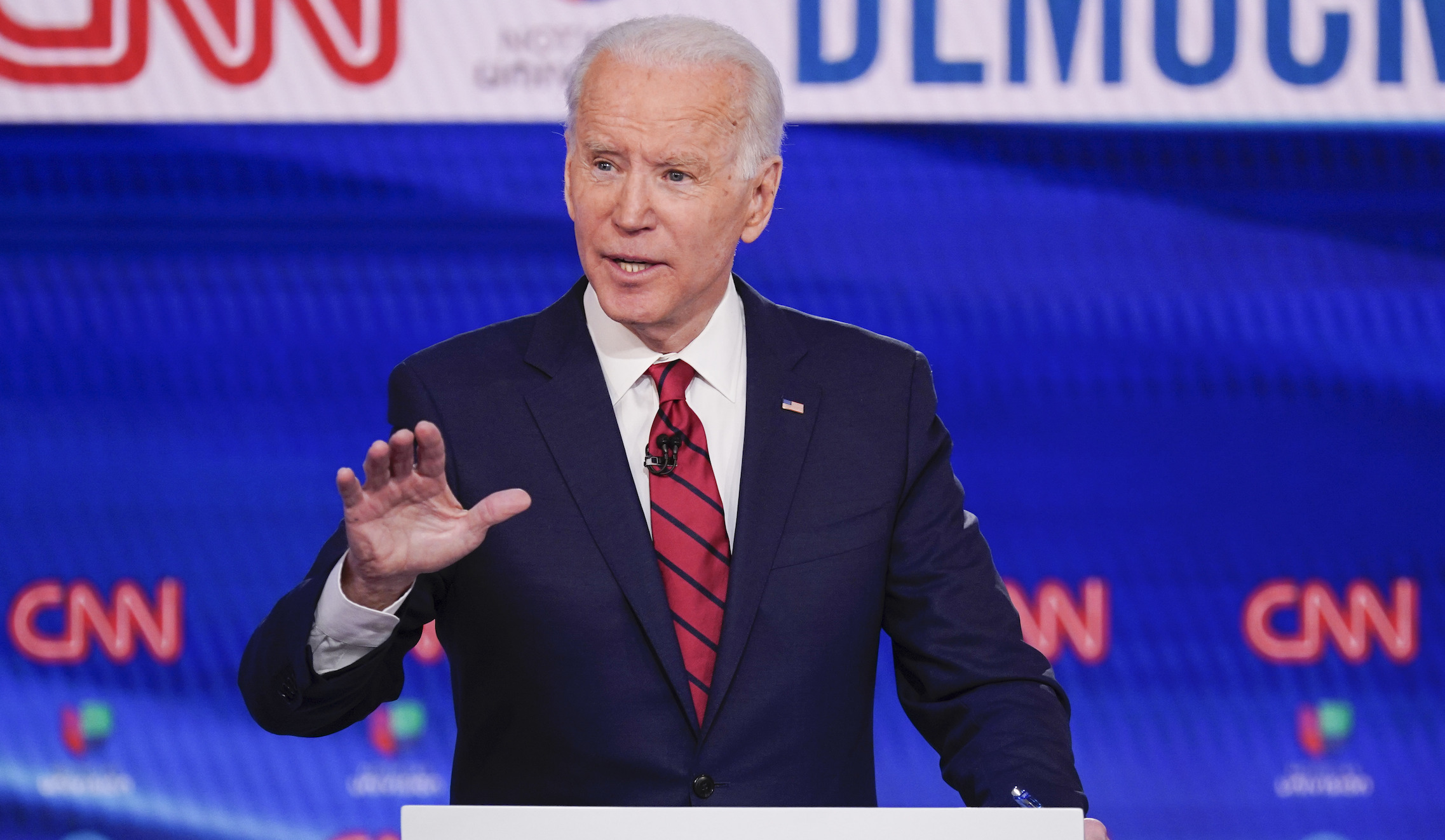
Joe Biden became the presumptive 2020 Democratic presidential nominee by convincing primary voters he is the most “electable” against President Trump. Now, he’s going to make that “safe choice” actually work.
Bernie Sanders, Biden’s last remaining rival for delegates, warned during Sunday night’s debate a lack of enthusiasm for the two-term vice president could hurt his electoral chances in the fall fight against Trump.
Recommended Stories



“I have my doubts about how you win a general election against Trump, who will be a very, very tough opponent unless you have energy, excitement, the largest voter turnout in history,” the Vermont senator said.
Delaware’s 36-year senator shot back, arguing he inspired record-breaking participation in states such as Virginia, where 1.3 million voters cast a ballot on Super Tuesday, compared to 783,000 in 2016 and 986,000 in 2008.
“They are coming out for me,” he said. “The reason they’re doing that is because they understand I know what has to happen, that I know what needs to be done.”
Republican strategist Susan Del Percio described Sanders’s theory as “tremendously flawed” because his 2016 success was exacerbated by then-competitor Hillary Clinton’s “negatives.” Clinton didn’t win the districts former President Barack Obama did in 2008 and 2012, while Biden is popular with black Democrats, she said.
“Bernie Sanders is saying he could do better because he could get people who don’t typically show up. That is not the same as what happened in 2016, when the base did not show up,” she told the Washington Examiner.
Biden could have been hindered by low enthusiasm in a normal election cycle, but he’s being boosted by anti-Trump sentiment, according to Del Percio.
“That’s what we saw in 2018, and that’s what we’re seeing in 2020 with the increased turnout in the primary of the suburban areas,” she said.
But Del Percio added Biden was an unpredictable candidate, so “nothing’s a done deal.”
“Biden should have the best chance, but let’s not forget people wrote Biden off as dead, not because anything happened to him. His early errors in the primary campaign were based on his own actions. It was all self-inflicted,” she said.
Although Biden’s 1,132 pledged delegates mean he’s still short of the 1,991 required to earn the party’s nod outright, Sanders’s path to the nomination is almost impossible. And Biden’s candidacy was, in part, bolstered by concerns Sanders’s embrace of socialism would hurt down-ballot races.
Early national general election polls give Biden, on average, a 6.4 percentage point lead on Trump, according to RealClearPolitics data.
Democrats are desperate to rebuild the so-called blue wall in 2020, taking back Michigan, Pennsylvania, and Wisconsin after Trump flipped the states four years ago. Biden has a slight edge in the first two states, but the pair are tied in the latter. Biden is ahead in battlegrounds such as Arizona, Minnesota, and North Carolina, while Trump has the advantage in Georgia and Texas.
For Middlebury College political science professor Bert Johnson, Biden’s potential enthusiasm problem may also be countered by a likely coronavirus-driven economic downturn.
Using a statistical model based on gross domestic product growth in an election year’s second financial quarter and presidential approval ratings around the same time, Biden could win the contest by Obama’s 2008 margin of victory, Johnson told the Washington Examiner.
“I’d say that a lack of enthusiasm (if there is one) could affect a closer election, which looked likely before the pandemic hit. But the worse it gets, the more dangerous it gets for the incumbent, regardless of the underlying level of enthusiasm for the challenger,” he said. “When an incumbent is running, the election tends to be a referendum on the incumbent — all the more so in challenging times.”
