

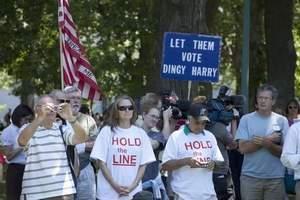
Today’s Washington Post has a multi-chapter series on the Republican resurgence, going all the way back before President Obama’s election and culminating in the just-ended fight over raising the debt ceiling. The story is a long tale of how we ended up with the debt deal.
The deal that Boehner and Obama reached obviously didn’t contain enough spending cuts (or enough certain and “real” spending cuts) to put bond-rating agencies at ease. But for conservatives who haven’t been following such things very long and are prone to bash Boehner without nuance, it is worth retelling out the broad point of this Post story: Two powerful forces — a long-term conservative strategy of candidate recruitment and the grassroots fervor of the Tea Parties — have completely changed the nature of the debate in Washington.
Recommended Stories


Having been here a decade now, I have to confess that I feel like I’ve been transported to an alternate universe this year. In the universe I know, spending must increase every year and no one takes seriously the idea of budget cuts. That’s been one of Newton’s Laws as long as I can remember.
So, a few takeaways from the piece: First, an administration official on the White House’s first big mistake of not taking care of the debt ceiling back when Democrats still controlled Congress:
On John Boehner’s “Hendaia-esque” position between Obama and the Tea Party — “Sorry, I’d love to help, but I can’t even make my own trains run on time.”
And more on that from a GOP leadership perspective, from Rep. Kevin McCarthy, R-Calif.:
More on that from a Tea Party perspective, from Rep. Jason Chaffetz, R-Utah:
