

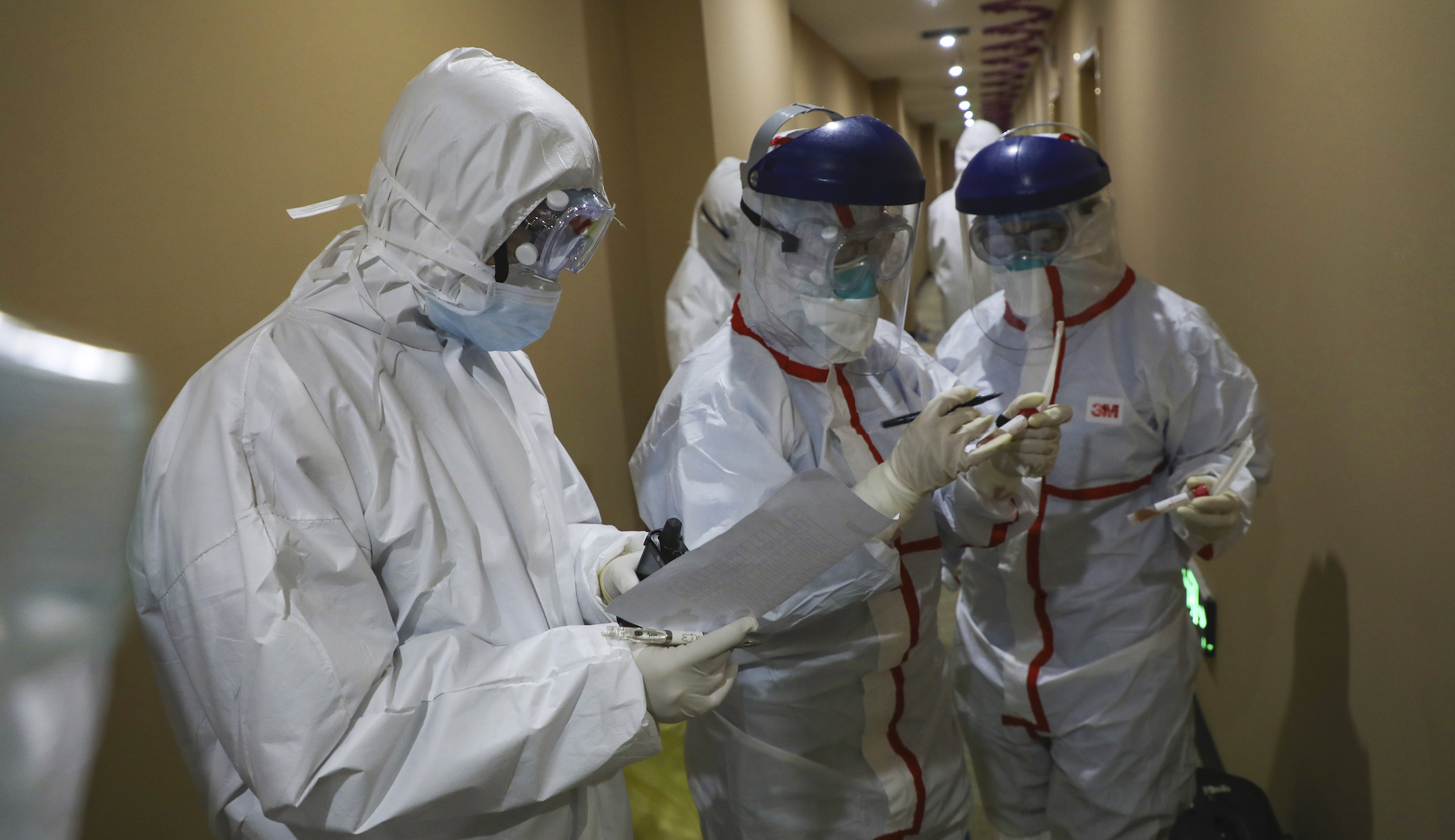
Some researchers are expressing optimism that a recent coronavirus mutation is a sign the virus could be weakening.
A newly published study concludes that a mutation in the coronavirus is genetically similar to a mutation in the SARS virus in 2003, suggesting the disease could be losing steam, according to the New York Post.
Recommended Stories


“One of the reasons why this mutation is of interest is because it mirrors a large deletion that arose in the 2003 SARS outbreak,” Dr. Efren Lim, lead study author and Arizona State professor, said about the genome deletion that was noticed.
Lim’s team used a technology called next-generation sequencing to read the genetic code of the coronavirus and found that out of 382 nasal swabs that were examined, a single sample was missing a significant portion of its genome. Eighty-one of the letters were permanently deleted.
Researchers say that during the middle and late phases of the SARS epidemic in 2003, the virus went through similar mutations that weakened its strength.
“Where the deletion occurs in the genome is pretty meaningful because it’s a known immune protein, which means it counteracts the host’s antiviral response,” Lim told the Daily Mail.
Researchers say this is the first time such a large deletion has been seen in the 16,000 that have been sequenced to date.
They add that the number of strains studied is less than 0.5% of the 3.6 million total confirmed cases.
“This is a drop in the bucket,” Lim told the Daily Mail.
“One sample is the convincing thing we need to say, ‘Look at this,‘ meaning that if more coronavirus genomes are sequenced, scientists might find far more instances of this attenuated genome,” he added.
The coronavirus has killed over 70,000 people in the United States and at least 250,000 worldwide.
