

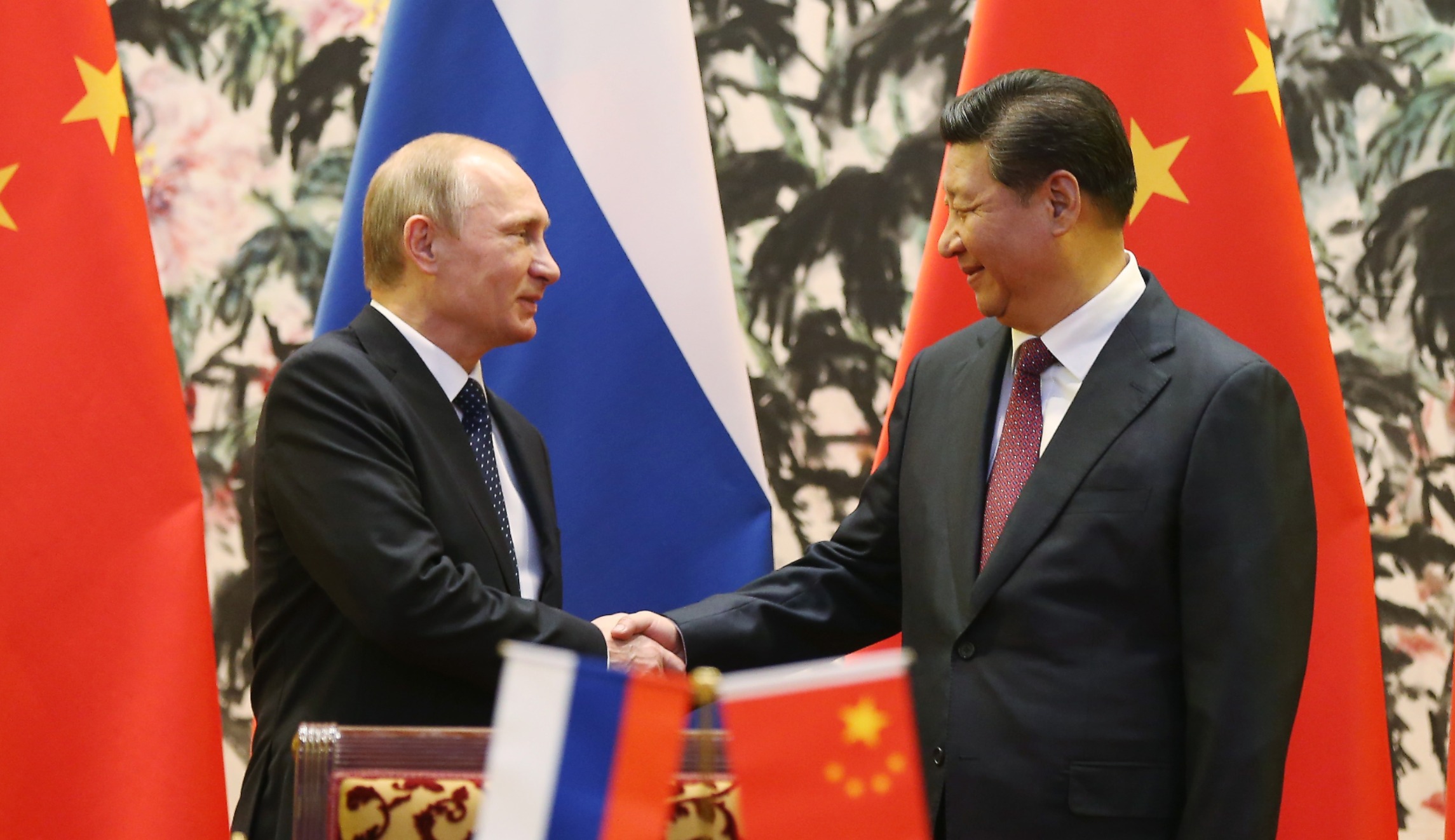
The heads of the intelligence community and of the CIA both agreed Tuesday that Vladimir Putin’s invasion of Ukraine may give China pause when considering invading Taiwan.
Director of National Intelligence Avril Haines and CIA Director William Burns both told the House Intelligence Committee on Tuesday that the war in Ukraine could affect the alliance between Russia and China and alter the Chinese Communist Party’s thought process on seizing Taiwan.
Recommended Stories


Republican Rep. Chris Stewart asked if the intelligence community had assessed that China was watching the invasion and the world’s response to it, adding, “It seems to me it would give them extreme pause now when we consider their plans for Taiwan. I think the united response — you know, private companies pulling out, banking, et cetera, et cetera — do you have any analysis that would indicate that this is making China more reluctant than they would have been like six months ago?”
Haines and Burns both agreed.
“Our analysts have been looking at this, and I agree with you, frankly,” the DNI said. “The view is both that it is likely to reinforce China’s perspective on the seriousness with which we would approach an infringement on Taiwan and the unity that they’ve seen between Europe and the United States, particularly in enacting sanctions, and then not just that unity, but the impact of those sanctions, I think are both things that are critical to their calculus and something that will be interesting for us to see how they learn those lessons.”
Burns added, “I agree entirely.”
RUSSIA AND CHINA ARE CLOSE, CIA SAYS, BUT CCP MAY BE UNSETTLED BY UKRAINE
Late last month, Taiwan condemned the Russian invasion of Ukraine and declared it would join U.S.-led sanctions against Russia, even as China, which has long desired to conquer the democratic island nation, has lent tacit support to Putin’s invasion.
Republican Rep. Mike Turner, the ranking member on the House Intelligence Committee, told the Washington Examiner: “I think if any nation, like China, is looking at this point at threatening their neighbors, they have to be concerned with two things.”
Turner said China’s first concern must now be “the united world front of democracies and allied nations that have responded to Russia in sanctions and in condemnation.” And he said the CCP’s second concern will be “the fierce defense and fighting that President Zelensky has rallied his country to as, I think, an inspiration for any other nation that is invaded to hold on, hunker down, and with a united front for the world, you may actually be able to defend your country.”
When asked if the U.S. was doing enough to supply Taiwan militarily, the Ohio Republican said: “I think both Taiwan and China are kind of going to school as to how this conflict has unfolded. They’re probably looking very closely at President Zelensky’s list of what he needs to fight this war as a shopping list for the future.”
The intelligence community released its Annual Threat Assessment on Tuesday, which had been finalized in February based on intelligence through late January.
“China uses coordinated, whole-of-government tools to demonstrate strength and compel neighbors to acquiesce to Beijing’s preferences, including its territorial and maritime claims and assertions of sovereignty over Taiwan,” the intelligence report assessed. “Beijing will press Taiwan to move toward unification and will react to what it views as increased U.S.–Taiwan engagement. We expect that friction will grow as China continues to increase military activity around the island, and Taiwan’s leaders resist Beijing’s pressure for progress toward unification.”
Republican Rep. Rick Crawford said Tuesday that some experts are concerned that Russia’s invasion of Ukraine might embolden China and asked what the likelihood of a “copycat” attack might be and what more the U.S. could do to protect Taiwan.
“I think Taiwan and Ukraine are two different things completely,” Defense Intelligence Agency Director Lt. Gen. Scott Berrier replied. “I also believe that our deterrence posture in the Pacific puts a very different perspective on all of this. We do know the PRC is watching very, very carefully what happens and how this plays out … and I would address more of this in the closed session.”
Haines said Tuesday that despite Russia’s military setbacks so far, the intelligence community assesses that Putin “may escalate, essentially doubling down to achieve Ukrainian disarmament and neutrality to prevent it from further integrating with the U.S. and NATO.”
Burns said: “I think President Xi and the Chinese leadership are a little unsettled by what they’re seeing in Ukraine.”
CLICK HERE TO READ MORE FROM THE WASHINGTON EXAMINER
Democratic Rep. Raja Krishnamoorthi also asked Haines if Putin’s invasion of Russia might be an opening to have more productive conversations with China about Taiwan.
“No. I mean, I think there’s an impact on the Chinese calculus with regard to Taiwan, which we’re obviously going to continue to pay close attention to,” Burns said.
The CIA director also said: “Analytically, I would not underestimate President Xi and the Chinese leadership’s determination with regard to Taiwan. I do think … they’ve been surprised and unsettled to some extent by what they’ve seen in Ukraine over the last 12 days. Everything from the strength of the Western reaction to the way in which Ukrainians have fiercely resisted to the relatively poor performance of the Russian military.”
