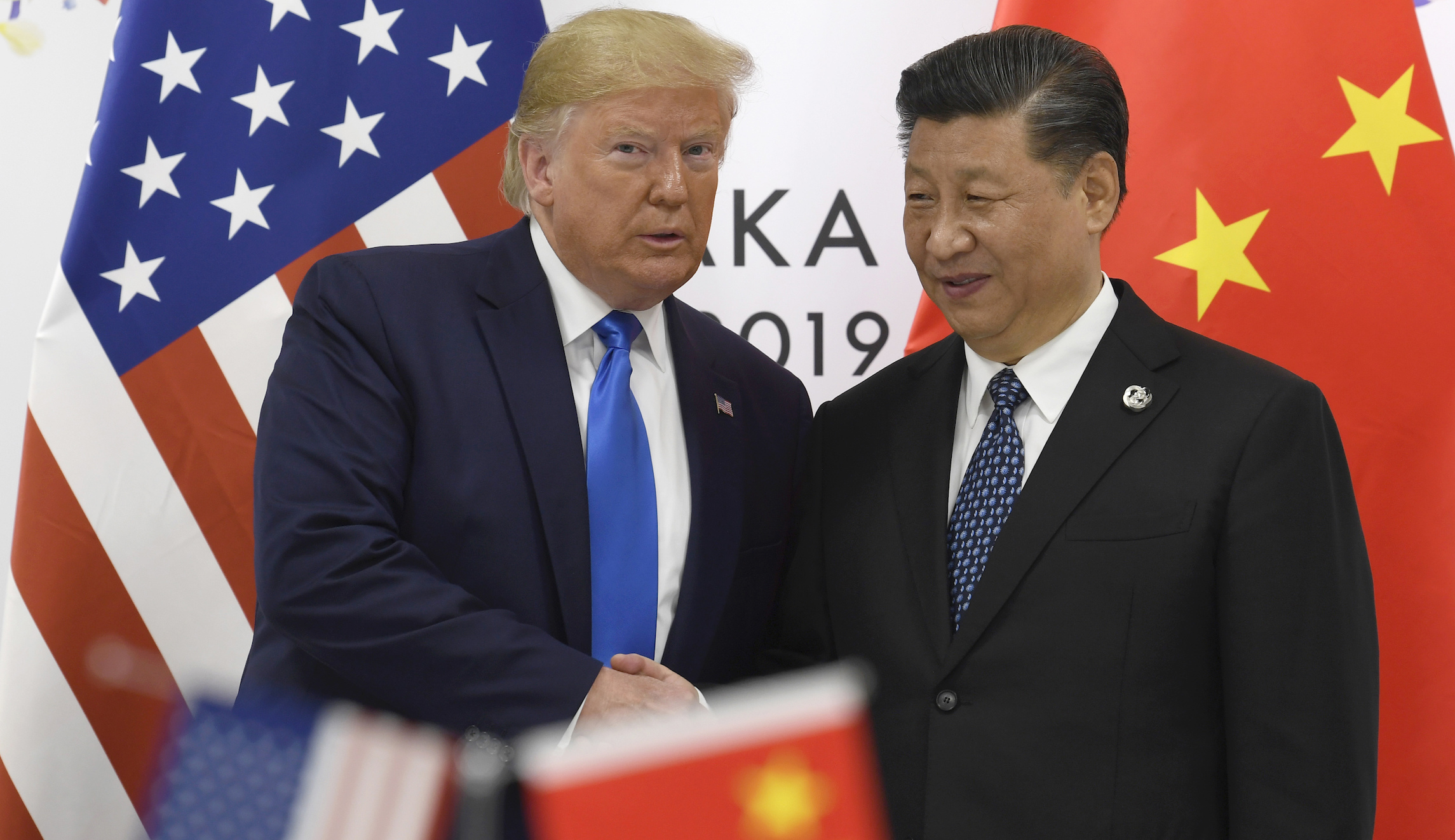
Chinese President Xi Jinping’s long-term strategy is both dependent upon and driven by the Communist Party’s unquestioned supremacy over its citizens. That’s why the Chinese regime is reacting with such ferocity to United States sanctions over its new Hong Kong security law.
The mainland office in Hong Kong on Wednesday described, “The meddling of the U.S. in Hong Kong affairs by means of domestic law is a gross interference in China’s internal affairs and a wanton trampling on international law and basic norms governing international relations.”
With an ever more fiery editorial than usual, the Global Times warned that “no matter what card the US will play next, China will fight it to the end … to defend the core interests. … Our political resilience, scale of society and other national potentials will support us in fighting for justice to the end.” Xi’s media foghorn to Washington ended with an insult: “Just look at how the U.S. has been hit by the COVID-19, and how China has effectively controlled the epidemic. People will know China is capable of dealing with the spread of the U.S.’ geopolitical virus.”
The editorial did, however, get one thing right. It pointed out that the sanctions President Trump announced on Tuesday are, in fact, quite mild in practice and unlikely to force financial institutions out of Hong Kong. So if the impact won’t be too severe, why is Xi so angry?
Because on this issue, he’s caught between a political rock and a very hard Party reality.
Shredding China’s Sino-British treaty commitment to uphold Hong Konger human rights until at least 2047, Xi’s security law formalizes the Communist Party’s absolute disdain for the principle of trust in international relations. In Hong Kong, Xi has proved to the international community that he is about as respectful of treaty law as he is reliable in his carbon emissions commitments. Xi fears that the world’s understanding of this reality will undermine his signature foreign policy priorities. Xi’s feudalistic Belt and Road initiative, for example, depends on nations, and especially democratic nations, accepting China’s vast investment in return for accepting Beijing’s global political hegemony. Xi wanted to pursue that agenda while keeping things quiet on the Hong Kong front. He hoped Hong Kongers would simply kneel down to his encroaching tyranny. But people who have tasted freedom are loath to surrender it. This posed another crisis for Xi. Relentlessly taking to the streets and polls in explicit rejection of the Party, Hong Kongers undermined Xi in devastating fashion. Hence why the security law was introduced.
Yet, now that the world’s major democracies, including the United States, Australia, Canada, and presumably in some form — eventually — the European Union, are sanctioning Xi over Hong Kong, Xi is struggling to secure his international prestige without jeopardizing the Party’s supremacy.
That cuts to the heart of why these sanctions are so problematic for the Chinese leader. They cut directly at the Communist Party’s defining, indeed, almost theological, claim that it alone gets to decide how Chinese mainland, Hong Kong, Uighur, and Taiwanese lives are governed and led. Xi, the Standing Committee, and the military believe that to undermine that principle is to risk it spreading as a contagious threat to the Party’s existence itself.
Considering that they are not particularly good at handling contagions, their concern is justified.
