

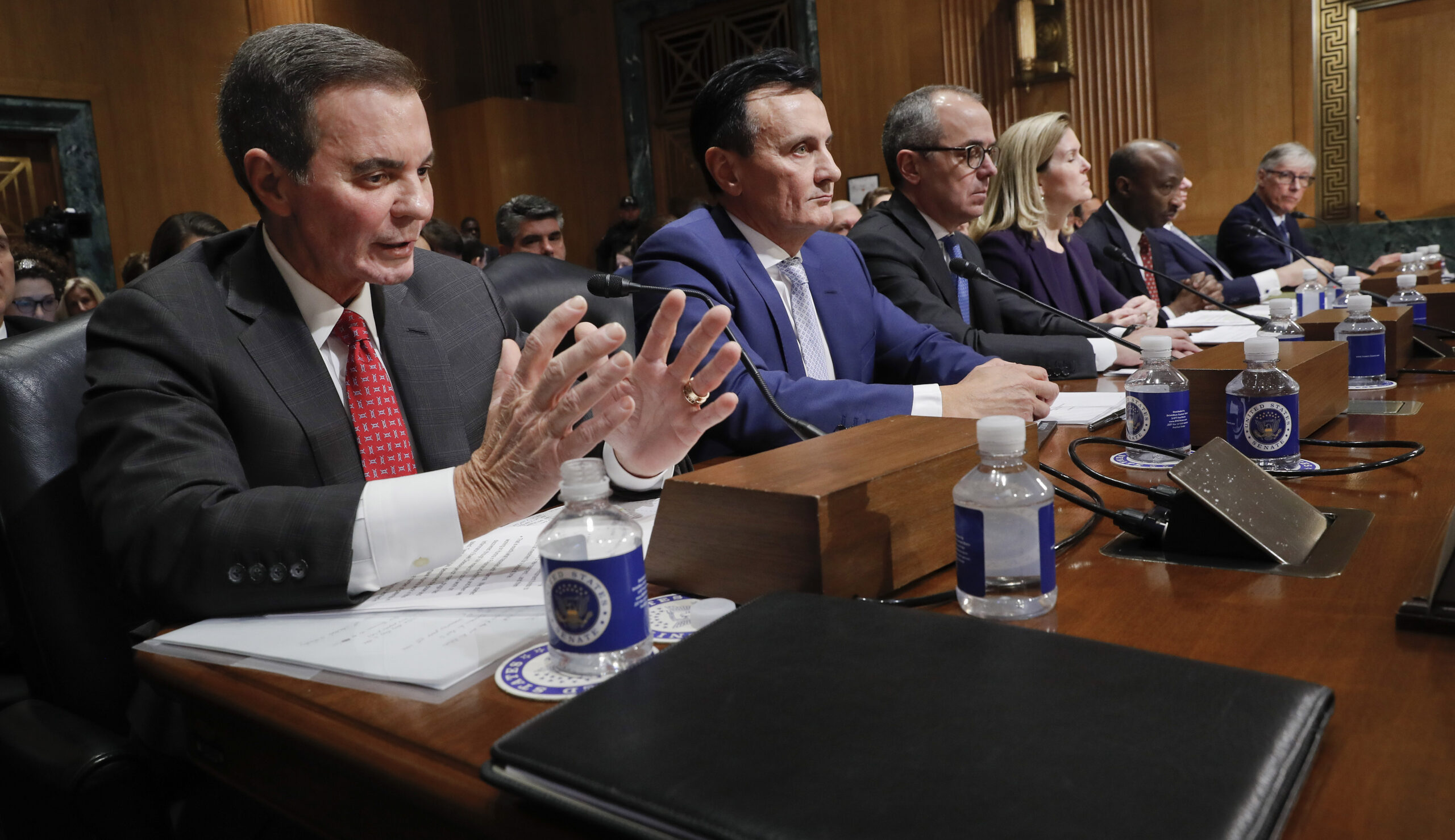
Senate Republicans on Tuesday displayed a shift in attitude toward pharmaceutical companies as they questioned seven top CEOs in a hearing about why their products have become so expensive, signaling they will work to pass new drug pricing laws.
The shift comes as polling shows that prescription drug costs top voters’ concerns about healthcare and as headlines about soaring prices of lifesaving medicines permeate the news.
Recommended Stories


While the hearing was devoid of shouting matches and executives came out largely unscathed, the issues Republicans raised suggested they have been getting an earful about the issue from constituents and from other parts of the healthcare industry.
Sen. John Cornyn, R-Texas, pressed Abbvie, the maker of the arthritis drug Humira, about its patents, suggesting Republicans may be open to changing the exclusive rights that drug companies have to their products after they come to market.
“I support drug companies recovering a profit … at some point that patent has to end, that exclusivity to end,” Cornyn said.
Sen. John Thune, R-S.D., asked whether a plan by the Trump administration to end rebates that insurers collect would help bring down list prices. Drug companies have praised the plan but they were unable to give Thune and other senators a guarantee that list prices would fall as a result. Sen. Bill Cassidy, R-La., fired back at one drug executive’s proposed solution by saying, “That seems status quo and the status quo is not working.”
Several senators shared personal stories about the drug hikes they have faced. Sen. Johnny Isakson, R-Ga., noted that he had long supported drug companies and the medical innovations they bring. He shared that a medication he took went up by $90 this year.
“When I can’t explain it, it’s tough … We have to get to the bottom of this so we can explain it,” he said.
Despite indications that Republicans are looking more closely at the rules governing the pharmaceutical industry, their questions were still less pointed than those of Democrats. Sen. Bob Menendez, D-N.J., for instance, asked executives whether they had used savings from the GOP tax law to lower prices. Pfizer was the only company to say it had. Sen. Sherrod Brown, D-Ohio, said the U.S. couldn’t continue to give drug companies “blank check” for their products.
Sen. Ron Wyden, the top Democrat on the committee, opened the hearing by blasting drug companies for “morally repugnant” practices that caused people not to be able to afford their medications. By the end of the hearing, he was unsatisfied with the executives’ answers, accusing them of “stonewalling on the key issues which is actually lowering drug prices.”
“Drug prices are astronomically high because that’s where pharmaceutical companies and their investors want them,” the Oregon lawmaker said.
The hearing wasn’t as aggressive as it might have been if it had taken place in the Senate Health, Education, Labor, and Pensions Committee. That committee counts among its members several senators who are vying for the Democratic nomination to run against Trump, and who tend to use the hearings to audition for voters.
Certain senators were more deferential toward drug companies. Sen. Pat Roberts, R-Kansas, for instance, asked CEOs what problem kept them up at night. Nearly all answered that it was the question over whether they would be able to find the next innovative drug.
Sen. Debbie Stabenow, D-Mich., who was up next shot back: “I’ll tell you what keeps people in Michigan up late at night, it’s the cost of medicine.”
Drug companies give generously to members of both parties, but Democrats tend to have more charged rhetoric against the industry and to back bills that would let the government set drug prices. Republicans side with drug companies to oppose such price setting.
Still, drug companies have clocked major victories even with Democrats, particularly by keeping sweeping price controls out of Obamacare.
None of the testimonies submitted Tuesday included an offer to lower drugs’ list prices. Instead, pharma executives defaulted to similar arguments they have made in the past about the obligation insurers have to help cover drugs. They have said that high prices help fund the research and development of new drugs, most of which fail to make it to market.
All pharmaceutical executives said they supported a bill known as the “Creates Act,” a bill the pharmaceutical industry had previously said it opposed. The bill goes after a practice by brand-name drugmakers to block generic companies from making cheaper copies.
Asked after the hearing whether drug companies shifted blame over the issue of high prices, Chairman Chuck Grassley, R-Iowa, said it happened less than he had expected it would.
“They knew we were not going to be accepting finger-pointing,” he said.
Grassley said he was glad with how the hearing went and concluded, “I felt they realized there is a problem and I think every one of them will help us stop it.”
