

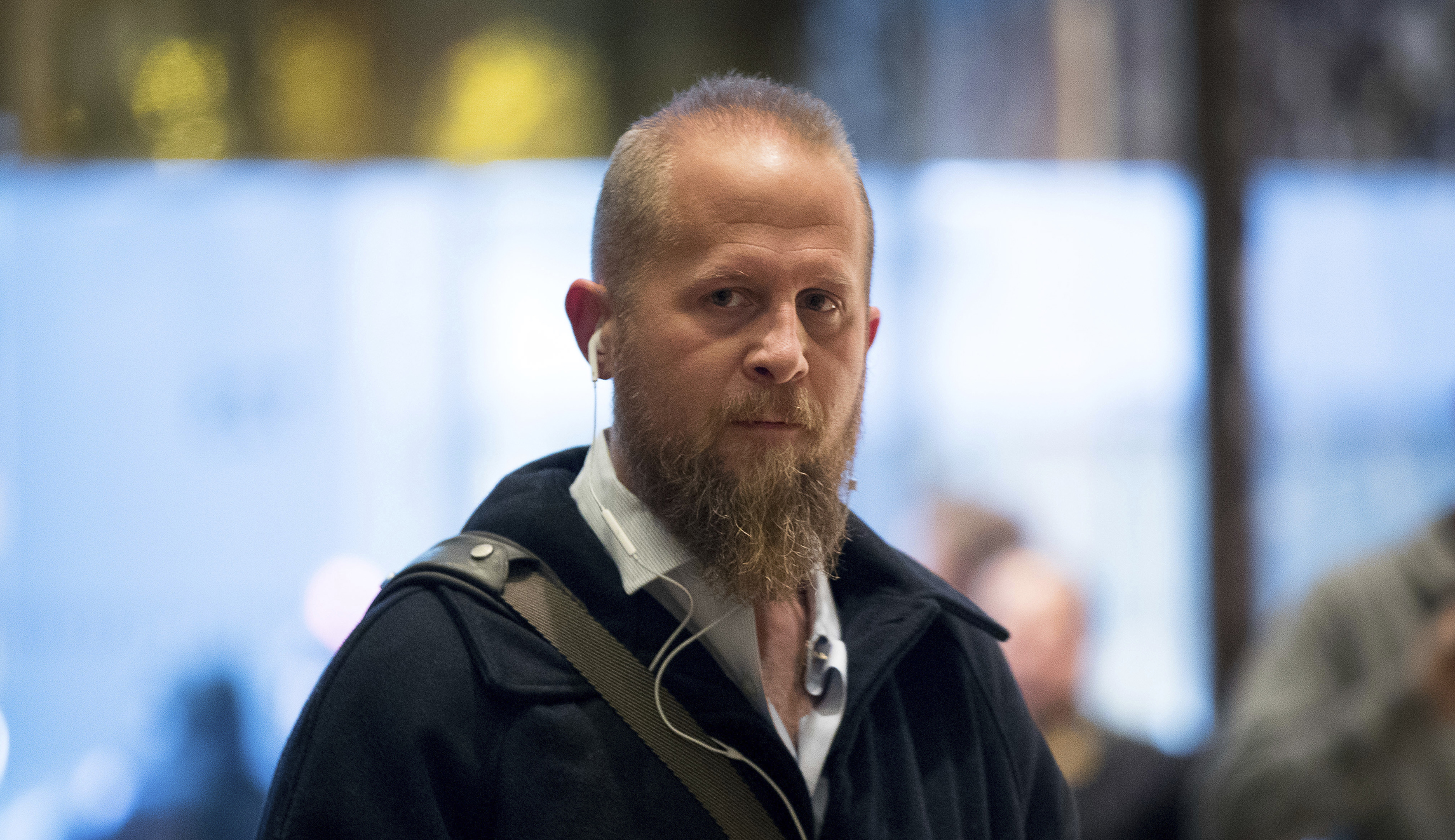
In a wide-ranging interview with the Washington Examiner, President Trump’s former campaign chief Brad Parscale explained how his strategy had the team on track for victory before a breakdown in trust cost him the job.
Despite spending millions of dollars in television advertising before Democrats had even settled on a nominee, Parscale insisted the campaign was following a fairly conventional timeline before the coronavirus hit. The plan was to spend the winter, spring, and summer on a persuasion strategy aimed at undecided voters, before shifting to a “turnout” strategy in the fall, ramping up its television advertising to drive enthusiasm across the entire universe of likely Trump voters the campaign had identified in the preceding months.
Recommended Stories


And with its own models showing the president on track for reelection, the campaign saw no reason to change course.
“We’re winning the Electoral College by 400 some points in February. So that’s the right decision,” Parscale said.
In a matter of weeks, the picture looked radically different, accelerated by the coronavirus.
“By April, we only have 120 electoral votes that are pulling [our way],” he said, and by April 23, “the president’s in the worst situation he’s ever been in.”
“COVID is also changing the way people are consuming things,” he added. “So I kept pushing out stories saying, ‘Where’s the super PAC? Who’s out defending Trump?’ And no one showed up. I was worried we were tanking.”
Further, internal polls were showing that voters were consolidating around their candidates, much faster than is typical.
“I was also seeing in our data that people were already making their choices,” Parscale said. “The pollsters are telling me that, my data guys are telling me that. They’re saying positions are hardening.”
As coronavirus deaths mounted, he said he advised Trump to show empathy and recounted this in a passage from his forthcoming book.
Parscale wanted to act quickly to arrest Trump’s springtime slide, explaining that “people were making their decision in the summer, so I pushed the budget up earlier.”
This move was, in part, his undoing, by reversing on an earlier strategy that Jared Kushner, Trump’s son-in-law and a senior adviser, wanted to stick with, according to a person familiar with the matter.
“Jared didn’t like that Brad wasn’t listening,” this person said, explaining that more seasoned operatives were charging that Brad was running advertisements when nobody was “listening.” He said that may be true historically, but not this year, and held his position.
“Brad said, ‘I’m not gonna lose by this decision.’”
Spending at the time included states Trump won in 2016, with news reports detailing concerns that the president was on defense.
Parscale has disputed claims that his demotion arose due to the campaign running out of money.
A source close to the matter said that “Jared wanted to get off of TV.”
“He was having old-school consultants tell him it was a mistake,” this person added.
According to Parscale, “The original plan in January, February was to stay off TV until late and to go up heavy the last three months and really push out turnout and then hope that money was coming in from super PACs to buy advertising.”
The campaign hit pause on television ad spending not long after.
Parscale said he is hurt but not mad at how his tenure shook out. He said he hasn’t talked to Trump since the days leading up to his demotion, when he was replaced by his former deputy, Bill Stepien. In Parscale’s wake, “the big decision they made was pushing Bill to get off TV.”
Parscale said a tactic to get greater mileage from campaign dollars on Facebook caused its own consternation.
“One day, a senior Trump campaign official goes, ‘Facebook’s f—ing with us. They’re throttling our app,’” Parscale said.
The staffer suggested using the campaign chief’s page to send out advertisements, telling him, “I think they will perform better.”
The test proved a success, rendering 4 times the engagement for the same cost as running the advertisements through the campaign’s page.
“My ads were performing 4 times better, but my ads weren’t for me. They were for Trump,” he said. “They were just using my account.”
Parscale said to “put it on everybody — Katrina [Pierson], just ask them all.”
“Don Jr. agrees to it. Everyone agrees to let us use their pages for advertising,” he said. Reports at the time characterized the effort as a bid to boost Parscale’s own profile, which he disputes, instead asking, “Why wouldn’t we do this if it’s performing better?”
“When I lost my job, they stopped doing that. And that’s f—ing stupid,” he said. “There’s a moment where we’re worried about process stories, we’re worried someone’s gonna look famous for something that could benefit us winning.”
After he stepped down, the campaign’s tone changed, he said.
“They stopped using all data for creative,” he added, explaining the effort to tailor the right message to each potential voter.
“Everything went to cookie-cutter politics, which is not what Trump was about,” he said. “Trump was about building a movement. It was about making something that was bigger than all of us. About having a country that we should be proud of.”
By the time he was talking to the campaign again, he said the die was largely cast.
“Ninety-six percent of people have made their decision before October, but the campaign spent all their money in October when no one is making decisions,” he said.
“They shifted the money over to persuasion advertising when no one was persuadable. So if you look at it — September, October should have been completely about turnout and ground-game operations,” he said.
“At the same time, they were supposed to be doing that, they flipped the model from turnout to persuasion because they were worried that people didn’t like the president. They cut 20 cents of every dollar out, where I was giving 25 cents of every dollar raised to the Republican National Committee.”
Still, he credited the campaign’s early decision to “overfund” down-ballot races with Republicans’ success in the House of Representatives.
Parscale and other senior Republican officials identified early on that the race would likely come down to turnout, and team Trump invested heavily in building out its ground game, including in states Trump was unlikely to win. To support down-ballot candidates, it sent a quarter of every dollar raised to the Republican Party.
Trump personally shot down advertisements portraying President-elect Joe Biden poorly with women, though these performed well with crucial audiences. “Trump said he didn’t want to go there,” Parscale said. Trump feared that this could ignite his issues with women, one prominent issue in the 2016 race.
The issue was fresh for Biden in a way that it wasn’t for Trump.
“It’s not baked in on Biden,” Parscale said, adding that not pursuing this “was a mistake.”
Further, Parscale said, “It was a mistake to go after suburban white women,” which he said Trump would win “as soon as I get done with being a ballerina.”
He said that in this election, “there was no persuasion advertising that was going to work,” due to how voters’ views had hardened.
The campaign shrank its 25 cents-on-the-dollar fundraising allocation to the Republican Party once he stepped down.
“I was demoted, and the next day, they changed that to five cents and started pulling back the ground game,” he said.
Instead, Trump wanted a referendum on himself.
Parscale said his push to go negative on Biden is likely one reason Trump wanted him gone.
“I’m unhappy that I didn’t get to finish what I did. I got so close,” he said. “I think if they would have trusted me, that if Trump would have listened to me a little bit more, we would have won.”
His one regret?
“I should have talked to the media more.”
