Why Romney won — Why Gingrich lost

Florida primary election results
Romney crushes Gingrich in Florida GOP primary
With win, Romney faces tough opponents in long war
Super PAC spending on GOP candidates tops $44M
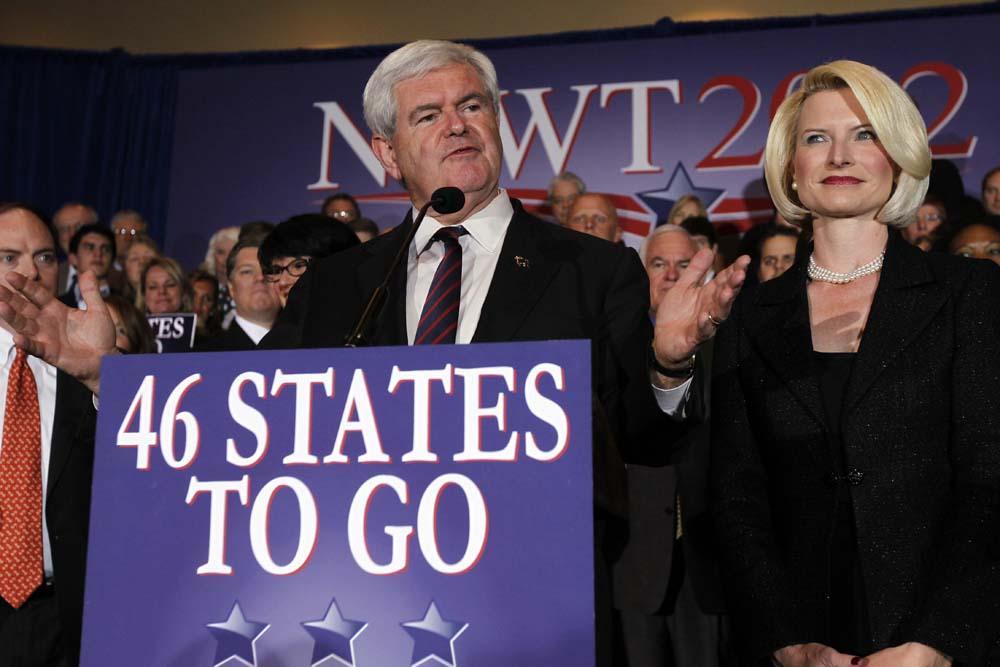
After loss, Gingrich pledges long primary fight
Exit polls: Florida GOP voters hurt by economy

TAMPA, Fla. — Coming off a decisive loss to Newt Gingrich in South Carolina, Mitt Romney needed to do three things to win the Florida primary: 1) attack Gingrich with a level of ferocity not yet seen in the already-contentious Republican presidential campaign; 2) raise the level of his performance in debate; and 3) improve his on-the-stump message to give voters more substance and fewer platitudes.

For his part, Gingrich had two must-dos: 1) deal with Romney’s attacks in a calmer, more seasoned way than Gingrich handled the last Romney barrage, during the campaign in Iowa; and 2) keep up the solid message he rode to victory in South Carolina.

Over the past week in Florida, Romney did nearly everything right; his ads hit hard and his debate performance was dominating, even if he improved only marginally on the stump.  And Gingrich did nearly everything wrong.  The result was a decisive 14-point victory for Romney, who now has two primary victories to Gingrich’s one.


First, the attacks.  When Gingrich complained that he had been carpet bombed by Romney, he was right.  Romney and his allies spent about $15 million on ads in Florida — perhaps three times Gingrich’s total — on an almost entirely negative campaign.  That’s no exaggeration; on Tuesday afternoon, ABC News’ Jonathan Karl reported that, “The only positive Romney ad aired over the past week was a single Spanish-language radio ad.”  Indeed, 68 percent of all ads aired in Florida were Romney attacks on Gingrich.

Gingrich did not learn the lesson of Romney’s first wave of attacks against him. At that time, Gingrich reacted angrily and publicly, complaining constantly and accusing Romney of lying. Voters in New Hampshire who were once open to Gingrich’s candidacy turned away from him, saying his hot-tempered response to the ads — rather than the ads themselves — just turned them off. (See Why Gingrich Tanked from January 7.)

Gingrich knew he had made a mistake. Going to South Carolina, he first tried to attack Romney on the issue of Bain Capital — to make their baggage equal, as it were. That didn’t work. Then, finally, he moved back to talking about the issues, particularly jobs and the economy. Back on solid ground, and showing the qualities that attracted voters to him, he won decisively.  The Gingrich team came away with a lesson: Gingrich loses when he talks about Mitt Romney and wins when he talks about his own agenda.

In Florida, Romney’s answer was a second, even bigger, wave of attacks.  And Gingrich reacted in the same complaining, self-defeating way he did the first time, only more so. Perhaps his angriest moment of the Florida campaign came last Thursday at a morning rally in Mount Dora, in the central part of the state. The event was held in a beautiful lakeside setting, on a beautiful day, before a big, enthusiastic Tea Party crowd — the perfect backdrop for a positive, forward-looking campaign speech. Instead, Gingrich stepped into the sunlight and delivered an angry prologue to his stump speech, denouncing Romney’s “gall,” saying Romney “thinks we’re stupid,” railing at the negative ads, calling Romney’s tactics “the desperate last stand of the old order, throwing the kitchen sink, hoping something sticks.”  The media narrative of that day was Gingrich’s anger — an entirely accurate summary.


Gingrich’s behavior had the same effect in Florida that it had in New Hampshire, which was to turn off voters who might otherwise be open to the Gingrich message. Romney’s team had done it again, and Gingrich fell for it again.

One stark fact of the campaign that emerged in Florida is that Romney can go more negative with less damage to himself than Gingrich can. The speaker’s advisers know there is an underlying theme to the race, and that theme is best described in a question: Where’s Angry Newt?  Every time Gingrich, provoked by a Romney ad, made an angry speech, as he did in Mount Dora, the answer he gave showed voters exactly where Angry Newt was.

Romney, in the persona he presents to voters, doesn’t have that subtext of anger.  Still, the constant negative attacks took their toll on Romney himself, as well as Gingrich. Romney’s approval rating among independent voters nationwide has declined significantly in recent weeks, nearly all of it as a result of his battle with Gingrich. Romney advisers point out that he only went 100 percent negative for one week, but know they have to get the battle over with — to kill Gingrich’s candidacy — before Romney does lasting damage to himself.

Romney is like a doctor using massive doses of chemotherapy and radiation to kill a cancer — the Gingrich threat — but trying to spare the patient, which is his own candidacy. It might be close by the time this is all over.


As delicate as the situation is, Romney’s team could not resist dishing to the New York Times for a how-we-killed-Newt story three days before the voting began. The piece focused on the staff’s brilliance at opposition research and rapid response, and even though victory seemed assured, it seemed both a premature celebration and a little disrespectful of the candidate himself. Romney suggested as much the next morning when he was asked about it on NBC’s Today Show.  “Well, I think you can expect advisers to think that the work of advisers is very, very important,” Romney said, “but frankly, I think if you’re to go back and look at where the sentiment changed, it was with the debates.”  Romney’s message to his own team was clear: I won this thing, not you.

On the subject of debates, Romney’s aides have long been irritated by the perception, widespread among Republicans, that Gingrich is a great debater.  Indeed, much of Gingrich’s support has been based on the voters’ supposition that Gingrich would defeat President Obama in a general-election debate.  In Florida, Romney set out to destroy that notion, and he succeeded.

Romney had mostly done well in the pre-Florida debates but had to stand by in South Carolina as Gingrich won huge applause from conservatives, first by taking on Fox News’ Juan Williams and then CNN’s John King over what Gingrich portrayed as wrongheaded questions.  What Romney’s team saw was Gingrich scoring points against the press, not his competitors on the stage.  “Newt Gingrich has had one good week and two good answers in this whole process,” top aide Stuart Stevens said after the Jacksonville debate.

As it turned out, the Tampa and Jacksonville debates would do grievous damage to Gingrich’s reputation as a debater.  Romney hit Gingrich hard on the former speaker’s 1990s ethics case and on his involvement with Freddie Mac.  Gingrich mostly sputtered and offered no coherent defense, let alone a counterattack.  For example, on the ethics issue Gingrich failed to mention the Internal Revenue Service’s 1999 report that exonerated him of the charges raised by the House Ethics Committee.  On the debate stage, Gingrich could have asked voters — and Romney himself — to watch a CNN report from the time that said flatly, “It turns out [Gingrich] was right.”  Romney must have been astonished that Gingrich flailed about so ineffectively and did not even use the weapons at his disposal.  When it was over, Gingrich had not one but two off nights, when he needed to hit home runs.

Organizationally, Romney’s forces simply overwhelmed Gingrich in the nation’s fourth-largest state.  Romney had concentrated on getting supporters to vote early and by absentee ballot so that he could bank a large percentage of the votes he would need to win ahead of time.  It worked; more than 600,000 people voted early or absentee, and Romney appears to have won big among them.  The pain of the situation for Gingrich was that it turned out he was the one who really needed early votes — he came into Florida strong and left weak — but instead lost badly among the early crowd.

As far as organization is concerned, perhaps the best analysis of Gingrich’s loss came from a top Gingrich aide before the candidate ever set foot in Florida. “There is a very strong contrast between the two campaign organizations,” Gingrich adviser Kevin Kellems said the night of the South Carolina primary.  “In military terms, it’s speed versus mass.  Newt Gingrich’s operation, and Newt Gingrich as a man, has a great deal of speed — intellectual speed, decisiveness.  The Romney campaign is much more about money and size, having hired half of Washington D.C.  And sometimes, speed beats mass.”

And sometimes, mass beats speed, which is what happened in Florida.

Beyond that, in Florida Romney’s big campaign was not just more powerful than Gingrich’s — it was also more agile.  After the South Carolina loss, Romney adapted faster to changed conditions.  Gingrich was mostly disorganized.

The problem for Romney is that he won without improving his message in any significant way.  The striking thing about Romney’s performance in South Carolina was how little substance he offered the people who came to his rallies; his speeches were heavy on sayings like “I love America” and “I believe in America,” and his recitation of several verses of “America the Beautiful.”  In South Carolina, Romney’s insubstantiality on the stump contrasted sharply with Gingrich, who often discussed issues in detail before appreciative audiences.

In Florida, Romney beefed up his speeches, but just a little. For example, in an election-eve speech in Dunedin, not far from Tampa, he offered details of his pledge to rebuild the U.S. military.  “If I am president of the United States, I will take our shipbuilding from nine a year to 15, I will get our F-35s produced, I will make sure we bring in at least 100,000 additional active-duty personnel, and I will make sure we care for our veterans in the way they deserve to be treated,” Romney said.  By itself, that was more meat than Romney often gave voters in other states.

On the other hand, Romney still recited “America the Beautiful,” and at his last Florida campaign appearance, at the retirement community The Villages, he actually sang it.

Romney’s message remains the weakest part of his candidacy.  And that means, despite his skill with attack ads and in debate, his campaign could still face substantial obstacles. “At bottom the Newt insurgency is fueled by the sense that Mr. Romney’s tepid policy agenda reflects no fixed beliefs,” the Wall Street Journal editorial page’s William McGurn wrote Tuesday.  “In fact, it’s telling that Mr. Romney’s GOP rivals are defined as non-Romneys, each standing for something lacking in the front-runner.”

That “something lacking” problem has not been fixed.

What now? The Gingrich campaign will argue that the race is between one candidate who has won two primaries versus one candidate who has won one — hardly a lopsided contest, and hardly a result to declare one man the overall winner.  And they believe the longer Romney has to devote much of his muscle to attacking Gingrich, the more Romney hurts himself.  At some point, Team Gingrich believes, voters will grow sick of the negativity and say to Romney, “Enough — what about you?”

That could well be wishful thinking in the Gingrich circle.  Even though Gingrich is pledging to continue the race for as long as it takes to win, the fact is, the former speaker presented a mortal threat to Romney in one of the nation’s largest states, and Romney turned that threat into a huge victory.

Related Content
