
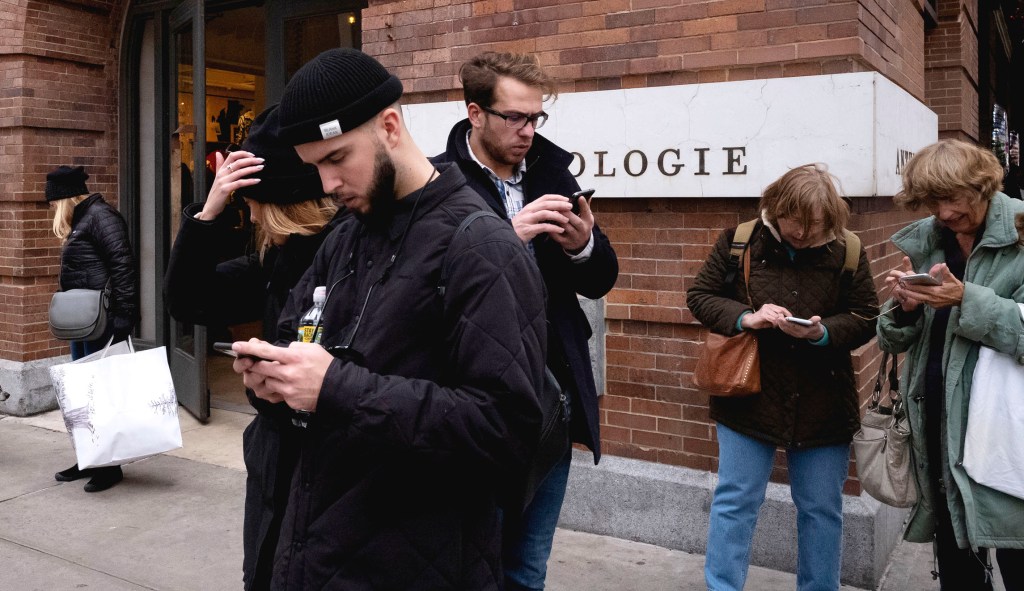
We must keep smartphones from making us dumber

Most of us whose brains haven’t been fried by overuse of “smart” phones have tacitly assumed that there are great dangers to the overuse of those devices. Now, researchers in the United States, the United Kingdom, and Australia are confirming for us what we thought we knew.

Specifically, the researchers used findings from psychiatric, psychological, and neuro-imaging studies to conclude that the internet and our phones are harming our social skills as well as our ability to focus and to remember things.

“Joseph Firth, [an] author of the review, told Medical News Today: ‘The limitless stream of prompts and notifications from the internet encourages us towards constantly holding a divided attention — which then, in turn, may decrease our capacity for maintaining concentration on a single task.’” Or, in the language of the report itself, over-reliance on technology can “cause changes in the brain’s structure and function, resulting in cognitive decline.”

The problem is especially acute with children and adolescents: “higher frequency of Internet use over 3 years in children is linked with decreased verbal intelligence at follow‐up, along with impeded maturation of both grey and white matter regions.” (On the other hand, for senior citizens, use of the internet may help keep cognition a bit sharper and may help people “overcome isolation” and thus maintain social connections that serve them well.)

Meanwhile, the research bolsters the conclusions already obvious to many of us with regard to social skills. We’ve all seen twenty-somethings, obviously on dates, texting each other across the table rather than actually talking, and we’ve dealt with teenagers almost entirely unsure how to conduct a phone conversation.

Sen. Ben Sasse, R- Neb., focused on this problem in a book published last winter called Them: Why We Hate Each Other, and How to Heal. Sasse, a former university president and high official at the Department of Health and Human Services, describes loneliness as a major public health crisis, laying part of the blame on technology. “We’re hyperconnected, and we’re disconnected,” he writes, describing what at first sounds like an irony but which he explains is at least partially a cause followed by its effect.

Sasse is no Luddite; he thinks technology used well is a boon to mankind. Still, he cited research similar to the study reported today to suggest that all of us use our electronics less and our brains more, while spending time in each others’ presence physically rather than digitally. Toward that end, his own family practices phone-free Sundays, and he says they have found they love the freedom and personal community the practice encourages.

So, if you need directions, put down your phone and look at a paper map. If you want to read a book, grab a bound volume and eliminate other distractions. And if you want to communicate to somebody in the next room, get out of your chair, walk through the door, make eye contact, and, yes, talk.

Otherwise, as the Eagles sang in “Hotel California,” we will all be “prisoners here, of our own device.”

Related Content