

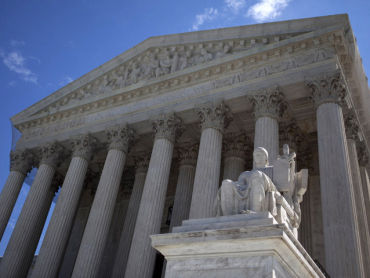
Justices on the U.S. Supreme Court wrapped up three days of health care oral arguments this afternoon with a discussion of whether the national health care law’s expansion of Medicaid was unconstitutional.
Paul Clement, arguing on behalf of 26 states led by Florida, made the case that the expansion of the joint federal/state Medicaid program was coercive to states. Under the health care law, Clement said, if states don’t go along with the expansion, they not only lose out on the new money, but risk forgoing the money that they already receive to implement the existing Medicaid program — a figure that totals $3.3 trillion over 10 years.
Recommended Stories


From the get go, the liberal justices on the court pounced on Clement. Justice Elena Kagan said she couldn’t understand how the state receiving a “boat load of money” from the federal government to finance health care for the poor could be seen as coercive, a sentiment echoed by other Democratic-appointed justices on the bench.
Justice Stephen Breyer also said that the law doesn’t actually say existing funding would be cut off, it only says that the Secretary of Health and Human Services has that power.
Clement responded that the power itself has a coercive effect.
Even conservative Chief Justice John Roberts pushed back against Clement, saying that since the New Deal era, states had become more dependent on the federal government, and thus their sovereignty has been compromised.
When U.S. Solicitor General Donald Verrill defended the Medicaid expansion, however, Roberts also argued that it could be seen as coercive because the states have no real choice but to accept the money.
Justice Antonin Scalia compared it to an old Jack Benny joke about the phrase, “Your money or your life.” In apparent reference to the famous line in the Godfather, Scalia also said the Medicaid expansion was akin to the federal government making states an offer they couldn’t refuse.
Even Justice Anthony Kennedy, often considered the swing vote, raised coercion concerns, at one point saying of the Medicaid expansion, “There is no real choice.”
That said, the Medicaid argument was the toughest one for challengers to the health care law, and it has never succeeded at any level of the court system. It would be surprising if they ruled it unconstitutional, but this would be a moot issue if they struck down the whole law.
