

After Mass on Sunday, a woman I haven’t seen since before the lockdowns asked me whether I felt endangered while covering the protests near Lafayette Square. I mentioned that one protester threatened me, but generally, I felt totally safe, in part because the protesters generally assumed the press was on their side.
“That’s good for you,” she said. “But is that healthy?”
It really was remarkable to be there at these anxious, yelling, anger-filled protests, with projectiles, fires, attempts to tear down barricades, and absolutely flaring political passions, and yet, almost all the protesters treated me as an ally. They assumed I was on their side because I was a member of the press.
I thought of it in light of this ridiculous moment on Twitter today:
Please share this as much as possible. @Julio_Rosas11 gtfo here. #dcprotest pic.twitter.com/cCnwo0wRd9
— Seun (@seuntheactivist) June 25, 2020
You’re reading that first tweet right. A protester is reporting on a conservative reporter who is “undercover,” and the picture shows the reporter, Julio Rosas (who was formerly with the Washington Examiner), wearing a vest with the letters “PRESS” in very large, white print on a black background.
The tweeter explained, “The woman who sent me this obviously meant undercover in the sense of manipulating his identity as a friendly member of the press on the side of the protestors.”
Friendly press are mentioned repeatedly in this Twitter thread. This jibes with my experience that the protesters assume the press is on their side — for good reason.
Axios explicitly encouraged its employees to join the protest and promised to cover any bail from arrested protesters.
Chris Cuomo on CNN went out of his way to defend violent and destructive protesters. The New York Times covered Seattle’s Capitol Hill Autonomous Zone (a lawless, violent, Marxist secessionist movement) the same way it covered the Soviet Union.
And if you were at the protests and then consumed the media coverage, you would see that most media tried to portray the rallies in a very friendly light.
The chants you saw on the evening news were the uplifting or touching ones, “Say His Name,” or a simple “No Justice, No Peace!” without the addendum, “F— these racist-ass police.”
In other words, the coverage of these protests highlighted the best of the protesters. This is not how the anti-lockdown protests were covered.
Here’s one example: I saw this drawing at Lafayette Square during the protests. It wasn’t hidden; it was very visible.
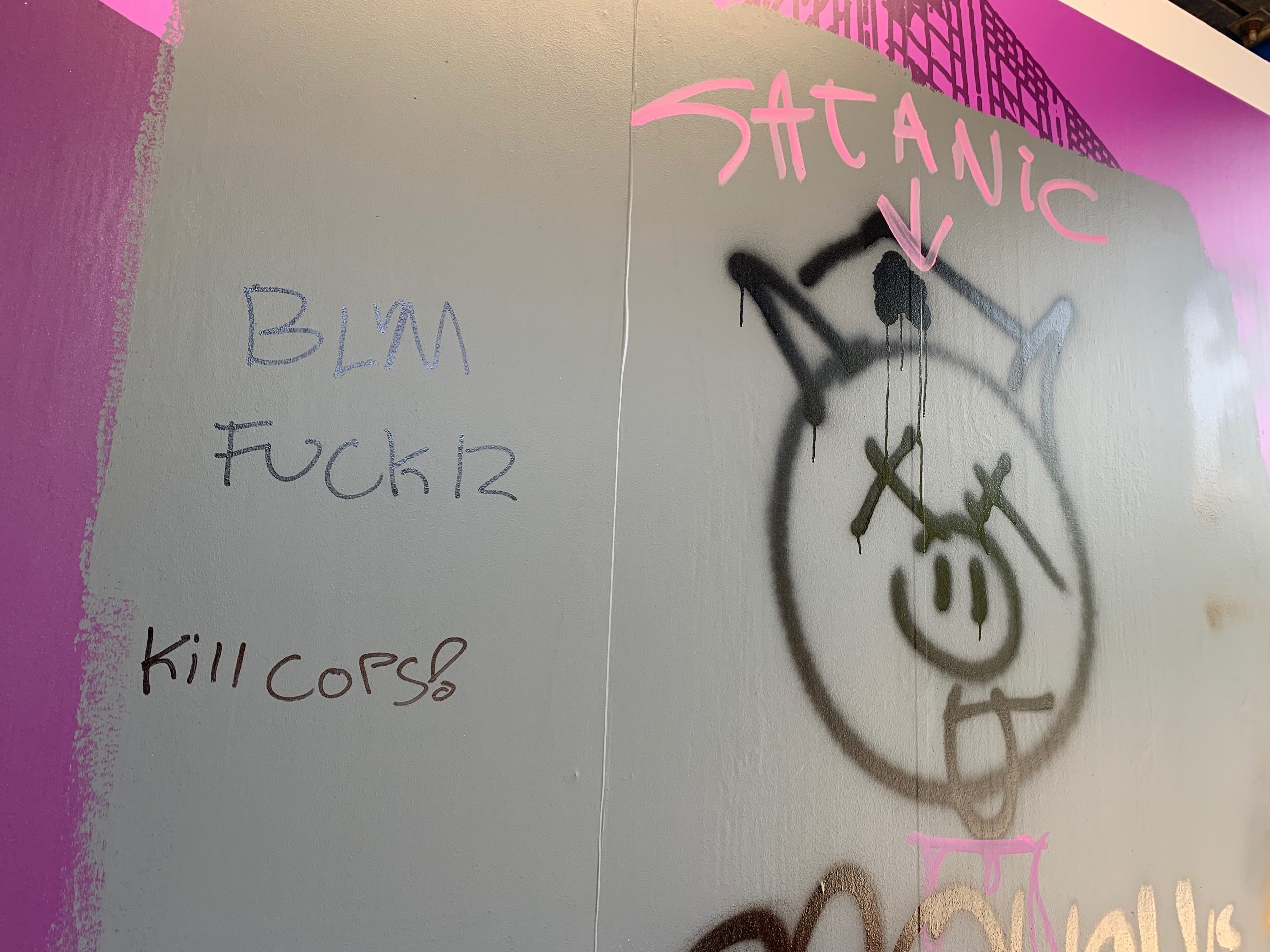
Yet, you saw no coverage of it. Reporters likely see a sign such as this as being an unrepresentative juvenile action not worthy of attention. Meanwhile, the worst elements at the anti-lockdown protests got wall-to-wall coverage.
Journalists should support all activities protected by the First Amendment, but other such activities (say, pro-life rallies, the exercise of religion, or lobbying against regulation) don’t get the sort of support from the media that the current protests do.
